
This article was first published on Deythere.
- Why Trading Psychology Matters
- Common Emotions and Biases in Trading
- How Emotions Affect Trading Behavior
- Improving Your Trading Psychology ( Tips and Tricks)
- Discipline and Consistency
- Strong Trading Habits
- Conclusion
- Glossary
- Frequently Asked Questions About Trading Psychology
- What is trading psychology?
- Why is trading psychology so important?
- How does fear and greed affect traders?
- What Biases should traders watch out for?
- How can I improve my trading psychology?
- References
In today’s wild and unpredictable markets, more and more traders are coming to the realization that their own state of mind can be just as important as anything they see from the charts , or any algorithms they may be using.
Trading psychology, which is the study of how emotions and personal biases can influence trading decisions, is widely accepted across the board as being a main driver of performance.
Real professionals will say that a good system without psychological discipline still produces losing results. This means that a solid strategy without the discipline to stick to it can still end in disaster.
Why Trading Psychology Matters
As markets everywhere remain absolutely impossible to call, the difference between a win and a loss can boil down to how in control you are of your emotions. Factors like fear, greed, and overconfidence end up playing a role in how traders make investment decisions. A lot of traders are unaware of how much of a role these emotions play.
For instance, fear might cause a trader to exit a trade that is still going right just when it needs more time to hit its peak. Also, greed might convince a trader to hold onto a loser for far too long.
Research shows that outcome-focused traders (i.e. those constantly fixated on how much money they’re making or losing) can get themselves into some bad habits, like ignoring their rules and acting on impulse.
Trading psychology focuses on how emotional and mental biases affect the way traders make decisions. If you were trading in 2026’s markets, you’d know that fear, greed, FOMO, and overconfidence can blow even the best of trading plans to nothing.
Common Emotions and Biases in Trading
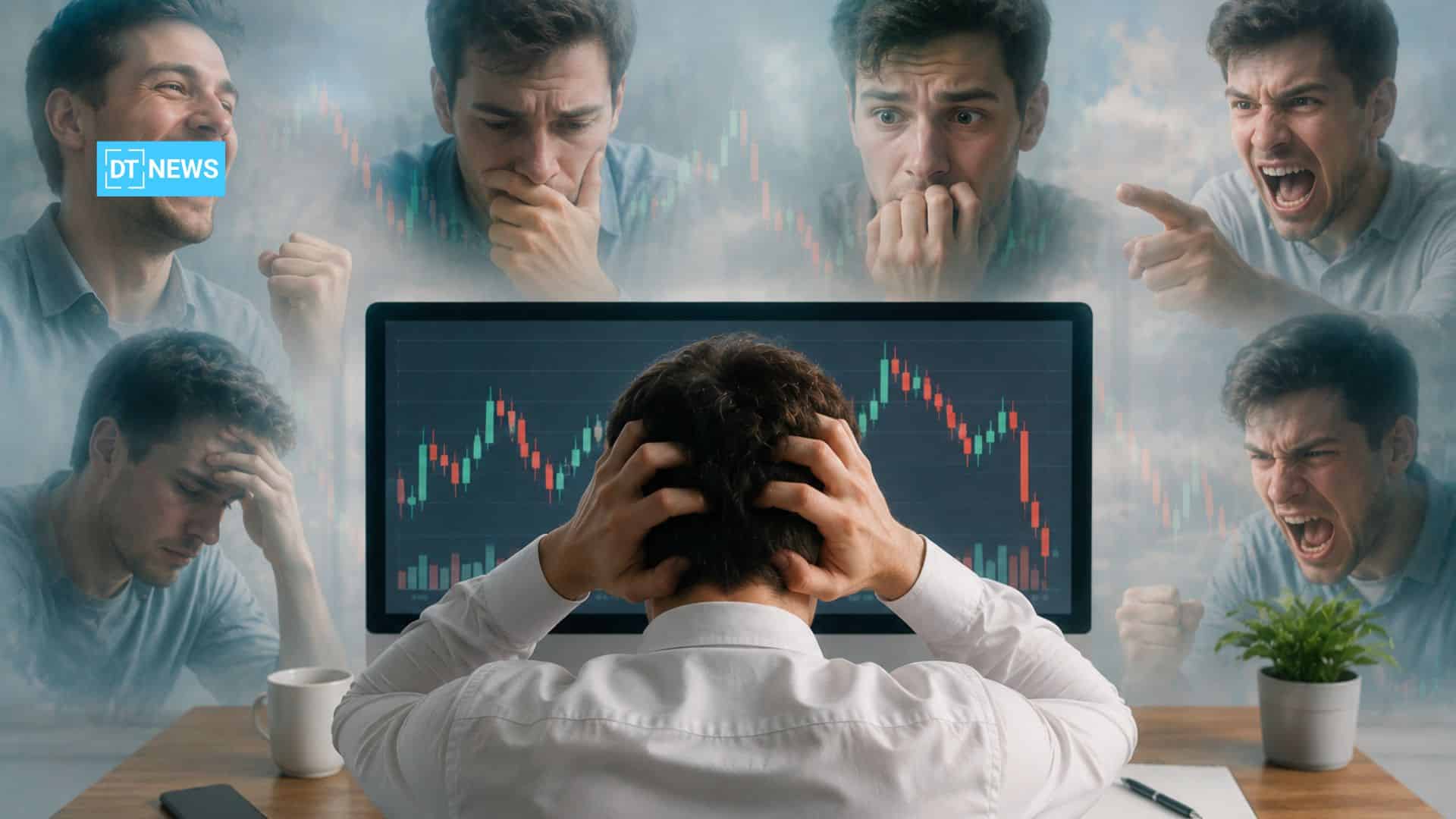
Traders aren’t immune to emotional biases driven by feelings and cognitive biases such as thinking errors. Check out the list below for some common ones :
| Bias/Emotion | Description | Trading Pitfall |
| Fear | Anxiety about losing money. | Selling winners early; missing rebounds. |
| Greed | Desire for profit or FOMO. | Holding winners too long; chasing risky gains. |
| Overconfidence | Belief you can’t lose after a winning streak. | Oversizing positions; ignoring warning signs. |
| Confirmation Bias | Seeking info that supports your view. | Ignoring evidence; doubling down on bad trades. |
| Herd Behavior (FOMO) | Following the crowd on tips or hype. | Buying overvalued “meme” stocks or assets. |
Each bias can lead to losses. Take overconfidence for example, it often follows a streak of wins and before a trader knows it , they’re taking on way too much risk. Being aware of these biases and second guessing your own reasoning is a good first step towards making better decisions.
How Emotions Affect Trading Behavior
Psychologists say that focusing on short-term results is usually a bad idea. Outcome-focused trading, being fixated on recent wins or losses, amplifies impulsivity and emotional swings.
In real life, that means a bad trade might trigger a panic exit or revenge trade, while a series of wins could induce reckless overtrading.
Improving Your Trading Psychology ( Tips and Tricks)
Experts are all in agreement that being prepared and disciplined can turn even the most difficult psychological challenges into strengths. Here are a few strategies that have actually worked:
Write down a trading plan: Before you even start trading, define your entry and exit rules, what size positions you’re going to take, where to put your stop-loss, and where you want your profit targets to be. Writing a plan down helps keep things structured and prevents making any last minute impulsive decisions.
CMC’s Carlo Pruscino advises that traders should quantify the amount of profit they are after on each trade, place a take-profit point, and quantify how much they are willing to lose and where they are placing their stop-loss. Committing to those numbers beforehand will stop traders from making emotional decisions on the fly.
Stick to your risk controls: Always use stop-loss orders and have a daily loss cap. If you hit your pre-set loss cap for the day, walk away and start fresh next session. This prevents “revenge trading” which is the impulse to chase losses. Many traders also recommend scaling into the market: practice with paper trading or micro positions first, then increase size only after consistent success.
Keep a diary of your trades. Write down every single trade, the outcome, the reasons behind it and what emotions were going through your head. Over time, this becomes a tool to learn what does and doesn’t work for you, and what is likely to trip you up.
It also helps if you can quickly tag your trades with notes like “FOMO” or “Revenge” to measure how often emotional mistakes occur. Going through your trade history like this lets you pick out the bad patterns and correct them.
Practice patience and take regular breaks. Mental fatigue and stress make it easy to get caught up in emotional errors. Give yourself some downtime now and again, take a walk if you’ve had a few losses or a few wins. Take a proper break too, a bit of time off after you’ve had a losing streak can be a lifesaver.
Take some time to breathe, review your plan and detach from outcomes before trading again. Over time, that kind of routine can really help you trade more calmly and more consistently.
Discipline and Consistency
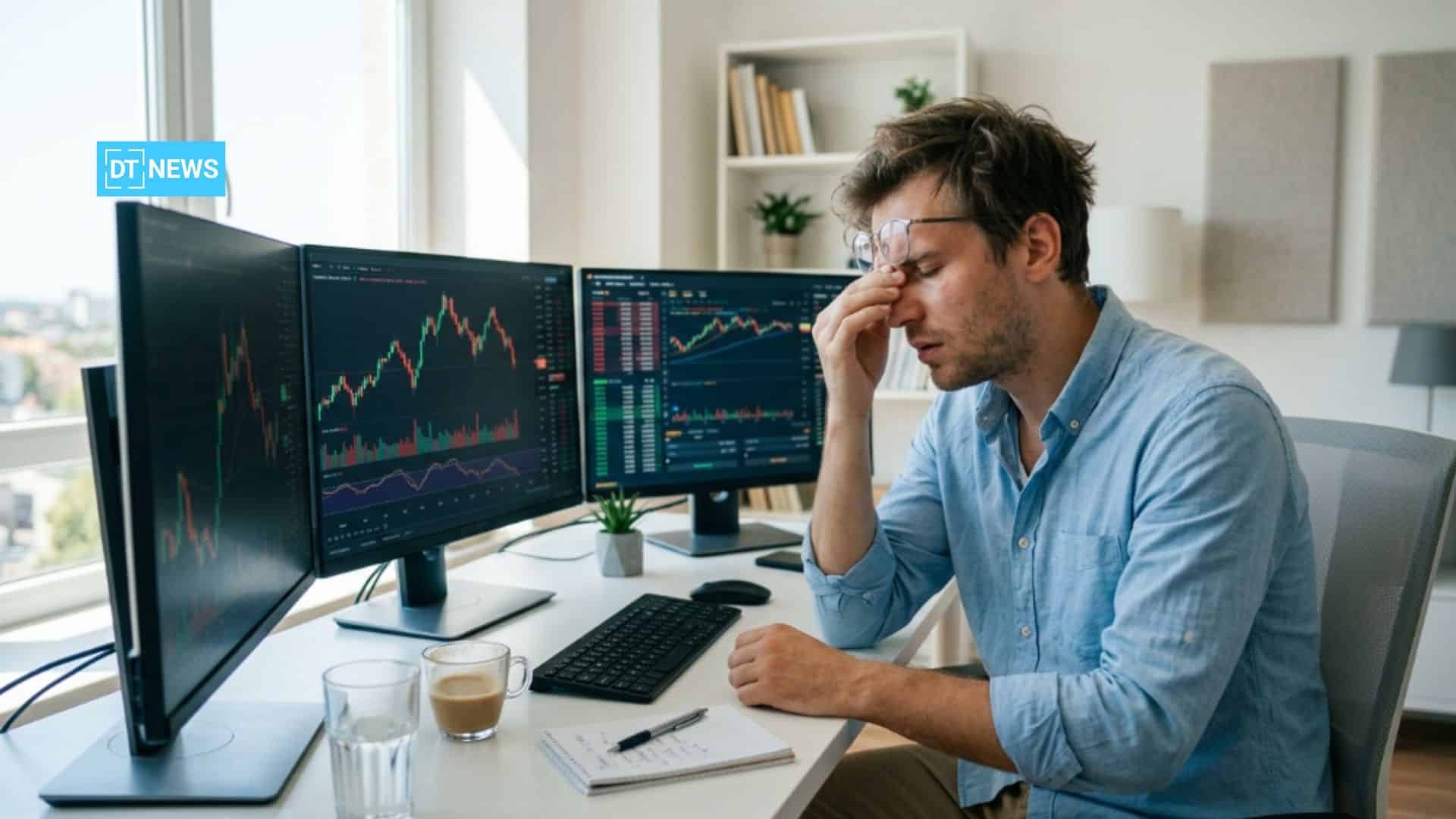
Most veteran traders will say that discipline trumps everything. CMC’s Carlo Pruscino puts it plainly by saying, “Manage your trades, manage your emotions, stick to your trading plan.” Research in 2026 basically found this theory to be true. One review even coins the idea of a “discipline coin”, a mental token to focus on process rather than outcomes.
Practical habits like journaling and checklists then act as guardrails, helping traders stay consistent and avoid emotional pitfalls.
Strong Trading Habits
| Strategy | How to Implement |
| Self-Awareness | Check your mood and biases before trading. Note any fear or bias that may be at play. |
| Clear Trading Plan | Document entry/exit criteria, stop-loss, and targets before you trade. |
| Risk Management | Set fixed risk per trade (e.g., 1% of capital). Enforce stop-loss and consider a daily loss cap. |
| Review & Learn | After each session, review your trades and emotions. Adjust your plan based on recurring mistakes. |
Conclusion
Trading psychology is an important edge for traders. Experts are all in agreement that emotions like fear, greed and the feeling of FOMO are a real deal-breaker when it comes to making decisions.
The good news is that these effects aren’t unfixable. Setting clear rules, practicing discipline, and getting to know yourself a little better allows traders to turn their emotions into an advantage, instead of letting them tank their chances.
Seasoned traders know that preparation and consistency are the way to combat biases. Discipline is often cited as the secret to consistent results. So while the markets are still as unpredictable as ever, being in control of your own mindset through rules and knowing where you’re at emotionally, is probably going to be your greatest asset.
Glossary
Trading Psychology: The study of how emotional and mental factors (such as fear, greed, and biases) influence trading decisions.
Emotional Bias: A decision bias that is driven by how you’re feeling (like fear of losing or desire to win).
Cognitive Bias: A mental shortcut or error in thinking (like confirmation bias) that can lead to some bad decisions.
FOMO: Fear Of Missing Out – that feeling when you get anxious that you’re missing out on some opportunity, and it leads you to make impulsive trades.
Overconfidence: When you feel too confident in your skills after a win, which can get you to take on too much risk.
Trading Journal: A detailed record of each trade along with notes on the trader’s strategy and emotional state, used to identify patterns and mistakes.
Frequently Asked Questions About Trading Psychology
What is trading psychology?
Trading psychology looks at the emotional and mental factors (like fear, greed, bias) that influence the way traders make their decisions.
Why is trading psychology so important?
Emotions can totally over-ride any kind of logical thinking. Having a disciplined mindset so sticking to your plan is important for long term success.
How does fear and greed affect traders?
Fear can lead to selling your winners early or exiting trades, while greed or FOMO can get you holding onto losing trades for too long or taking on way too much risk.
What Biases should traders watch out for?
Some common biases to watch out for include confirmation bias (not looking at any data that contradicts what you want to believe), status quo bias (sticking with what you know), and herd behavior (following trends without actually doing any analysis).
How can I improve my trading psychology?
Create a written plan with clear rules for getting in and out, and set some risk limits. Use stop-losses and consider a daily loss cap. Keep a journal of your trades and how you’re feeling as it is a great way to stay on track. Last but not least, take breaks. It is surprising how a little downtime can help stay focused and on track.
References
Disclaimer: This article is purely for information and is not to be taken as any kind of financial advice. Trading and investing comes with big risks, including the possibility of losing your funds. Readers should do their own research and get expert advice before putting their capital on the line.