


Ethereum validator exit queue has dropped to zero, highlighting a notable shift in Ethereum’s staking activity as more participants continue committing assets to the network instead of withdrawing them. The latest on-chain data points to rising confidence among validators even as the broader market remains focused on institutional inflows and regulatory developments.
- What does the Ethereum validator exit queue indicate about the network’s current direction?
- Why are more investors continuing to stake Ethereum?
- How are institutional flows supporting Ethereum’s outlook?
- What are options traders signaling about ETH’s next move?
- Why does regulation remain an important factor for Ethereum?
- How do the latest on-chain metrics compare with previous market conditions?
- Conclusion
- Glossary
- Frequently Asked Questions About Ethereum Exit Validator Queue
Arkham described the absence of any withdrawal backlog as a sign of stakers’ “long-term conviction,” while beaconcha.in data shows demand to enter staking continues to outpace exits by a wide margin. Together, these developments are drawing attention to whether improving network fundamentals can support Ethereum’s performance during the third quarter despite lingering macroeconomic and legislative uncertainties.
What does the Ethereum validator exit queue indicate about the network’s current direction?
The Ethereum validator exit queue reflects a major change in staking behavior compared with the market stress witnessed in late 2025. Arkham reported that the exit queue has fallen to 0 ETH, leaving validators with no waiting time to withdraw their staked assets. During the market downturn in late 2025, the exit queue had surged to 2.6 million ETH, forcing validators to wait about 44 days before exiting the network. Beaconcha.in data shows approximately 2,528,923 ETH is waiting to enter staking, with an estimated waiting period of 43 days and 22 hours.

The network currently processes validator changes at a churn rate of 256 per epoch. Arkham said the sharp difference between entry and exit activity demonstrates robust demand for staking and reflects stakers’ “long-term conviction.” It added that more capital is entering staking than leaving it, supporting tighter ETH supply dynamics.
Why are more investors continuing to stake Ethereum?
The latest validator statistics suggest that confidence in Ethereum’s staking ecosystem has strengthened despite modest staking rewards. Beaconcha.in data shows Ethereum now has 886,508 active validators securing the network. Total staked ETH has climbed to 40.9 million ETH, representing about 33.56% of the circulating supply and marking a 14% year-over-year increase in staked holdings. The current staking APR stands at 2.64%.
The absence of an exit backlog means validators can withdraw immediately if they choose. Even with that flexibility, withdrawal requests remain extremely limited while new participants continue joining the staking queue, reinforcing the gap between demand and exits. This continuing demand suggests that many participants are focusing on Ethereum’s longer-term network value rather than short-term market volatility.
How are institutional flows supporting Ethereum’s outlook?
Growing institutional participation has added another source of demand alongside increasing staking activity. U.S. Spot ETH ETFs have recorded net inflows over the past two weeks, helping lift Ethereum from below $1.8K toward the $2K level. ETH traded around $1,926 as the market focused on the CLARITY Act and the ETF-driven recovery toward the psychological resistance level.
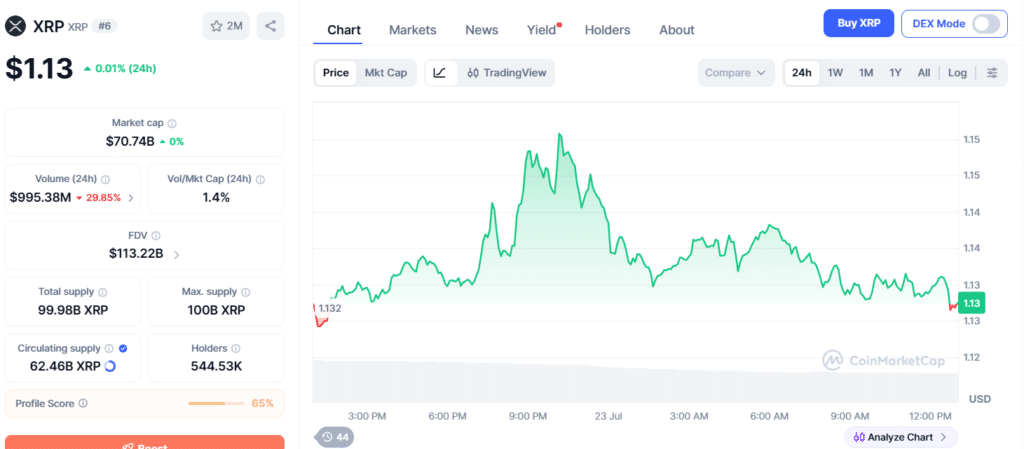
Currently, Ethereum is trading around $1,880.25 after declining 2.1% over the past 24 hours. Its market capitalization stands at $226.91 billion, while daily trading volume is $10.03 billion, up 1.49%. The volume-to-market-cap ratio is 4.41%. Part of the staking demand has also been linked to institutional participation through U.S. Spot ETH ETFs and treasury firms such as Bitmine, adding another layer of support to Ethereum’s staking ecosystem.
What are options traders signaling about ETH’s next move?
Activity in the options market suggests traders continue positioning for higher prices during the coming months. Calls, which represent bullish contracts, have accounted for the largest trading volumes across September and early August expiries. Many of these positions target price levels around $2K and $2.4K, indicating expectations that Ethereum could extend its recovery if supportive conditions remain in place.
However, derivatives positioning does not guarantee future price direction. Call activity may also reflect hedging strategies or broader market positioning rather than outright bullish expectations. Likewise, ETF inflows can reverse, and sustained outflows could make reclaiming the $2K level more difficult.
Why does regulation remain an important factor for Ethereum?
While staking activity has improved, regulatory developments could continue shaping Ethereum’s market direction throughout the third quarter. Market participants remain focused on the progress of the CLARITY Act before the U.S. Congress begins its August recess. If the legislation faces further delays, Ethereum could experience renewed price pressure despite strengthening on-chain metrics.
Progress on unresolved issues, including ethics-related matters and the eventual passage of the legislation, could provide broader support for digital assets and improve overall market sentiment. Even with stronger staking participation, Ethereum remains sensitive to broader liquidity conditions. The current 2.64% staking APR is relatively modest, and weaker macroeconomic conditions or slower regulatory progress could reduce the pace of new staking demand.
How do the latest on-chain metrics compare with previous market conditions?
The latest validator data illustrates a significant reversal from conditions seen during the previous market downturn. Periods of market stress typically lead to rising exit queues as validators seek to withdraw their holdings.

Today, validators can exit immediately, yet very few are choosing to do so, while more than 2.52 million ETH remains queued for staking despite an entry wait of nearly 44 days. This combination reduces the likelihood of large volumes of newly unstaked ETH returning to the market while reflecting continued confidence in Ethereum’s proof-of-stake network.
Conclusion
Ethereum validator exit queue has become one of the clearest indicators of changing sentiment across Ethereum’s staking ecosystem. Zero waiting time for withdrawals, an entry queue exceeding 2.52 million ETH, and total staked holdings reaching 40.9 million ETH all point to sustained participation from long-term validators.
At the same time, continued U.S. Spot ETH ETF inflows, institutional interest, and bullish options positioning provide additional support, although regulatory developments and broader market liquidity remain important variables. Whether Ethereum can build on these improving fundamentals during the third quarter will likely depend on how these on-chain trends align with policy decisions and institutional capital flows in the weeks ahead.
Glossary
Ethereum Validator Exit Queue: The queue for validators waiting to withdraw staked ETH.
ETH Staking: Locking ETH to secure Ethereum and earn rewards.
Active Validator: A validator actively securing the Ethereum network.
Staking APR: The estimated yearly return from staking ETH.
Validator Churn Rate: The limit on validators entering or leaving the network per epoch.
Frequently Asked Questions About Ethereum Exit Validator Queue
Why did the Ethereum validator exit queue drop to zero?
The exit queue dropped to zero because very few validators are choosing to leave staking.
How much ETH is waiting to enter staking?
About 2.53 million ETH is currently waiting to enter Ethereum staking.
How much ETH is currently staked?
Around 40.9 million ETH is currently staked on the Ethereum network.
What ETH price levels are traders watching?
Many options traders are watching the $2,000 and $2,400 price levels.
Why is the CLARITY Act important for Ethereum?
The CLARITY Act could provide clearer crypto rules that may affect Ethereum’s market outlook.