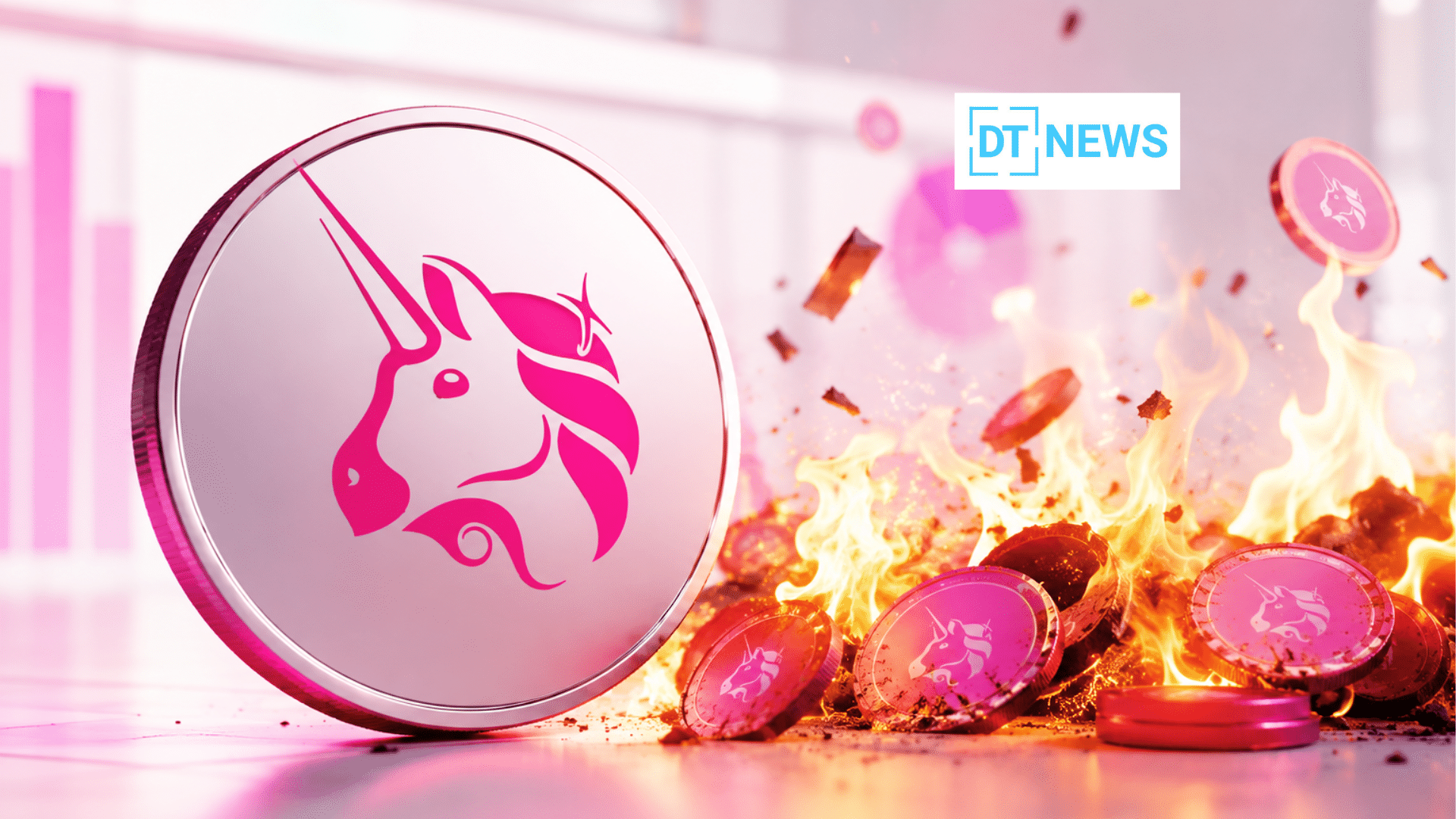

UNI burn proposal is moving through a key stage of Uniswap’s governance process as the community considers a mechanism designed to connect the token’s long-term value with actual protocol activity. The initiative represents a shift in how value could be created within the ecosystem by using protocol-generated fees instead of relying primarily on governance incentives.
- What is the UNI burn proposal and why does it matter?
- How could protocol revenue support the new mechanism?
- Why is Robinhood Chain important to the proposal?
- Can higher adoption alone increase token scarcity?
- What additional context surrounds the governance process?
- What comes next for the proposal?
- Conclusion
- Glossary
- Frequently Asked Questions About UNI Burn Proposal
If approved, the proposal would introduce a sustained burn model that gradually removes UNI from circulation through protocol usage. At press time, community voting showed 74% support for the proposal, indicating broad backing as the governance process continues.
What is the UNI burn proposal and why does it matter?
The UNI burn proposal is designed to establish Uniswap’s first sustained token burn mechanism funded by protocol fees rather than governance rewards alone. The initiative consists of three governance votes covering protocol fee activation on Robinhood Chain, Uniswap v4 deployment and bridge infrastructure across multiple supported chains.
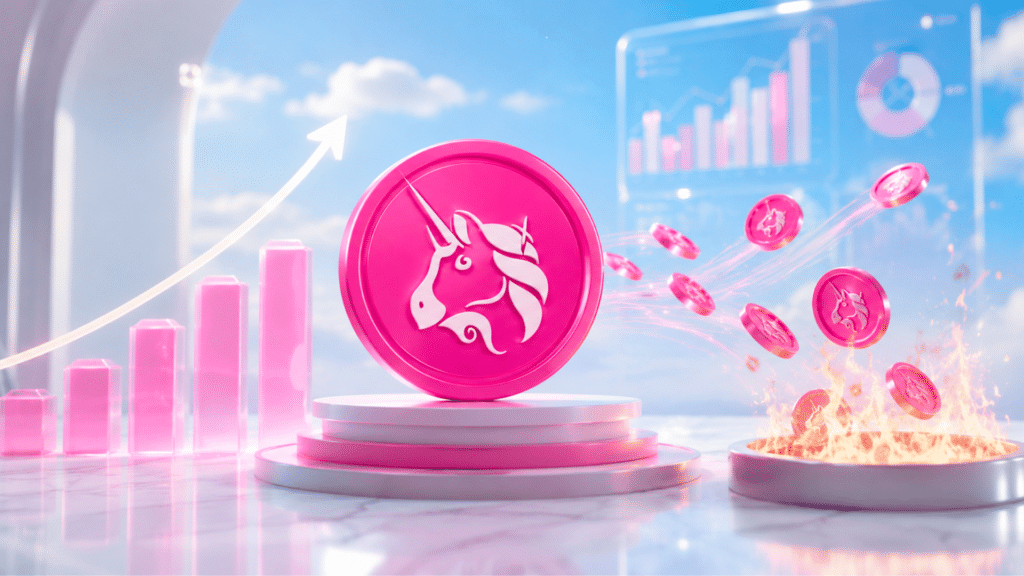
If approved, protocol fees will begin flowing into TokenJar accounts. Users will then be able to acquire enough UNI to burn those tokens completely while collecting their UNI from the TokenJar account. The mechanism aims to connect UNI’s circulating supply with real protocol usage. Instead of value being driven mainly by governance participation, the proposal seeks to tie token economics more closely to trading activity across the network.
How could protocol revenue support the new mechanism?
Protocol revenue plays a central role because higher trading activity generates more fees that could contribute to token burns. Uniswap currently generates approximately $5 million in daily fees, while annual protocol revenue stands at nearly $50 million based on DefiLlama data. As trading volume expands through initiatives such as Robinhood Chain and Uniswap v4, fee generation could also increase.
However, the projected burn rate remains modest when compared with UNI’s total supply. The proposal does not suggest an immediate reduction in supply but instead creates a long-term framework where increasing protocol activity could gradually strengthen token scarcity over time.
Why is Robinhood Chain important to the proposal?
Robinhood Chain has become one of the earliest indicators of whether increased adoption can support the proposed burn model. The network surpassed $1 billion in cumulative swap volume within days of launch, reflecting strong early participation. Rising wallet interactions and growing swap activity also suggest that the ecosystem is attracting users beyond its traditional base.
Even so, the long-term outcome remains uncertain. Sustained success will depend on whether users continue trading on the network after the initial momentum. If daily transactions and liquidity continue expanding, Robinhood Chain could become a more significant contributor to Uniswap’s long-term protocol growth and fee generation.
Can higher adoption alone increase token scarcity?
Not necessarily. The proposal links protocol usage with token burns, but its effectiveness depends on consistent network activity rather than governance approval alone. Every increase in trading activity would generate additional protocol fees, creating more opportunities to remove UNI from circulation through the proposed mechanism.
At the same time, the relatively modest burn rate means any impact on supply is expected to develop gradually instead of producing immediate changes. If adoption continues to grow across supported networks, UNI’s long-term value may increasingly reflect organic protocol demand rather than governance incentives. That outcome, however, remains dependent on sustained user engagement.
What additional context surrounds the governance process?
The governance proposal also reflects Uniswap’s broader approach to community-led decision-making, where major protocol changes require approval from UNI holders before implementation. Supporting developments indicate that the proposal builds on existing efforts to expand fee-funded burns within the ecosystem.
At the same time, some industry participants have cautioned that applying protocol fees more broadly could influence liquidity provider participation during the early stages of adoption. Those discussions remain separate from the proposal itself, while the governance process will determine whether the mechanism moves forward.
What comes next for the proposal?
The governance process will determine whether the proposal progresses from community support to implementation. If approved, protocol fees collected through the proposed framework would begin funding ongoing UNI burns using the TokenJar mechanism.
While this could create a lasting connection between protocol usage and token supply, the proposal does not guarantee immediate changes to UNI’s scarcity because the projected burn rate remains relatively modest.
Conclusion
UNI burn proposal has received 74% support from the community during voting, marking an important step toward introducing Uniswap’s first sustained fee-funded burn mechanism. The proposal seeks to connect protocol activity with long-term token value by directing protocol fees toward ongoing UNI burns through TokenJar.
Its long-term impact will depend less on governance approval and more on sustained network adoption. Robinhood Chain’s early growth offers an encouraging signal, but continued trading activity, liquidity and user retention will determine whether the mechanism meaningfully strengthens token scarcity over time.
Glossary
UNI Burn Proposal: A governance proposal for ongoing UNI token burns.
Protocol Fees: Fees generated from transactions on Uniswap.
Uniswap v4: The latest version of the Uniswap protocol.
Robinhood Chain: A blockchain supporting Uniswap ecosystem growth.
Swap Volume: The total value of tokens traded on a network.
Frequently Asked Questions About UNI Burn Proposal
How much support has the UNI burn proposal received?
The proposal has received 74% community support during voting so far.
How will UNI tokens be burned?
If approved, protocol fees will be used through TokenJar to buy and burn UNI tokens.
Why is Robinhood Chain part of the proposal?
Robinhood Chain could help generate more trading activity and protocol fees for token burns.
Will the proposal reduce UNI supply immediately?
No. The proposal is designed to reduce UNI supply gradually over time.
Does the proposal guarantee a higher UNI price?
No. UNI’s price will still depend on market demand and network activity.