
This article was first published on Deythere.
- Mining Stocks Continue To Trade Under Pressure
- Bitcoin Miner Reserves Keep On Rising
- Miners Still Own Over Five Percent Of All Bitcoin
- Why Miner Conviction Matters When It Comes To Bitcoin’s Next Move
- Conclusion
- Glossary
- Frequently Asked Questions About Bitcoin Miner Reserves
- Why are Bitcoin miners holding on rather than selling off?
- How much Bitcoin are miners currently holding on to?
- What does an MPI reading of -1.1 actually mean?
- Why are mining stocks falling while miners are accumulating more Bitcoin?
- References
While Bitcoin price charts are still worth a look, a bigger signal might be coming from somewhere else which is the wallets of the companies that keep the network running.
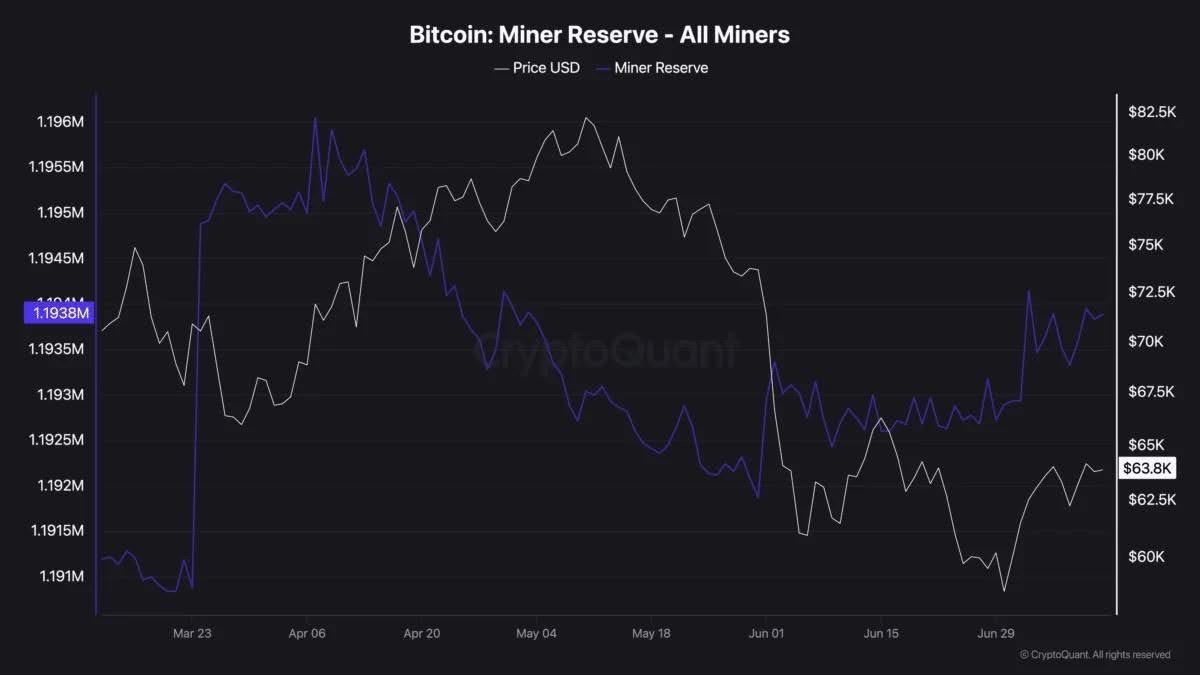
Despite quite a rough month for public mining companies and repeated failures by Bitcoin to break the $64,000 level, Bitcoin miner reserves hold steady as miners still refuse to sell. Their collective holdings have climbed to 1.1938 million BTC, one of the highest levels recorded since early May.
Mining stocks have taken a big hit, production costs are still high, and profit margins have been squeezed tighter than ever since 2024 halving. Yet, the miners are just holding onto their coins and not selling them into the market.
Mining Stocks Continue To Trade Under Pressure
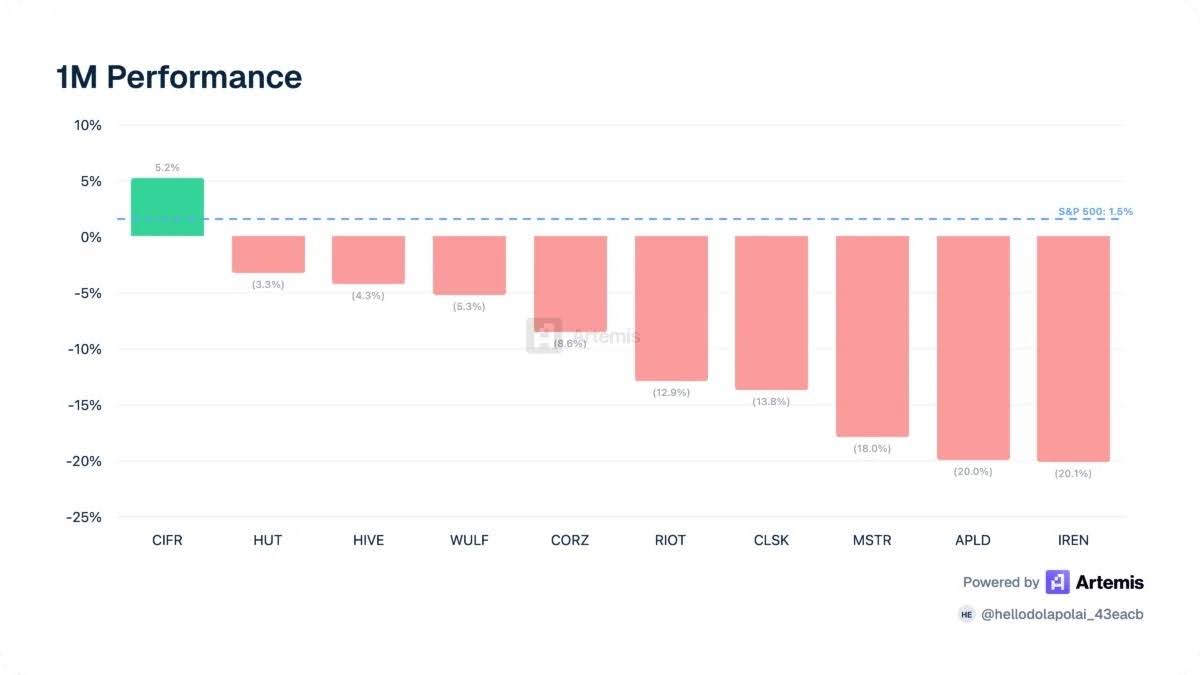
Public Bitcoin mining companies have been struggling big time over the past month. Data from the Artemis Theme Tracker showed the eleven major mining stocks with a combined valuation of about $102.9 billion, have dropped by around 10%.
The biggest fallers were Iris Energy and Applied Digital, which both tanked by 20.1% and 20% respectively.
Meanwhile Hut 8 dipped by 3.3% and Hive Digital Technologies slipped by 4.3%.
Only one of them, Cipher Mining, managed to stay in the green, up by 5.2% and doing better than the S&P 500’s 1.5% monthly rise.
The weakness doesn’t stop at Bitcoin prices either, investors are getting cautious about the sector’s plans to transition to AI and high-performance computing infrastructure, which requires a lot of heavy capital spending and takes a long time to develop.
Bitcoin Miner Reserves Keep On Rising
Normally, when mining companies are under a lot of pressure, they would start to sell. However, that has currently not happened.
The Bitcoin Miners’ Position Index (MPI), which compares miner outflows to their one-year average, is at -1.1 right now. Readings below average usually indicate that miners are holding rather than selling their coins.
At the same time, the Miner Supply Ratio has been slowly climbing since July 8. It is currently at 0.05951, which is telling that miners are increasing their exposure to Bitcoin and not reducing it.
The increase in Bitcoin miner reserves suggests that the operators are confident that they’re missing out on the upside if they sell now.
If that trend keeps going, it removes one of the largest natural sources of sell pressure from the market and improves Bitcoin’s supply dynamics.
Miner selling has amplified downturns in past times, while miner accumulation has often coincided with stronger market conditions.
Miners Still Own Over Five Percent Of All Bitcoin
The importance of miner behavior comes down to the maths. Bitcoin miners currently control around 1.1933 million BTC, which is just over 5% of the circulating supply.
If that group were to all of a sudden start selling, it would put a lot of pressure on prices and could even start a market slump.
Instead, their holdings have kept on rising to 1.1938 million BTC, even though prices have been stagnant and mining equities have been struggling.
Those reserves are now sitting near their highest levels since the early days of May.
This growing pile of coins implies that miners are opting to build up their balance sheet strength instead of relying on short term gains, even though operating costs are still quite high across the whole industry.
Research published this year has also shown how tied mining profitability is to energy prices and the economics of hashing out, making sustained accumulation even more noteworthy given the current conditions.
Why Miner Conviction Matters When It Comes To Bitcoin’s Next Move
Bitcoin has now failed to reclaim the $64,000 level for the third time in a row and each subsequent attempt has seen its momentum weakened.
Without any fresh demand to help things along, another breakout attempt is likely to struggle.
Miner behavior may therefore become one of the most important indicators that the market will hold out for over the coming weeks.
Unlike day traders, miners are right at the sharp end of network economics and production costs, so their decisions tend to reflect long term expectations not the current mood of the market.
Interestingly, while mining stocks have struggled, a number of operators are expanding into AI infrastructure and data centers as a way to generate more revenue. Hut 8, Hive Digital and Cipher Mining are examples, as they are betting on demand for high-performance computing alongside their Bitcoin mining operations.
But for now, the strongest signal they are sending is with their wallets.
Conclusion
Bitcoin miner reserves still represent one of the strongest bullish indicators supporting the market structure for Bitcoin. Even as mining stocks decline by around 10% and Bitcoin repeatedly fails to reclaim the $64,000 mark, miners continue to increase their holdings to 1.1938 million BTC.
With the Miners Position Index sitting at -1.1 and the Miner Supply Ratio getting higher since July 8, one of Bitcoin’s biggest holder groups appears determined not to sell.
As long as those reserves stay off of exchanges, miners may continue providing an important safety net for the market.
Glossary
Bitcoin Miner Reserves: This is the total amount of Bitcoin that is being held by mining companies and mining wallets.
Miners Position Index (MPI): This is a metric that compares miner outflows with historical averages to measure selling pressure.
Miner Supply Ratio: A metric that shows the percentage of Bitcoin that is controlled by miners.
Hashprice: It is the revenue that miners expect to get per unit of computational power.
Hash Rate: It is the total amount of computing power that is being used to secure the Bitcoin network.
Frequently Asked Questions About Bitcoin Miner Reserves
Why are Bitcoin miners holding on rather than selling off?
The latest data shows that Bitcoin miner reserves are steady and miners remain quite confident in Bitcoin’s long term prospects despite the current weakness in both prices and mining stocks.
How much Bitcoin are miners currently holding on to?
Miners as a group currently control around 1.1938 million BTC, which is just over 5% of the total supply of Bitcoin.
What does an MPI reading of -1.1 actually mean?
A negative reading on the MPI generally signals that miners are holding on to their coins rather than selling them off to exchanges.
Why are mining stocks falling while miners are accumulating more Bitcoin?
Investors remain concerned about the high operating costs and the capital needed for miners to get into AI and data center businesses.