



Bitcoin miners are once again shaping market direction as Bitcoin struggles to secure momentum above the $80,000 zone. What looked like a healthy breakout quickly turned into a tense battle between aggressive sellers and determined buyers. The sudden return of dormant coins has added even more uncertainty to the market.
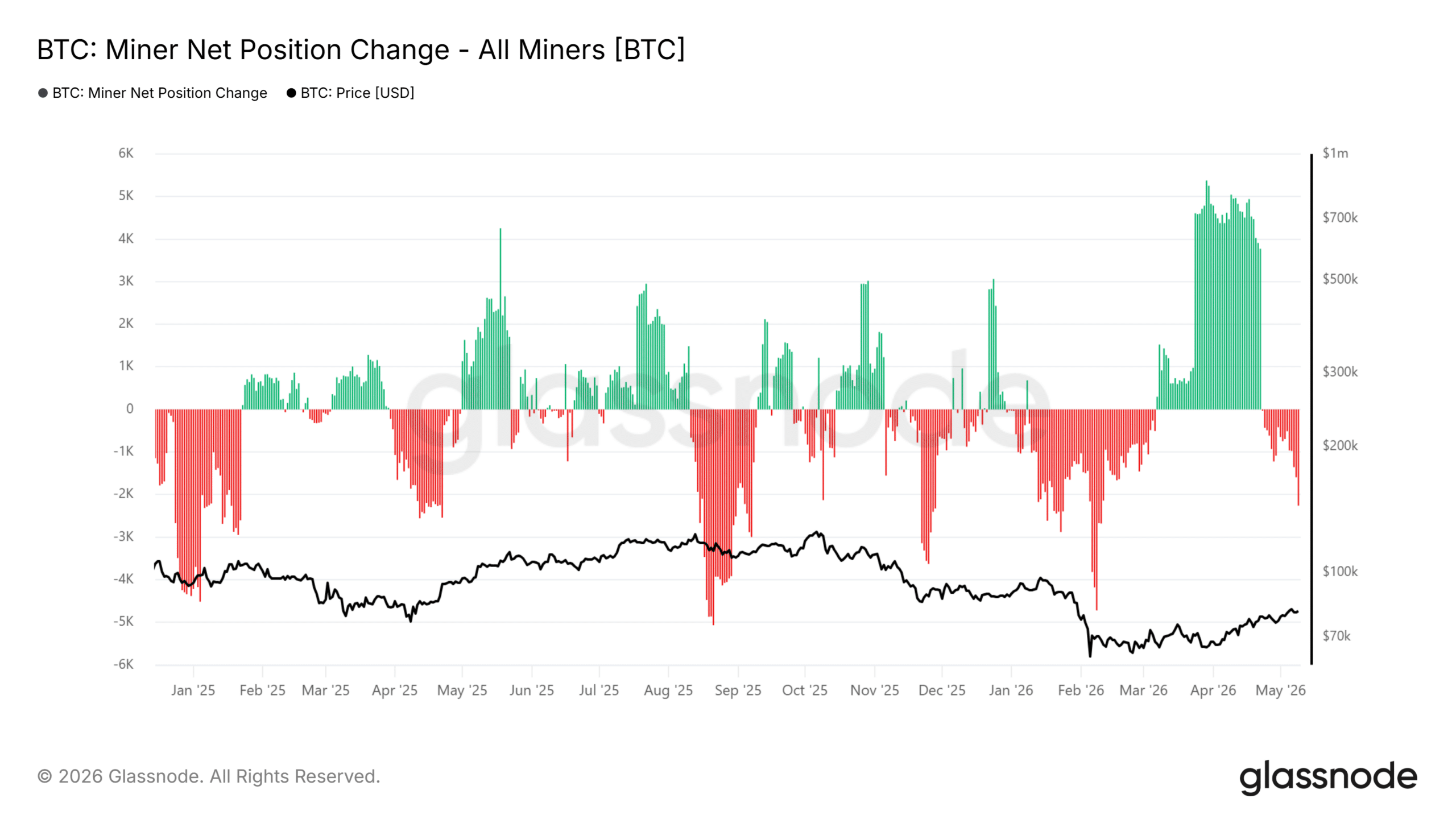
According to the source, public mining firms distributed nearly 32,000 BTC during Q1 2026 alone. That amount exceeded total Bitcoin liquidations recorded throughout all of 2025, highlighting how aggressively Bitcoin miners have started selling after the halving cycle. At the same time, rising Bitcoin supply from older wallets increased pressure across trading markets.
Despite the growing sell-side activity, Bitcoin continued hovering between $80,500 and $81,000. That resilience signaled that strong demand still exists beneath the surface, even while traders remain cautious about the next move.
Bitcoin Miners Struggle With Post-Halving Economics
The latest halving event sharply reduced mining rewards, leaving many Bitcoin miners operating under tighter financial conditions. Recent on-chain market data showed Hashprice remained between $33 and $40 per petahash daily. For older mining machines, those levels sit dangerously close to breakeven territory.
As profits weakened, major firms including MARA Holdings, Riot Platforms, CleanSpark, and Bitdeer Technologies Group increasingly converted reserves into cash.
That shift matters because Bitcoin miners often influence short-term market sentiment. Their selling introduced fresh Bitcoin supply into circulation at a time when Bitcoin approached a critical resistance zone. Analysts noted that continued miner distributions near local highs suggest operators still prioritize liquidity preservation over long-term accumulation.
Dormant Wallets Inject Fear Into The Market
The market grew more nervous after several dormant wallets suddenly became active. One 14-year-old wallet distributed nearly 11,300 BTC worth roughly $750 million, while another accumulated close to 7,000 BTC valued near $470 million.
According to recent on-chain analytics, Coin Days Destroyed spiked sharply after those transfers, signaling that older Bitcoin holders had started repositioning dormant assets. The metric measures old coins returning to circulation after years of inactivity.
That movement increased active Bitcoin supply and triggered psychological pressure across the market. Traders often interpret dormant whale activity as informed selling because long-term holders usually move funds during overheated conditions.
Long-Term Holders (LTH) also added to the pressure. Analysts viewed the aggressive LTH distributions as an important signal because institutional traders closely monitor veteran wallet activity during major price rallies.
Bitcoin Miners And Long-Term Holders Test The $80K Zone
The $80,000 level has now become a major battlefield for both bulls and bears. While Bitcoin miners continue liquidating reserves, buyers still absorb large amounts of distributed coins without allowing a sharp breakdown.
Exchange inflows briefly rose by several thousand BTC during selective trading sessions. However, exchange reserves still remain near multi-year lows between 2.1 million and 2.7 million BTC. That detail matters because lower reserves often indicate investors prefer holding assets privately rather than preparing for mass selling.
At the same time, rising Bitcoin supply continues testing trader confidence. Markets increasingly view whale transfers as signs of potential volatility ahead. Fear surrounding informed selling has intensified psychological resistance around the $80K region.
Still, Bitcoin’s stability above key support suggests spot demand remains healthy. Many analysts believe the market continues absorbing available Bitcoin supply surprisingly well despite relentless pressure from Bitcoin miners and older holders.

Conclusion
The latest market structure reveals a growing clash between accumulation and distribution. Bitcoin miners are selling at levels not seen since before the halving, while dormant whales continue introducing additional Bitcoin supply into circulation. Together, those forces have created one of Bitcoin’s most important liquidity battles in recent months.
Yet the market still holds above $80,000. That resilience suggests buyers continue absorbing pressure from Bitcoin miners, Long-Term Holders, and dormant wallets. If demand remains strong, Bitcoin could stabilize despite rising volatility. However, continued increases in Bitcoin supply may keep traders on edge as the market searches for its next direction.
Glossary Of Key Terms
Bitcoin Miners: Individuals or companies that validate Bitcoin transactions using specialized computing machines.
Bitcoin Supply: The amount of Bitcoin currently circulating or entering active markets.
Coin Days Destroyed: An on-chain metric showing old Bitcoin becoming active after long inactivity.
Long-Term Holders (LTH): Investors who hold Bitcoin for extended periods before selling or transferring coins.
Hashprice: A metric measuring daily miner revenue earned from computing power.
FAQs About Bitcoin Miners
Why are Bitcoin miners selling more BTC?
Lower profits after the halving forced many miners to sell reserves for operational stability.
Why does dormant Bitcoin supply matter?
Old coins returning to circulation can increase volatility and market uncertainty.
What do low exchange reserves indicate?
Low reserves often suggest investors still prefer long-term holding over immediate selling.
Why is the $80K level important?
The zone acts as a major psychological and liquidity level for traders and institutions.