
This article was first published on Deythere.
- Polymarket is Bringing Private Markets to the Masses
- OpenAI, SpaceX, and the Other AI Firms Will Drive Demand
- Why the Partnership With Nasdaq Matters
- Prediction Markets Are Growing But Scrutiny Is Rising Too
- Conclusion
- Glossary
- Frequently Asked Questions About Prediction Markets
- What are Polymarket Prediction Markets?
- What is different about Polymarket’s latest launch?
- Can users buy private company shares through Polymarket?
- Which companies might show up in these markets?
- References
Polymarket is steadily pushing prediction markets further into mainstream finance after launching markets tied to private companies using Nasdaq Private Market data.
The deal lets everyday users bet on private company valuations, IPO timing, and secondary market activity through blockchain-based prediction contracts. It is the first major attempt to connect private equity data with the crypto-native prediction markets.
Prediction market platforms are evolving beyond politics, sports, and crypto events into the financial space.
Polymarket is Bringing Private Markets to the Masses
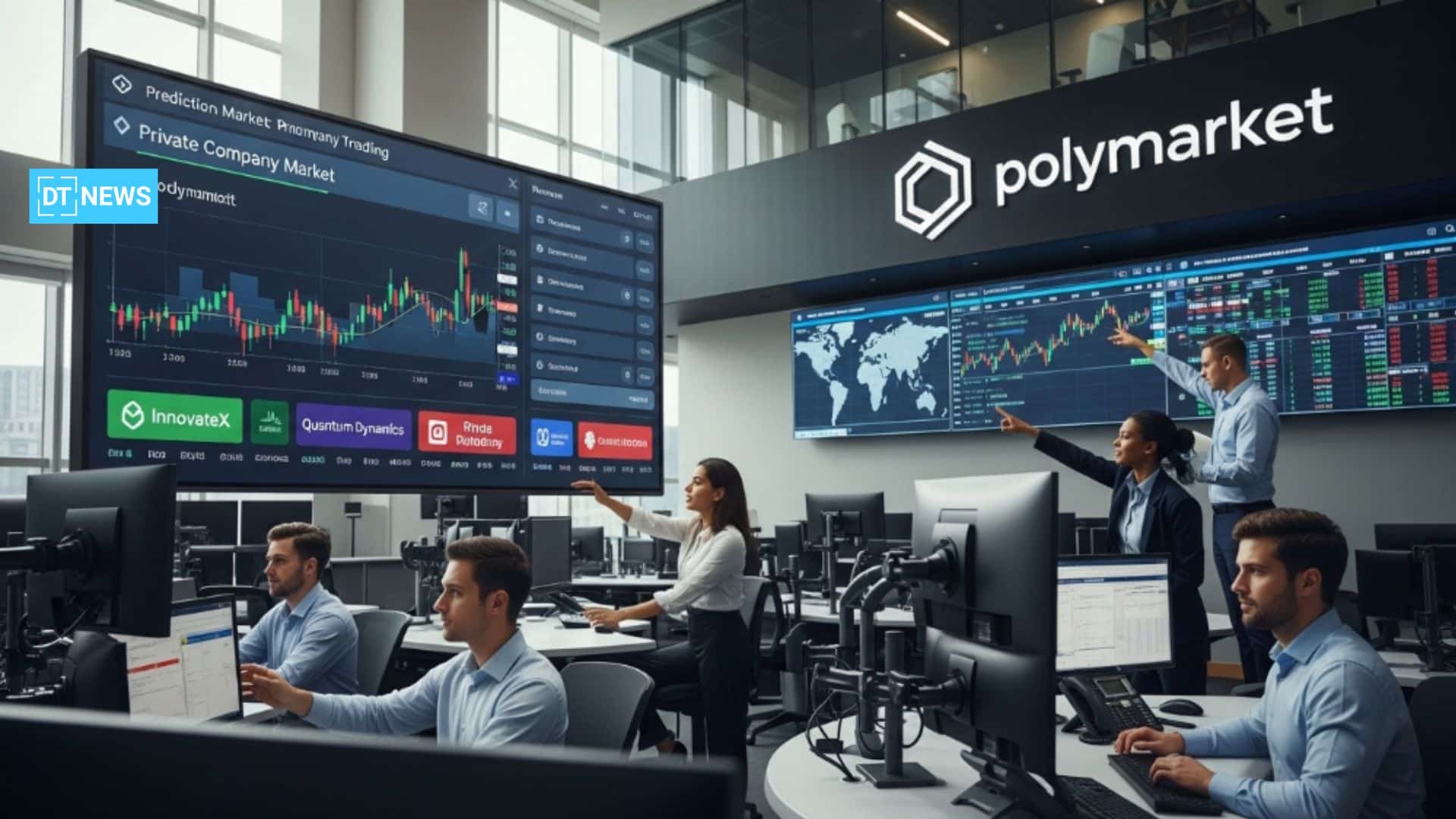
The new function is powered by an exclusive partnership with Nasdaq Private Market, which will provide official resolution data for the contracts.
Now users can trade markets tied to milestones involving private companies, including:
- What price a private company will reach
- When exactly an IPO is going to happen
- What’s going to happen on the secondary share market
- How a company is going to fare on the funding front
Private company markets have always been difficult for retail investors to access because most information and all the liquidity stays concentrated among venture capital firms, big institutional investors and accredited buyers.
Polymarket is trying to change that by turning private market expectations into actual tradable prediction contracts.
According to the company, nearly 1600 of the world’s ‘unicorn’ startups now account for more than $5 trillion in combined value. This recent growth has really piqued the public’s interest in companies staying private for longer before pursuing IPOs.
OpenAI, SpaceX, and the Other AI Firms Will Drive Demand
Reports from Financial Times state that some of the first markets involve companies such as OpenAI, SpaceX, Anthropic, and Anduril.
Traders can bet on future milestones rather than buying actual shares.
For example, users can put their money on whether OpenAI reaches a $1 trillion valuation by a certain date or whether another major startup files for an IPO within a set timeframe.
The difference here is that the contracts are prediction instruments, not ownership stakes.
Polymarket CEO Shayne Coplan described the launch as a way to open private market forecasting up to a much wider audience, and at the same time creating new pricing signals for institutional traders.
The growing interest in AI companies is likely to become a major driver behind trading activity in the new markets.
There’s been a huge surge in interest around late-stage AI startups over the past year as companies like OpenAI, Anthropic, and xAI have picked up massive private valuations and attracted tons of institutional investment.
Why the Partnership With Nasdaq Matters
The Nasdaq Private Market partnership is a big deal. Nasdaq Private Market is one of the biggest providers of liquidity and transaction infrastructure for private company shares. Its involvement brings a real level of credibility to the rollout.
Its involvement means Polymarket gets access to all the verified valuation and transaction data it needs to resolve contracts accurately.
This matters a lot because prediction markets are heavily reliant on trusted settlement systems. Without a reliable data provider, disputes over contract outcomes could undermine confidence in the markets themselves.
Several analysts are now starting to see Prediction Markets as a possible alternative to traditional methods of price discovery because the prices of contracts really show what people expect to happen in real time.
Polymarket said that the new products could give institutional traders another tool to help them get a sense of the mood of the private market.

Prediction Markets Are Growing But Scrutiny Is Rising Too
Polymarket really gained traction during the 2024 and 2025 US election cycles, while other areas like crypto, sports and macroeconomics also attracted huge amounts of trading volume.
At the same time, Regulators are paying a lot more attention to the sector.
Reuters reported recently that the US Commodity Futures Trading Commission filed a lawsuit against Minnesota after the state attempted to ban prediction markets entirely.
And meanwhile, worries about insider trading and market manipulation are starting to grow. Cases where bets were suspiciously timed and linked to private information in relation to geopolitical events were recently reported.
Prediction Markets also continue facing criticism especially now that these platforms are becoming more accessible to everyday traders.
Despite all that, institutional interest in the sector is still growing. Competitor platform Kalshi seemingly reached a valuation of around $22 billion, and Polymarket itself has continued to push to get more integrated with the financial markets.
Conclusion
The expansion of Polymarket Prediction Markets into private companies is a big step forward for blockchain-based forecasting platforms.
By teaming up with Nasdaq Private Market data and crypto-native prediction contracts, Polymarket is opening up an area of finance that has been limited to institutional investors and venture capital firms up until now.
The launch could expand retail engagement around private company valuations, IPO speculation, and startup sentiment.
However, the move increases the regulatory, legal and ethical scrutiny of Prediction Markets as they get more and more integrated with mainstream finance.
Glossary
Prediction Market: A market where traders bet on what’s going to happen.
Private Equity: Money invested in companies that aren’t public.
IPO: When a private company becomes publicly traded for the first time.
Unicorn: A startup worth more than 1 billion dollars.
Frequently Asked Questions About Prediction Markets
What are Polymarket Prediction Markets?
They’re blockchain-based contracts that allow users to bet on the chances of future events.
What is different about Polymarket’s latest launch?
Polymarket now offers Prediction Markets tied to private companies using Nasdaq Private Market data.
Can users buy private company shares through Polymarket?
No, what users are trading is prediction contracts not actual shares.
Which companies might show up in these markets?
Reports mentioned companies like OpenAI, SpaceX, Anthropic and Anduril.