

Ethereum is facing a tougher market test after its latest pullback pushed the asset close to $2,100, placing fresh attention on ETF outflows, exchange deposits, futures selling, and wider macro pressure. The move has not erased the long-term case for Ethereum price, but it has clearly shifted short-term sentiment. Traders are now watching whether buyers can defend the $2,000 area, because that level may decide whether this decline remains a healthy reset or turns into a deeper correction.
- Ethereum Price Pullback Puts $2,000 Support Back in Focus
- ETF Outflows Add Pressure to Ethereum Demand
- Binance Inflows Raise Selling Concerns
- Futures Selling Shows Traders Are Playing Defense
- Oil Prices and Macro Risk Hurt Crypto Sentiment
- Long-Term Ethereum Case Still Has Support
- Key Indicators Traders Should Watch
- Conclusion
- Frequently Asked Questions
- Why is Ethereum falling?
- Is $2,000 important for Ethereum?
- Do ETF outflows hurt Ethereum?
- Can Ethereum recover from this pullback?
- Glossary of Key Terms
Ethereum Price Pullback Puts $2,000 Support Back in Focus
The Ethereum price has slipped nearly 10% over the past week, giving back earlier May gains and bringing the $2,000 support zone back into focus. This is not just a normal chart wobble. The decline came at a time when several pressure points hit the market together, from rising oil prices to weak ETF flows and stronger sell-side activity in derivatives.
For crypto traders, timing matters. When risk appetite fades across global markets, large digital assets often feel the pressure first. Ethereum remains one of the most liquid crypto assets, which means it can attract both long-term accumulation and quick selling when investors move to reduce exposure.
ETF Outflows Add Pressure to Ethereum Demand
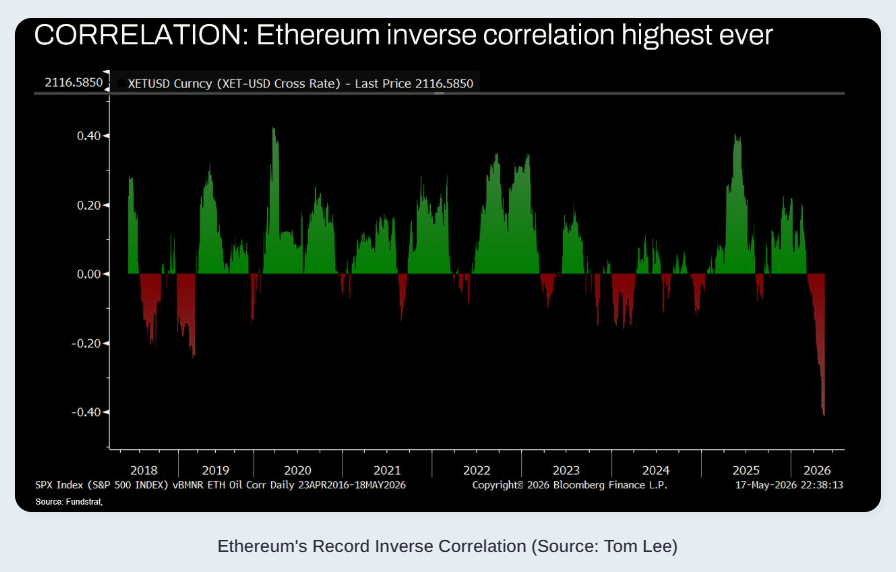
Spot Ethereum ETFs have become an important sentiment gauge because they show whether regulated investment products are attracting or losing capital. Recent data showed several straight trading days of net outflows from US spot Ethereum ETFs, with cumulative redemptions reportedly reaching hundreds of millions of dollars. Global Ethereum investment products also posted $249 million in weekly outflows, the largest weekly exit since late January.
This matters because ETF flows can influence market confidence beyond the funds themselves. When inflows rise, they often signal stronger institutional appetite. When outflows build, traders usually read it as caution, especially when the spot market is already weak.
The Ethereum price is therefore not reacting to only one chart signal. It is responding to a wider demand question. Are institutions stepping back for a short period, or is capital rotating away from ETH into other assets? That is the debate now shaping near-term sentiment.
Binance Inflows Raise Selling Concerns
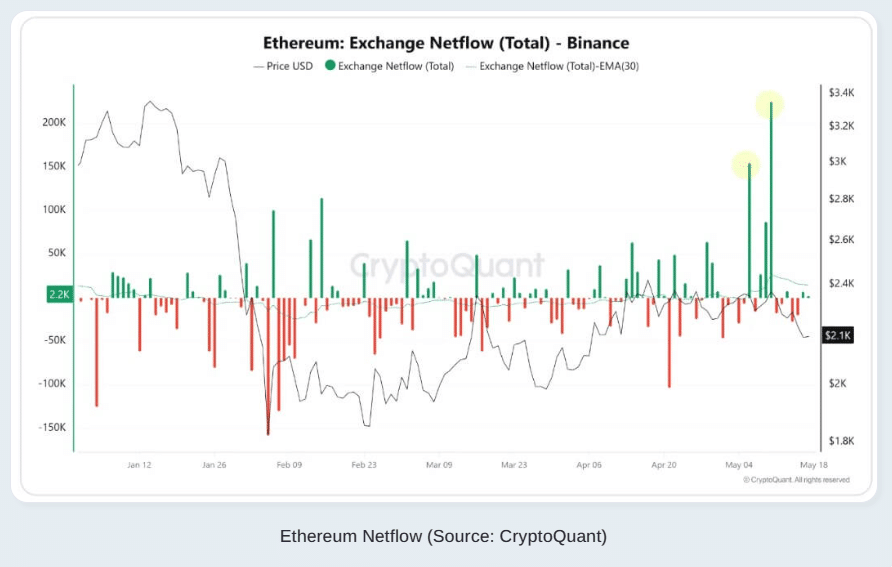
Exchange inflows are another key indicator as more than 225,000 ETH reportedly moved into Binance in a single day while ETH traded around $2,100, with the seven-day netflow average also rising sharply. Large inflows do not always mean immediate selling, but they often increase concern because assets sent to exchanges are easier to sell.
For the Ethereum price, this creates a simple but important signal. If deposits keep rising while demand stays weak, sellers may have more room to pressure the market. If inflows cool and withdrawals increase, it may suggest holders are moving back toward storage rather than preparing to sell. Exchange flow is the market’s supply window. Right now, that window looks more crowded than bulls would like.
Futures Selling Shows Traders Are Playing Defense
The derivatives market has also turned defensive as reports showed aggressive taker sell volume on Binance futures as ETH hovered near $2,100, reflecting heavier market selling from leveraged traders. This kind of activity can speed up price moves because futures markets often react faster than spot markets.
The Ethereum price tends to struggle when spot selling and futures pressure appear together. Futures traders can amplify weakness through short positions, forced liquidations, and fast momentum trades. That does not mean a breakdown is guaranteed, but it does mean buyers may need stronger volume to regain control.
Oil Prices and Macro Risk Hurt Crypto Sentiment
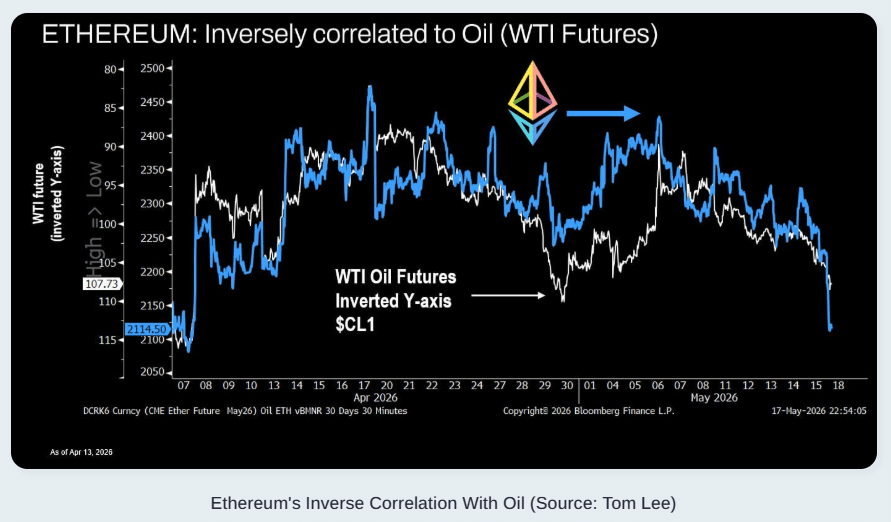
Rising oil prices have added another layer of stress as higher energy prices can feed inflation fears, pressure consumer sentiment, and make investors more cautious toward risk assets. Crypto does not trade in a vacuum, even if it sometimes acts like its own world.
When oil rises because of geopolitical risk, traders often move away from volatile assets. That shift can hit Bitcoin, Ethereum, and smaller altcoins at the same time. In this case, the Ethereum price is being tested by both crypto-native pressure and outside market stress.
Long-Term Ethereum Case Still Has Support
Despite the pullback, some long-term investors still see Ethereum as a core infrastructure asset. The argument centers on tokenization, stablecoins, decentralized finance, and future AI-linked blockchain use cases. These themes are not short-term price guarantees, but they explain why some market participants may view ETH below $2,200 as an accumulation zone.
Still, conviction needs confirmation. The Ethereum price must stabilize first. A strong recovery would likely require ETF outflows to slow, exchange inflows to ease, and futures selling to fade. Without those changes, any bounce may remain fragile.
Key Indicators Traders Should Watch
The first indicator is ETF flow. Continued outflows may keep pressure on ETH, while renewed inflows could improve confidence.
The second is exchange netflow. Rising ETH deposits suggest possible selling pressure, while falling deposits may calm the market.
The third is futures taker volume. Heavy sell volume shows aggressive short-term pressure.
The fourth is the $2,000 support zone. If the Ethereum price holds above it, buyers may attempt a recovery. If it breaks clearly below it, the market could retest lower demand areas.
Conclusion
Ethereum’s latest decline is not based on one weak signal as it reflects a mix of ETF outflows, exchange inflows, derivatives selling, and macro risk from rising oil prices. That combination has made the $2,000 zone a key battleground for bulls and bears.
The bigger picture has not disappeared. Ethereum still has strong long-term narratives tied to tokenization, DeFi, stablecoins, and blockchain infrastructure. But for now, the market wants proof. Until selling pressure cools and demand returns, the Ethereum price may remain vulnerable to sharp swings.
Frequently Asked Questions
Why is Ethereum falling?
Ethereum is falling because ETF outflows, higher exchange inflows, futures selling, and weaker risk appetite are pressuring demand at the same time.
Is $2,000 important for Ethereum?
Yes. The $2,000 area is a key psychological and technical support zone. If buyers defend it, sentiment may improve.
Do ETF outflows hurt Ethereum?
ETF outflows can hurt sentiment because they suggest regulated investment demand is weakening, especially when the spot market is already under pressure.
Can Ethereum recover from this pullback?
Ethereum can recover if ETF flows improve, exchange selling pressure falls, and wider market risk sentiment becomes more stable.
Glossary of Key Terms
ETF Outflows
ETF outflows happen when investors pull money from exchange-traded funds, which can signal weaker institutional demand.
Exchange Netflow
Exchange netflow measures whether more crypto is moving into or out of trading platforms. Higher inflows can suggest possible selling pressure.
Futures Selling
Futures selling means traders are using derivatives contracts to bet on lower prices or reduce exposure.
Support Zone
A support zone is a price area where buyers often step in and try to stop further declines.
Sources
Disclaimer
This article is for informational purposes only and does not provide financial advice. Cryptocurrency markets are volatile, and readers should conduct independent research before making investment decisions.