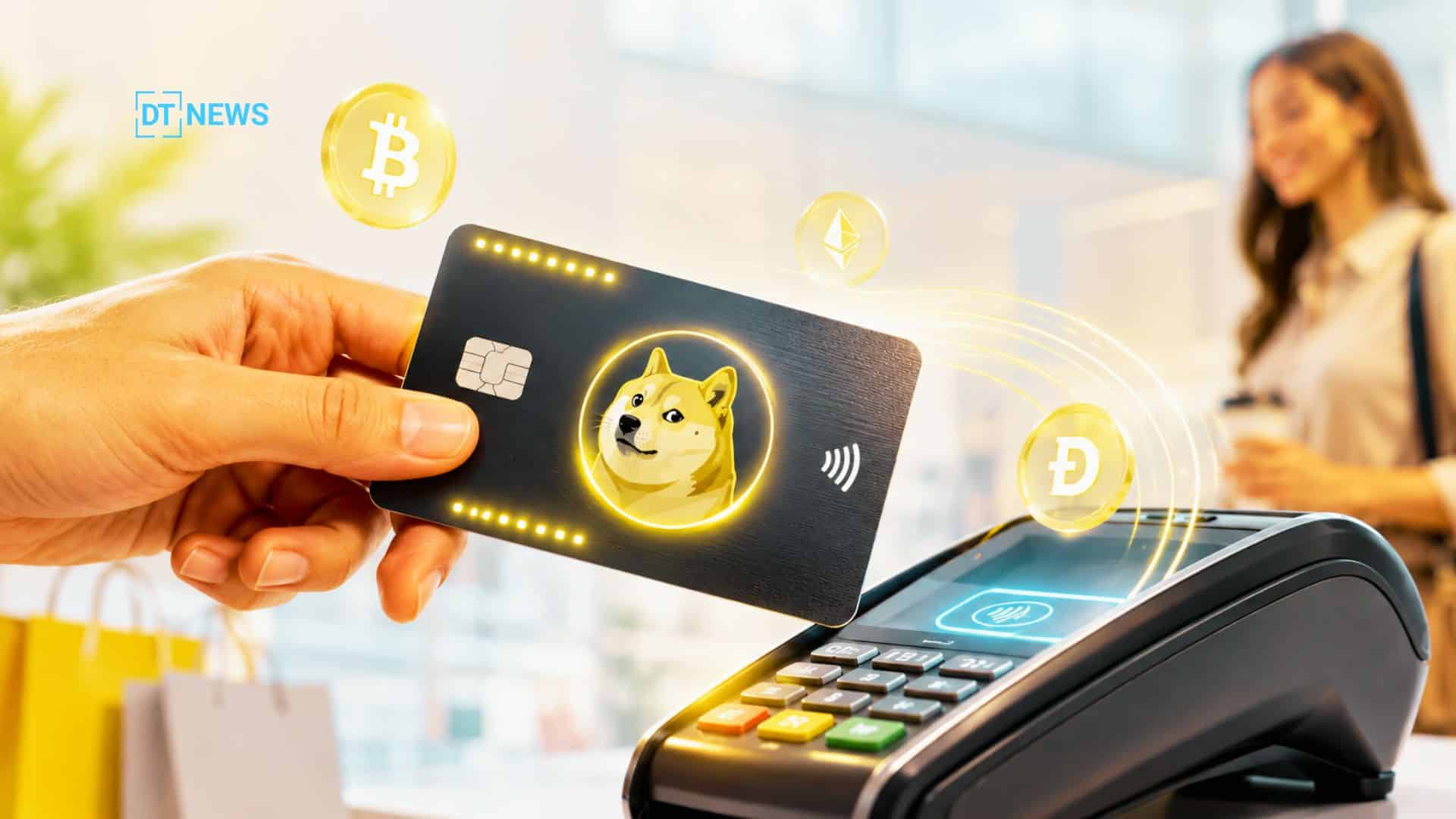

The Revolut crypto card is giving crypto payments a fresh push toward mainstream finance as digital assets slowly move beyond speculation and into daily consumer spending. For years, crypto holders treated Bitcoin and Dogecoin like long-term investments. Now, fintech firms are trying to turn those assets into practical payment tools people can actually use at checkout counters.
According to the source, the Revolut crypto card launched on May 18 as the company’s first physical crypto-linked debit card. The Dogecoin-themed card includes an LED display that lights up during transactions and works anywhere Visa and Mastercard are accepted. The initial rollout covers the United Kingdom and the European Economic Area, placing the product in front of millions of existing users already familiar with crypto payments.
The Revolut Crypto Card Turns Meme Culture Into Consumer Finance
The Revolut crypto card blends branding and utility in a way rarely seen in fintech products. Its Dogecoin-inspired design taps into internet culture, while the glowing LED payment feature gives the card a premium and futuristic feel during purchases.
Still, the real innovation happens behind the scenes. The card connects directly to users’ crypto balances and converts digital assets into fiat currency in real time. Merchants receive traditional payment settlement without touching cryptocurrency themselves. That detail matters because businesses avoid technical blockchain integration while customers still enjoy crypto payments.
More importantly, the system removes one of crypto’s biggest friction points. Users no longer need to manually sell Bitcoin or Dogecoin before buying groceries, coffee, or retail goods. Revolut handles the conversion automatically at checkout.
Recent industry research suggests that simpler payment infrastructure remains one of the biggest forces driving blockchain adoption worldwide.
Why Crypto Payments Are Suddenly Becoming More Practical
The Revolut crypto card arrives during a year when consumer appetite for crypto payments has grown steadily. Regulatory clarity across parts of Europe and the UK has encouraged fintech firms to compete more aggressively in blockchain-based financial services.
Unlike many crypto-native card providers, Revolut already operates at global scale. The company reportedly serves more than 70 million users worldwide, giving it a distribution advantage that smaller crypto firms struggled to achieve.
That distinction changes the adoption conversation completely. Several crypto payment cards launched during previous years, but most lacked the user reach needed for mainstream traction. Revolut already owns a massive fintech ecosystem, making crypto payments easier to place into ordinary financial routines.
Recent fintech research suggests that consumers increasingly favor payment systems that feel simple, fast, and familiar in daily use. Revolut appears to be following that same strategy with its growing crypto payments ecosystem.

Revolut Expands Beyond Crypto Into Full Financial Services
The Revolut crypto card also arrives alongside a much broader regulatory expansion. In March 2026, Revolut secured a full UK banking license, strengthening its position inside traditional finance.
Days before the card launch, the company also received Financial Conduct Authority approval for leveraged investment products, discretionary portfolio management, and advisory services. Those permissions show Revolut evolving beyond a simple fintech app into a larger financial services institution.
At the same time, Revolut filed a US banking charter application earlier this year. That move could eventually bring crypto payments into one of the world’s largest consumer markets, increasing competition across global fintech and payment sectors.
The company also introduced strict transaction controls. Individual purchases can reach £100,000, while users may perform up to 100 exchanges within 24 hours.
Crypto Payments Still Face One Important Barrier
Despite growing excitement, crypto payments still face practical obstacles. Tax reporting remains the largest challenge for frequent users. In many jurisdictions, spending cryptocurrency counts as a taxable event, meaning users may need detailed records for every transaction.
Price volatility also creates uncertainty during purchases. A digital asset can change value quickly within minutes, making spending decisions harder during market swings.
Still, the Revolut crypto card reflects a larger industry shift. Crypto is slowly moving from speculation toward utility. Consumers increasingly want blockchain products that solve real-world problems instead of simply offering trading opportunities.
Conclusion
The Revolut crypto card may represent one of the clearest signs yet that crypto payments are entering mainstream consumer finance. Its combination of automatic conversion, massive user reach, banking expansion, and simple payment infrastructure creates a model that many earlier crypto card projects lacked.
Challenges around taxation and volatility still remain. Yet the broader direction now feels difficult to ignore. Crypto payments are no longer sitting only inside trading platforms. They are steadily approaching restaurants, stores, and everyday checkout counters across the global economy.
Glossary of Key Terms
Crypto Payments: Payments completed using cryptocurrencies instead of traditional money.
Fiat Currency: Government-issued money like the US dollar or British pound.
Blockchain: A digital ledger that securely records transactions.
Capital Gains Tax: Tax charged on profits from asset price increases.
Digital Assets: Cryptocurrencies or blockchain-based financial products.
FAQs About Revolut Crypto Card
What is the Revolut crypto card?
The Revolut crypto card is a physical debit card linked to users’ cryptocurrency balances.
How do crypto payments work on the card?
Revolut automatically converts crypto into fiat currency during checkout.
Where is the Revolut crypto card available?
The card currently operates in the UK and European Economic Area.
Why is the card important for crypto adoption?
It simplifies crypto payments for everyday spending without requiring merchants to handle digital assets.