

Ethereum whale activity returned to the spotlight after a long-dormant wallet moved 69,878 ETH, worth nearly $157 million, after almost 9 years of silence. The wallet reportedly traced back to Ethereum’s 2015 ICO era, making the transfer more than a routine shuffle of coins. In crypto markets, old wallets matter because they often carry emotional weight.
Traders see them as early-holder signals, and sometimes, as a warning that patient capital may finally be waking up. The key question is simple: was this a security move, a portfolio reset, or preparation for a future sale?
Ethereum whale activity Raises Fresh Market Questions
The transfer moved the ETH into 3 newly created wallets, which immediately drew attention because the funds had not been active for years. Ethereum whale activity does not always mean selling is about to begin, but it does force traders to watch the next step. If funds move from private wallets to exchanges, the market usually reads that as possible sell-side pressure. If the funds stay in private custody, the move can be treated as neutral, or even as a security update.
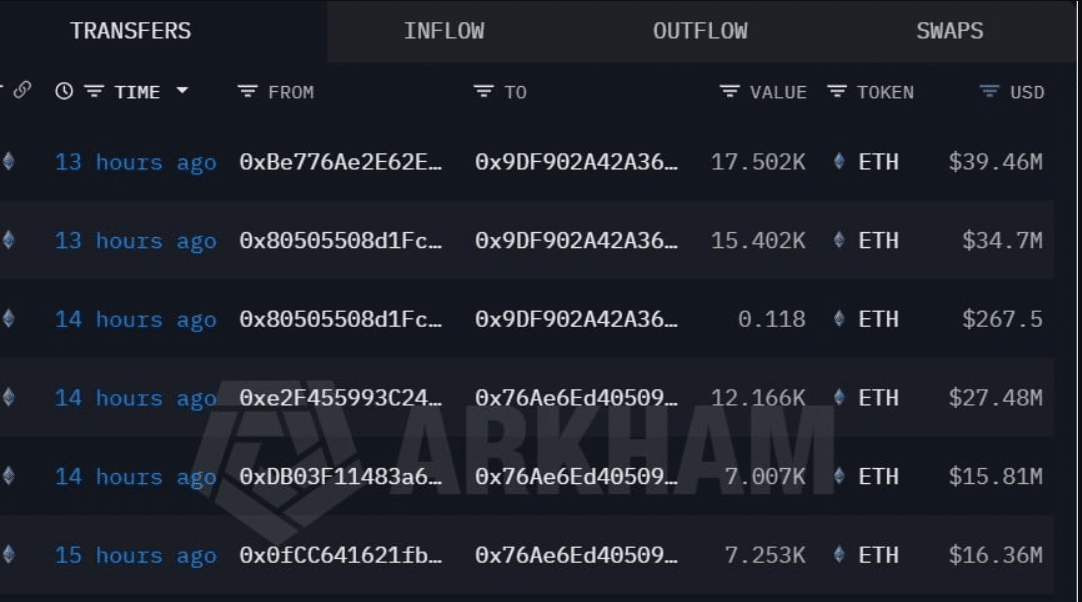
In this case, the most important detail is what did not happen. The ETH had not reached exchanges at the time of reporting, which means there was no clear proof of immediate selling pressure. For traders, Ethereum whale activity becomes more serious when it connects with exchange deposits, large swap activity, or rising spot supply. Without those signals, the transfer is important, but not yet bearish by itself.
Exchange Netflow Shows Accumulation, Not Panic
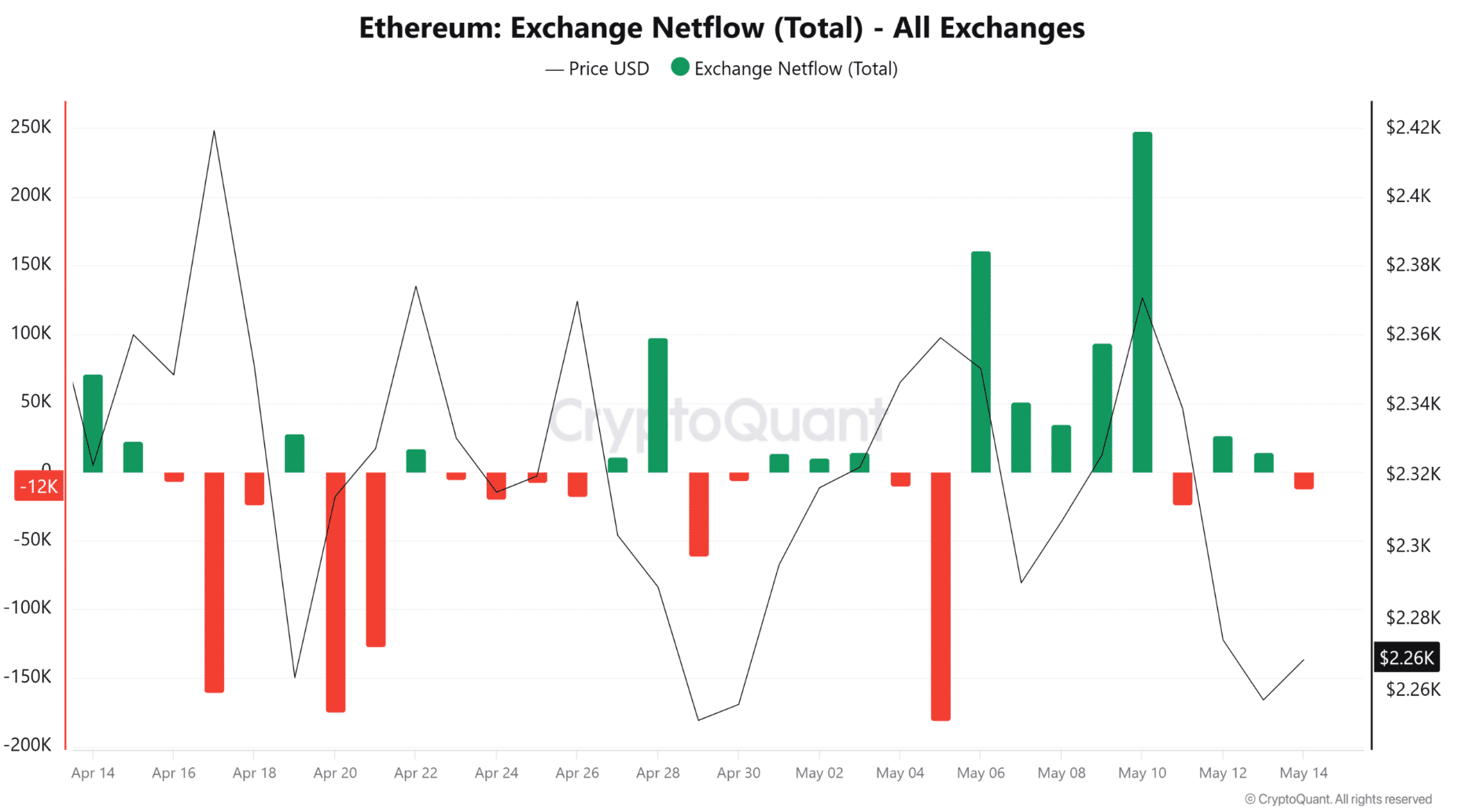
One of the strongest market indicators around this move was exchange netflow. The reported netflow dropped to -11.9K ETH, which means more ETH left exchanges than entered them. In simple terms, traders and holders were moving ETH away from trading platforms and into private wallets. That often suggests accumulation or long-term holding behavior.
Ethereum whale activity also needs to be read beside this data. A large dormant-wallet transfer may look scary on the surface, but negative exchange netflow softens the concern. It shows that broader market behavior was not fully aligned with a rush to sell. This is the kind of split signal that often creates confusion in crypto markets. The headline looks heavy, but the flow data tells a calmer tale.
Why ETH Still Looks Fragile
Even with exchange outflows, Ethereum’s price structure remained weak. ETH was trading below key moving average and EMA crossover levels, while momentum indicators showed limited bullish strength. The Directional Movement Index reportedly showed ADX near 25, while +DI stayed below 20, a setup that points to weak buyer control rather than a clean upside trend.
Ethereum whale activity matters more when the technical picture is already soft. If ETH is struggling below resistance, even a neutral whale transfer can make traders cautious. The reported $2,320 area became an important recovery level because ETH needed a daily close above that region to improve sentiment. On the downside, $2,200 remained a key support zone, with a possible slide toward $2,175 if buyers failed to defend the range.
Coinbase Premium Adds Another Warning Signal
The Coinbase Premium Index was another weak spot as the index reportedly stayed negative for more than 2 weeks, turning positive only once during that period. This matters because Coinbase is often used as a gauge for U.S. demand, especially from larger investors. When the premium stays negative, it can suggest weaker U.S. spot buying compared with other markets.
Ethereum whale activity, negative premium readings, and soft technical levels create a mixed setup. There is no confirmed sell-off signal from the dormant wallet, yet demand is not strong enough to give ETH a clean bullish structure. That is why the market reaction needs balance. Panic would be premature, but ignoring the warning signs would also be careless.
What Traders Should Watch Next
Ethereum whale activity should now be tracked through 3 practical signals: whether the moved ETH reaches exchanges, whether exchange netflow stays negative, and whether ETH can reclaim the $2,320 region. If the whale wallets remain quiet, the market may move past the transfer quickly. If one of the new wallets sends ETH to an exchange, the tone could change fast.
The larger lesson is that whale transfers are not signals in isolation. A dormant wallet waking up is like an old ship leaving harbor. It gets attention, but the destination matters more than the departure. In this case, the destination is still private wallets, not trading venues.
Conclusion
Ethereum whale activity has added a fresh layer of uncertainty to ETH’s short-term outlook, but the transfer itself has not confirmed a bearish turn. The $157 million move is important because of the wallet’s age, size, and ICO-era history. Still, the lack of exchange deposits and negative exchange netflow suggests that immediate sell pressure has not clearly appeared. ETH now needs stronger demand, especially from U.S. spot buyers, and a decisive move above $2,320 to repair sentiment. Until then, the market remains watchful, not broken.
Frequently Asked Questions
Why did the dormant Ethereum whale move funds?
The exact reason is not confirmed. Ethereum whale activity may reflect security management, wallet restructuring, or possible preparation for future selling, but there is no proof of immediate liquidation.
Does this mean ETH will fall?
Not necessarily. A whale transfer only becomes more bearish if the ETH moves to exchanges or creates clear sell-side pressure.
What ETH level matters most now?
The $2,320 area is important for bullish recovery, while $2,200 and $2,175 remain key downside levels to watch.
Glossary of Key Terms
Whale: A wallet or holder that controls a large amount of crypto and can influence market sentiment.
Dormant Wallet: A wallet that has stayed inactive for a long period before moving funds again.
Exchange Netflow: The difference between crypto entering and leaving exchanges. Negative netflow often suggests accumulation.
Coinbase Premium Index: A measure used to compare Coinbase pricing with other markets, often viewed as a signal of U.S. investor demand.
Sources
Disclaimer: This article is for informational purposes only and should not be treated as financial advice. Cryptocurrency markets are highly volatile, and readers should conduct independent research before making investment decisions.