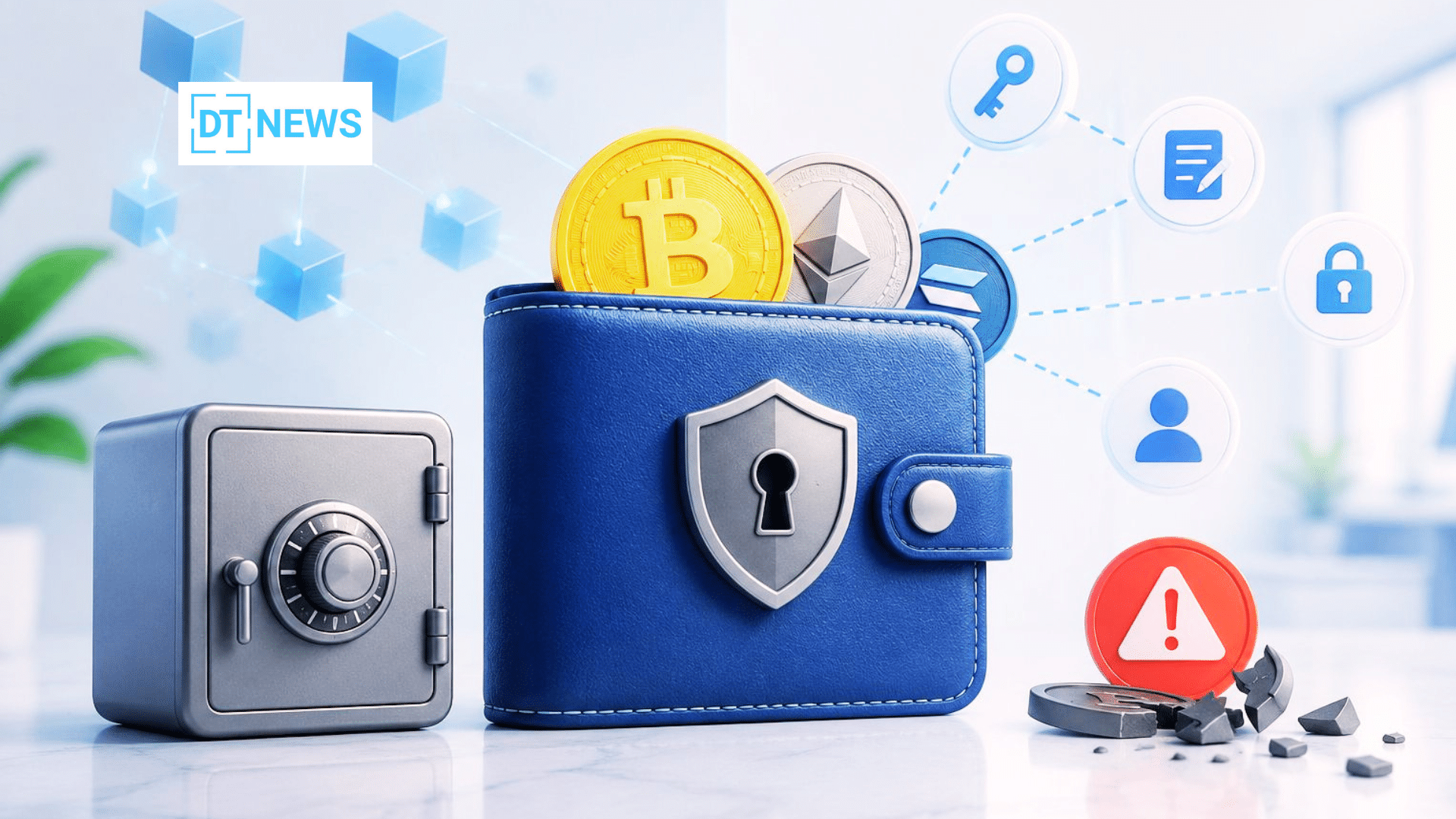

Non-custodial wallet is a crypto system where users hold and control their private keys, giving them direct authority over blockchain transactions without any intermediary. In contrast, a custodial wallet is one where an exchange, broker, or service provider holds the private keys and can manage access, including recovery and withdrawals on behalf of the user.
- Non-custodial wallet: What does it mean for ownership and control?
- How do custodial and self-custody models differ in practice?
- How do private keys and signing actually work?
- What recovery models and hybrid setups exist?
- What risks exist beyond basic user errors?
- What privacy and security limits should users understand?
- How should users respond if a wallet is compromised?
- Who should use self-custody and when?
- Conclusion
- Glossary
- Frequently Asked Questions About Non Custodial Wallet
Self-custody removes third-party control entirely but shifts full responsibility for security, recovery, and transaction accuracy to the individual. If recovery details are lost or exposed, access to funds cannot be restored.
Non-custodial wallet: What does it mean for ownership and control?
A non-custodial wallet gives users direct ownership of digital assets by ensuring private keys remain under personal control. In this structure, crypto is not stored inside the wallet application. Assets remain on the blockchain, while the wallet only stores or accesses cryptographic keys required to authorize transactions.
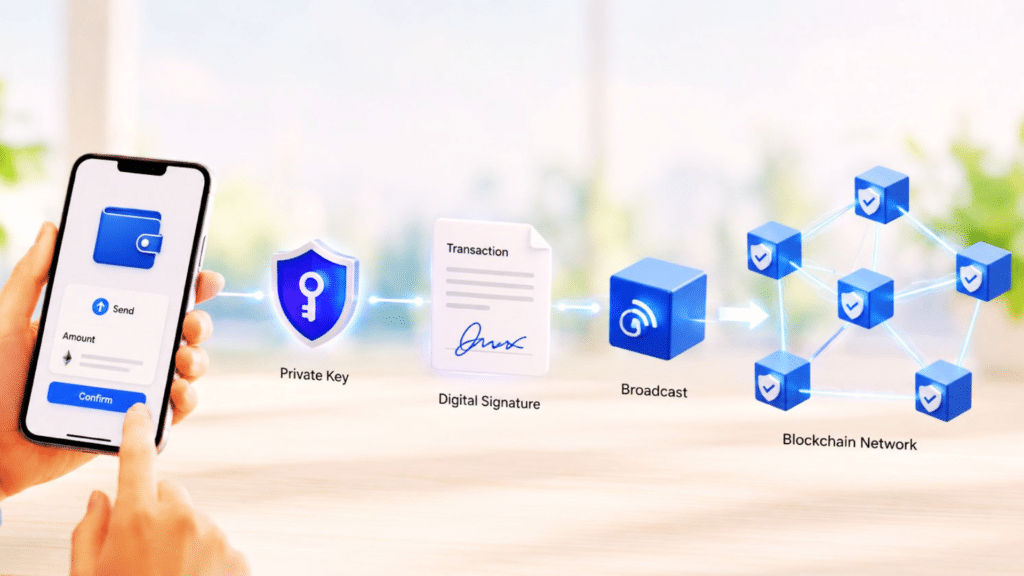
Every action is signed locally and then validated by the network. This removes intermediaries from transaction approval and ensures ownership is proven through cryptographic signatures rather than platform accounts. A non-custodial wallet therefore functions as a control layer rather than a storage system.
How do custodial and self-custody models differ in practice?
The key difference lies in who controls access and who can recover it. In custodial systems, a service provider holds private keys and can reset passwords, freeze accounts, or process withdrawals under its policies. In a non-custodial wallet, no external party has that ability. Only the holder of the recovery phrase or private key can authorize movement of funds.
Custodial systems offer convenience, customer support, and fiat integration. Self-custody removes those safety nets in exchange for full control. This trade-off defines how users choose between flexibility and responsibility.
How do private keys and signing actually work?
Private keys act as the core authority mechanism behind all transactions. When a user initiates a transfer, the wallet creates a digital signature using the private key stored on a device or hardware chip. This signature confirms authorization without exposing the key itself. The blockchain verifies it and processes the transaction.
A recovery phrase (typically 12 or 24 words) can rebuild access on a new device. However, there is no fallback system if it is lost or stolen. A non-custodial wallet depends entirely on the security of this backup structure.
What recovery models and hybrid setups exist?
Modern self-custody includes several recovery and security designs beyond a single seed phrase. Multisignature wallets require multiple approvals before funds can move, reducing single-point failure but adding coordination complexity.
MPC (multi-party computation) splits key control across multiple parts, reducing reliance on one secret but introducing infrastructure dependency. Social recovery systems allow pre-selected contacts or devices to help restore access, though trust assumptions shift to those recovery agents.
Some smart-contract wallets also include account abstraction features like spending limits or recovery rules. However, these can introduce upgrade or admin risks depending on contract design. A non-custodial wallet may use any of these systems as long as the user retains ultimate control over signing authority.
What risks exist beyond basic user errors?
Self-custody introduces risks that extend beyond simple mistakes. Phishing attacks and fake wallet apps are common threats designed to capture recovery phrases. Malicious smart contract approvals can grant ongoing access to tokens without requiring further signatures. Since blockchain transactions are irreversible, errors such as wrong address entry or incorrect network selection cannot be undone.
Asset-level controls also exist outside wallets. In April 2026, Tether supported the freeze of more than $344 million in USDT across two addresses in coordination with authorities, showing that stablecoin issuers can enforce restrictions at the token level.
Cross-chain bridges introduce additional counterparty risk, as funds rely on external protocols to move between networks. A non-custodial wallet protects keys but cannot eliminate these external dependencies.
What privacy and security limits should users understand?
A non-custodial wallet exposes all activity linked to a public address. Anyone can view balances and transaction history on the blockchain. To reduce exposure, users often rotate addresses, separate wallets for different purposes, and avoid reusing the same address across platforms.
Hardware wallets improve security but introduce supply-chain risk. Devices should always be purchased from authorized sources, verified on first setup, and checked for firmware authenticity. Open-source or auditable firmware is preferred where available. Even with strong key control, privacy depends on how carefully addresses and interactions are managed.
How should users respond if a wallet is compromised?
If compromise is suspected, immediate action is critical. The first step is to revoke token approvals through blockchain explorers or connected applications. Remaining funds should be moved quickly to a new wallet generated with fresh keys.
Users should also rotate approvals, update connected dApp permissions, and monitor for any bridge or replay risks across networks. If funds were linked to exchanges or marketplaces, relevant platforms may also need to be notified to prevent further exposure.
Who should use self-custody and when?
Different users benefit from different wallet setups depending on risk tolerance and activity. Beginners often start with custodial services or low-value self-custody wallets to learn recovery safely. DeFi users typically separate wallets, using one for app interaction and another cold wallet for storage.

Long-term holders rely on hardware-based storage for larger balances. Businesses generally use multisignature wallets with documented approval processes to avoid single-person control risks. A non-custodial wallet is most effective when paired with a clear structure that matches usage patterns rather than a one-size-fits-all approach.
Conclusion
A non-custodial wallet represents a shift from platform-managed access to user-controlled cryptographic ownership. It removes intermediaries from transaction approval and strengthens financial independence, but it also removes recovery safety nets.
Custodial recovery options depend on service providers, while some smart-contract wallets offer decentralized recovery alternatives with different trust models. In practice security depends less on the wallet itself and more on how carefully users manage keys, approvals, and interactions across the blockchain ecosystem.
Glossary
Non custodial wallet- user-controlled wallet with full private key ownership
Custodial wallet- a platform-controlled wallet that manages user access
Self-custody- direct user control of crypto without intermediaries
Private key- secret code used to own and move crypto
Public key- code used to generate a wallet address for receiving funds
Frequently Asked Questions About Non Custodial Wallet
Who controls a custodial wallet?
A custodial wallet is controlled by an exchange or platform that holds your private keys.
What happens if I lose my recovery phrase?
If you lose your recovery phrase, you may lose access to your crypto forever.
What is the biggest risk of self custody?
The biggest risk of self custody is losing your recovery phrase or making a transaction mistake.
Are non custodial wallets safe?
Non custodial wallets are safe if you properly protect your private keys and recovery phrase.
Who should use a non custodial wallet?
A non custodial wallet is best for users who want full control and can manage their own security.