

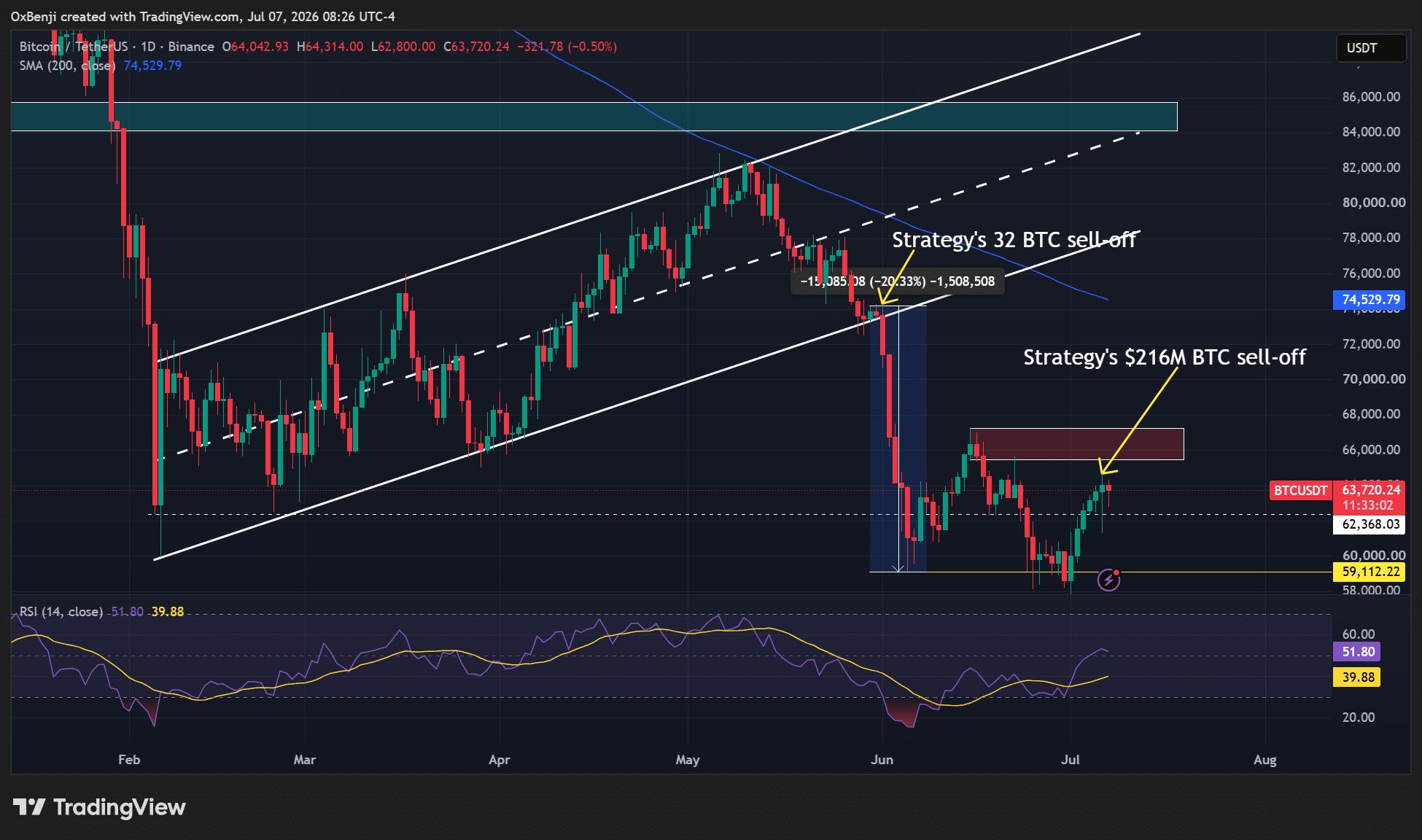
Something strange happened this week, and almost nobody in the crypto space expected it. Strategy, the business intelligence firm turned Bitcoin whale, disclosed a $216 million Bitcoin sale on Monday, and the market basically shrugged. Bitcoin dipped for a few hours, then closed the day up 0.6%.
Compare that to early June, when a similar move from the company sent BTC tumbling more than 20%, down to roughly $59,000, and you start to see why traders are paying attention now. This Strategy Bitcoin sale might look like a red flag at first glance, but a growing number of analysts think it’s telling a completely different story about where Bitcoin is headed next.
The Backstory Behind the Strategy Bitcoin Sale
To understand why this matters, it helps to rewind to mid-June. That’s when Strategy’s preferred stock, known as Stretch or STRC, lost its $100 peg. Investors got nervous, and frankly, who could blame them. The firm had been relying on its USD reserves to cover dividend payments, but with the crypto winter dragging on far longer than anyone budgeted for, those reserves started thinning out fast. Add in the debt obligations tied to its convertible notes, and Strategy found itself boxed into a corner it needed to sell out of.
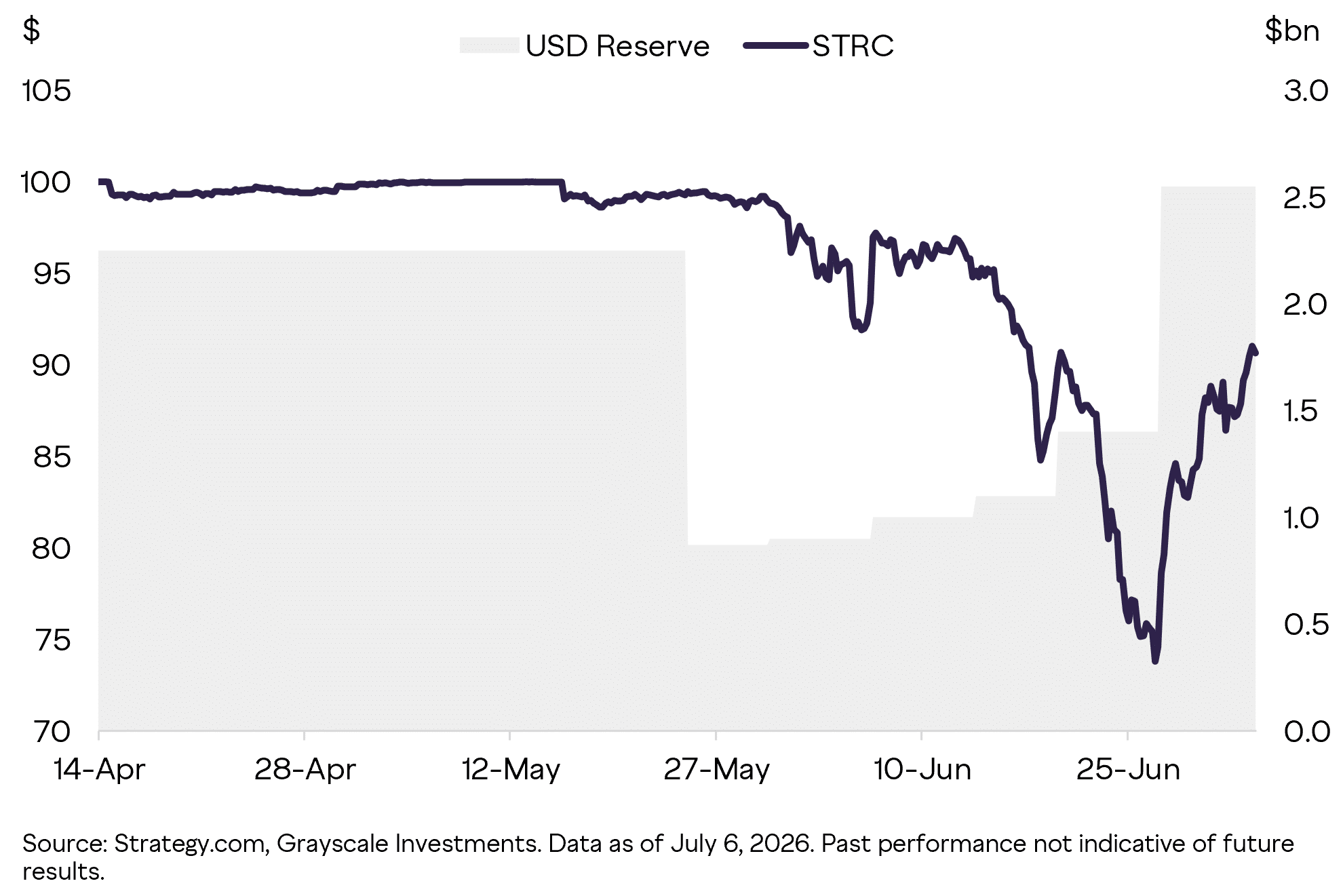
That’s how the company landed on a formal plan to offload $1.25 billion worth of Bitcoin, using the proceeds to rebuild its cash cushion and keep dividend payments flowing to STRC holders. Monday’s $216 million sale is simply one installment of that larger strategy, not some isolated panic move. And that distinction matters a lot when you’re trying to read the tea leaves on where BTC goes from here.
Grayscale Sees a Silver Lining
Not everyone is treating this as bad news, not by a long shot. Zach Pandl, Head of Research at Grayscale, has been pretty vocal about a different interpretation. He pointed to STRC’s price action as the real story here, noting that the preferred stock briefly climbed above $90 for the first time since June 22. To Pandl, that bounce signals renewed confidence in Strategy’s overall financing structure, not fear about its Bitcoin holdings shrinking.
His argument goes a step further too. Pandl believes continued Bitcoin sales from Strategy could actually help the asset carve out a firmer, more durable bottom, rather than dragging prices lower the way everyone assumed back in June. It’s a bit counterintuitive, sure, but markets often work that way. Sometimes the thing everyone fears turns out to be the thing that finally clears the air.
Skeptics Aren’t Buying It
Of course, not every analyst is on board with the optimistic read. JPMorgan had already warned Strategy against this exact path, suggesting the firm should instead extend its cash runway by selling MSTR shares rather than touching its Bitcoin stack. Galaxy Research echoed similar concerns, arguing that selling BTC doesn’t actually solve Strategy’s deeper structural issues and could still put pressure on both STRC and MSTR down the line.
Then there’s Peter Schiff, a name that comes up in pretty much every Bitcoin conversation involving skepticism. Schiff pointed out that Strategy is selling below its average purchase price, which means it’s booking real losses, somewhere around $15,000 per coin, adding up to roughly $54 million on this single tranche alone. With more than 840,000 BTC still sitting on its balance sheet, he’s warning those losses could snowball if the pattern continues month after month.
What the Quiet Reaction Might Really Mean
Here’s where it gets genuinely interesting. Analyst James Van Straten framed the situation in a way that’s stuck with a lot of traders this week. When bad news stops moving the price lower, he argued, that’s usually a sign the bottom is already behind you. It’s an old trading axiom, but it holds up surprisingly well across market cycles, crypto included.
The real test comes soon. FOMC meeting minutes are due out on July 8, and that release could either confirm this newfound resilience or expose it as a temporary lull before another leg down. Either way, this Strategy Bitcoin sale has become something of a litmus test for how much conviction is actually left in this market.
Conclusion
Markets rarely move in straight lines, and this week’s muted reaction to Strategy’s latest Bitcoin sale proves that point once again. Whether this turns out to be the calm before another storm or genuine evidence of a bottom forming, one thing is clear. The old playbook of assuming every Strategy sale spells doom for Bitcoin no longer applies automatically, and traders would do well to watch price action rather than headlines alone.
Frequently Asked Questions
Why did Strategy sell $216 million worth of Bitcoin?
The sale is part of a broader $1.25 billion plan to rebuild cash reserves and cover dividend obligations on its preferred stock.
Did Bitcoin’s price crash after the sale?
No, BTC dipped briefly but closed the day up 0.6%, a much calmer reaction than the 20% drop seen in early June.
What is STRC?
STRC, or Stretch, is Strategy’s preferred stock product that lost its $100 peg in mid-June amid investor concerns.
Is Strategy losing money on these sales?
Yes, according to Peter Schiff, the firm is selling below its average purchase price, realizing losses of roughly $15,000 per Bitcoin.
Glossary of Key Terms
Bitcoin (BTC): The largest cryptocurrency by market capitalization, used as a store of value and trading benchmark.
Preferred Stock: A class of stock that pays fixed dividends and typically has priority over common stock during payouts.
Peg: A fixed price level a financial instrument is designed to maintain, often near a round number like $100.
Convertible Debt: Debt that can be converted into equity shares under specific conditions, often used by companies to raise capital cheaply.
Cash Runway: The amount of time a company can continue operating before it runs out of available cash reserves.
Market Bottom: The lowest price point an asset reaches before beginning a sustained upward trend.
Sources