



There was a time when Michael Saylor’s bold Bitcoin bet looked like nothing short of genius. Strategy, formerly MicroStrategy, had turned itself into a proxy for Bitcoin exposure, and Wall Street rewarded that conviction handsomely.
Then came June 2026, and with it a reckoning that few bulls had penciled in: MSTR fell below $100 for the first time since March 2024, rattling investors and reigniting a debate about whether the leveraged Bitcoin treasury model was ever as bulletproof as it appeared.
Strategy Stock Price Free-Fall Raises Alarm Bells Across Crypto Markets
Following a brutal 9.26% single-day decline, MSTR stock was changing hands at $94.23 at the time of writing. The drop did not happen in isolation. Bitcoin itself slid to $61,246, down roughly 1.59% in the prior session, and the broader crypto market was absorbing a wave of selling pressure that left little room for optimism in the short term.
What made this particular MSTR stock price decline sting even more was the context surrounding it. Strategy holds 847,363 BTC after recently offloading 2.71 million MSTR shares to raise $335.5 million in net proceeds, a portion of which went toward purchasing 520 additional Bitcoins at an average price of $67,068 per coin. On the surface, that looks like continued conviction. Beneath it, the cracks are showing.
What Triggered the MSTR Stock Price Collapse in June 2026
The initial spark came from Strategy’s own actions. A late-May sale of just 32 BTC caught the market off guard and acted as the catalyst for a broader selloff. When a company built on the premise of accumulating Bitcoin starts selling it, even in a minor amount, confidence takes a hit fast.
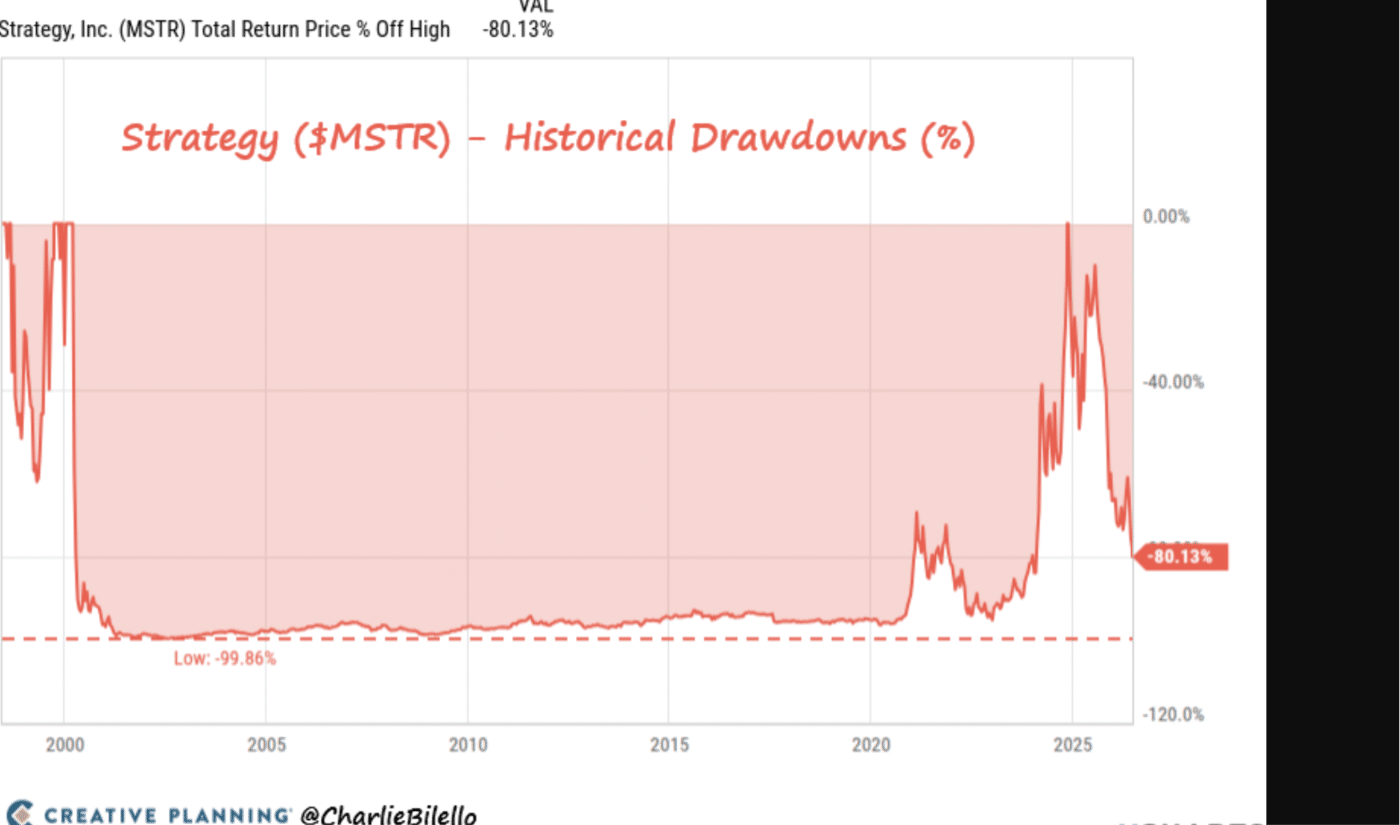
Market strategist Charlie Bilello of Creative Planning added fuel to the fire by pointing out something investors often overlook: a stock that has already fallen sharply is not necessarily close to the bottom. Bilello reminded the market that Strategy’s shares lost roughly 99.86% of their value during the Dot-com Bubble collapse, and he left little to the imagination when he suggested another 99% decline from current levels was not inconceivable if history decided to rhyme. That kind of historical context has a way of cutting through the noise.
CryptoQuant CEO Questions the Logic Behind Strategy’s Bitcoin Buying Spree
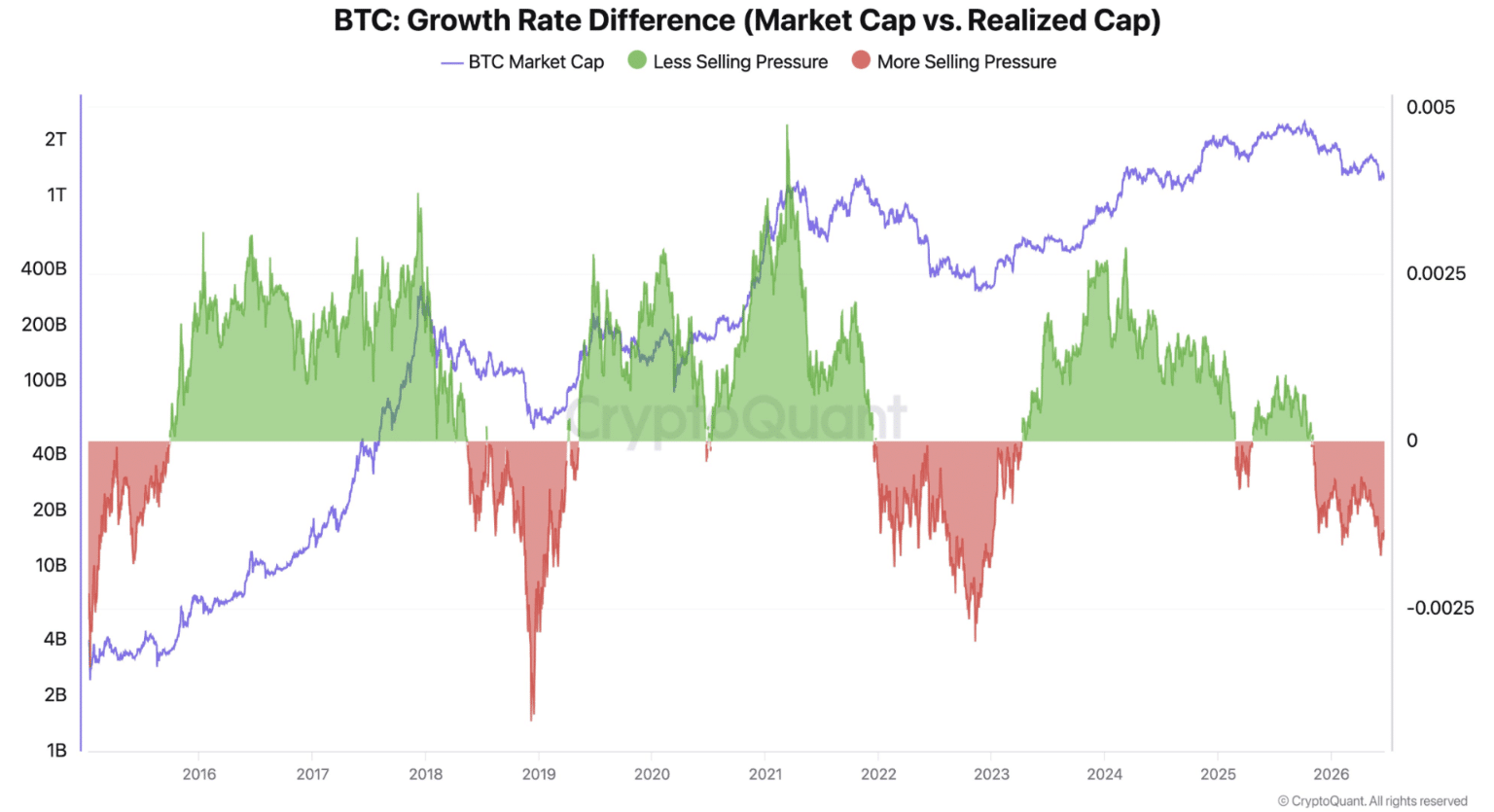
Perhaps the most pointed critique came from Ki Young Ju, CEO of on-chain analytics firm CryptoQuant, who argued that Strategy’s relentless Bitcoin accumulation might not be doing what most people assume it is. His assessment was clear: rather than acting as a price catalyst, Strategy’s buying is functioning more like a liquidity sink, giving sellers an exit rather than pushing the asset higher.
The data he cited backed that view up firmly. Even though Bitcoin’s realized market cap climbed by $467 billion over the past two years, the actual price has remained stubbornly range-bound.
That divergence tells a particular story: capital is flowing in, but an equivalent wave of selling is absorbing it before any meaningful rally can take hold. In that environment, Strategy buying more Bitcoin only delays the reckoning rather than preventing it, and Young Ju recommended the firm pause its purchases, rebuild cash reserves, and develop a more disciplined framework for when and how it buys.
The Price-to-BTC Reserve Ratio Is Telling a Story Investors Cannot Ignore
CryptoQuant’s MicroStrategy Price-to-BTC Reserve Ratio is one of the cleaner ways to assess whether MSTR stock is trading at a justified premium to its underlying Bitcoin holdings. That ratio has been in a consistent downtrend since peaking in late 2024 and early 2025. What that means practically is that investors are no longer paying the kind of speculative premium they once did for Strategy’s Bitcoin acquisition approach. The gap between the stock’s market value and its actual BTC reserves has narrowed considerably, and that compression reflects a loss of narrative premium, not just price correction.
Conclusion
The MSTR stock price breaking below $100 is more than a headline number. It reflects a growing skepticism about whether an endlessly leveraged Bitcoin accumulation strategy can sustain itself through prolonged market stress. Strategy still holds an enormous amount of Bitcoin, and that position retains real value. But the model’s credibility is being tested in ways that buying more BTC alone cannot fix. Whether the company recalibrates or doubles down will likely define its trajectory for the rest of 2026 and well into the next cycle.
Frequently Asked Questions
Why did MSTR stock drop below $100?
A combination of a 9.26% single-day decline, Bitcoin’s slide to $61,246, and a late-May BTC sale by Strategy itself triggered a sharp selloff, pushing MSTR below $100 for the first time since March 2024.
How much Bitcoin does Strategy currently hold?
Strategy holds 847,363 BTC as of the latest available data, making it the largest publicly known Bitcoin Digital Asset Treasury in the world.
Is the MSTR stock price recovery possible in the near term?
Analysts remain cautious. The price-to-BTC reserve ratio is declining, Bitcoin is facing selling pressure, and criticism of Strategy’s accumulation model is growing louder among on-chain analysts.
What is the Price-to-BTC Reserve Ratio?
It measures how much premium investors are paying for MSTR stock relative to the value of its Bitcoin holdings. A declining ratio means the market is assigning less speculative value to the strategy itself.
What did CryptoQuant recommend for Strategy?
CryptoQuant’s CEO advised Strategy to pause Bitcoin purchases, rebuild cash reserves, and adopt a more systematic, data-driven approach to future acquisitions rather than buying continuously regardless of market conditions.
Glossary of Key Terms
MSTR Stock Price: The publicly traded share price of Strategy (formerly MicroStrategy) on the Nasdaq exchange, widely tracked as a leveraged proxy for Bitcoin.
Realized Market Cap: A Bitcoin valuation metric that prices each coin at the price it last moved on-chain, giving a more grounded view of capital actually invested versus speculative market cap.
Price-to-BTC Reserve Ratio: A ratio comparing Strategy’s stock market value against the current value of its Bitcoin holdings, used to gauge whether the stock trades at a premium or discount to its BTC assets.
Digital Asset Treasury (DAT): A corporate model where a company holds cryptocurrency, typically Bitcoin, as a primary treasury reserve asset rather than traditional cash or bonds.
Sources