



Bitcoin miners are holding more coins even as operating conditions become harder, despite weaker mining economics. Bitcoin miner reserves have increased by 1% to about 1.1943 million BTC, worth $76.76 billion, while Bitcoin recovered toward $65,000. The change matters because miners often sell when revenue falls while energy, hardware, and financing costs keep climbing.
Bitcoin Miner Reserves Signal Patience Under Pressure
Bitcoin miner reserves recorded net inflows of 224 BTC, showing that deposits into miner-controlled wallets slightly exceeded withdrawals. It does not mean every company is accumulating, but the sector has not entered broad distribution despite tighter margins.
Miner wallets matter because newly produced Bitcoin enters circulation through them. Large transfers to exchanges can signal possible selling pressure. Stable or rising balances remove one source of immediate supply. In this case, Bitcoin miner reserves point to restraint rather than panic.
Puell Multiple Shows Revenue Stress
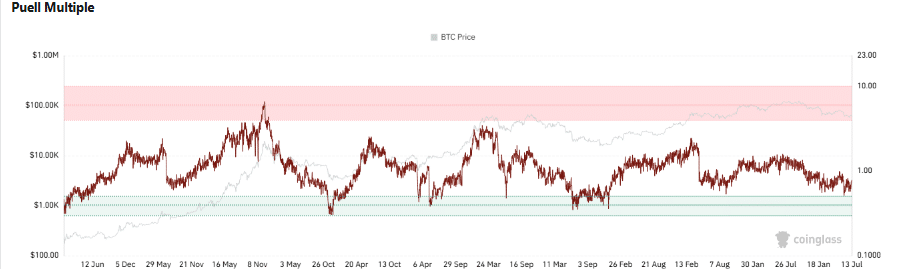
The Puell Multiple has fallen to 0.71, below the neutral level of 1 and near a range historically linked with miner strain. The indicator compares the daily dollar value of newly issued Bitcoin with its longer-term average. A low reading means miners are earning less than usual.
Power contracts, cooling, debt, staff, and repairs still require funding when revenue drops. If pressure lasts, weaker operators may sell coins, shut machines, or raise capital. For now, rising Bitcoin miner reserves suggest many miners have enough liquidity, confidence, or outside income to avoid aggressive selling.
Hashrate Decline Reflects a Changing Industry
Bitcoin’s hashrate has slipped from about 1.107 billion TH/s in November to roughly 995.46 million TH/s. Hashrate measures the computing power competing to secure the network and produce blocks. A decline can show that machines have gone offline because mining is less profitable.
Some public miners have also redirected power capacity, data centers, and investment toward artificial intelligence computing, where contracts may offer steadier revenue. The shift shows that mining infrastructure now has competing uses.
Hash Ribbons have flashed another capitulation band. The indicator tracks short-term and long-term hashrate trends to identify periods when miners may be switching off equipment. It highlights stress but does not guarantee a price move.
Lower Difficulty Offers Breathing Room
Mining difficulty has dropped another 5% to 127.17 trillion, 17% below its yearly peak of 148.26 trillion. Difficulty adjusts automatically so Bitcoin blocks continue arriving near schedule. When hashrate falls, the network eventually lowers the challenge.

That adjustment helps machines still online because they compete against less computing power and may earn more block rewards. This relief helps explain why Bitcoin miner reserves can rise while revenue indicators remain weak.
A solo miner recently found a block and received 3.1382 BTC, valued near $200,000. Such outcomes remain extremely rare for small operators.
What Miner Holdings Mean for Bitcoin Price
Bitcoin has moved above the neckline of an inverted head-and-shoulders pattern, which traders often view as a possible bullish reversal. Confirmation requires price to hold above the neckline while demand remains firm.
Bitcoin miner reserves support the recovery by limiting fresh supply from a group that regularly receives new coins. Yet those holdings also represent potential future supply. If reserves begin falling while the Puell Multiple stays depressed, forced selling could return and weaken the rebound.
Conclusion
The 1% increase in Bitcoin miner reserves shows that miners are choosing patience during a difficult operating period. Falling hashrate, weaker revenue, and lower difficulty reveal genuine stress, but broad capitulation has not appeared in wallet balances. Bitcoin’s near-term outlook may improve if miners keep holding and price remains above technical support. A reserve decline, however, would quickly change the picture.
Frequently Asked Questions
Why are miner holdings rising?
Miners may expect higher prices, hold enough cash, or earn revenue from other computing services.
Does miner accumulation guarantee a rally?
No. It reduces immediate supply pressure, but demand and wider market conditions still control price.
Is falling hashrate dangerous?
A long decline can reduce security margins, although difficulty adjusts to support steady block production.
Glossary of Key Terms
Miner reserves: Bitcoin held in wallets linked to miners or mining pools.
Puell Multiple: A ratio comparing daily mining revenue with its long-term average.
Hashrate: The computing power used to secure Bitcoin and compete for blocks.
Mining difficulty: The network setting that controls how hard block discovery becomes.
Hash Ribbons: A hashrate indicator used to identify periods of miner stress.
Sources