



Bitcoin has pushed back toward $65,000 after a difficult stretch, yet the recovery remains caught between improving on-chain signals and a tougher macro backdrop. Long-term holders are selling at smaller losses, exchange balances are falling, and older coins are not flooding trading venues. Higher crude prices could still revive inflation pressure, strengthen the dollar, and delay easier monetary policy. That leaves the Bitcoin price stronger than it was earlier in July, but still short of a confirmed breakout.
Bitcoin price recovery meets a tougher oil market
Bitcoin traded near $65,489 on July 21, with an intraday range between $63,742 and $65,697. Buyers are defending the mid-$60,000 area, although the narrow distance from the daily high shows that traders remain cautious.
Oil is the larger outside risk as brent moved above $90 during July 20 trading before easing, while WTI settled near $83.23 as Middle East tensions renewed concerns over supply. Higher energy costs can spread through transport and consumer prices. That matters because the Bitcoin price often struggles when inflation fears lift bond yields and the U.S. dollar.
The link is not automatic, still, expensive oil can reshape interest-rate expectations. When investors expect central banks to keep policy tight for longer, capital becomes more selective and high-risk assets need stronger demand to advance.
Long-term holders are taking smaller losses
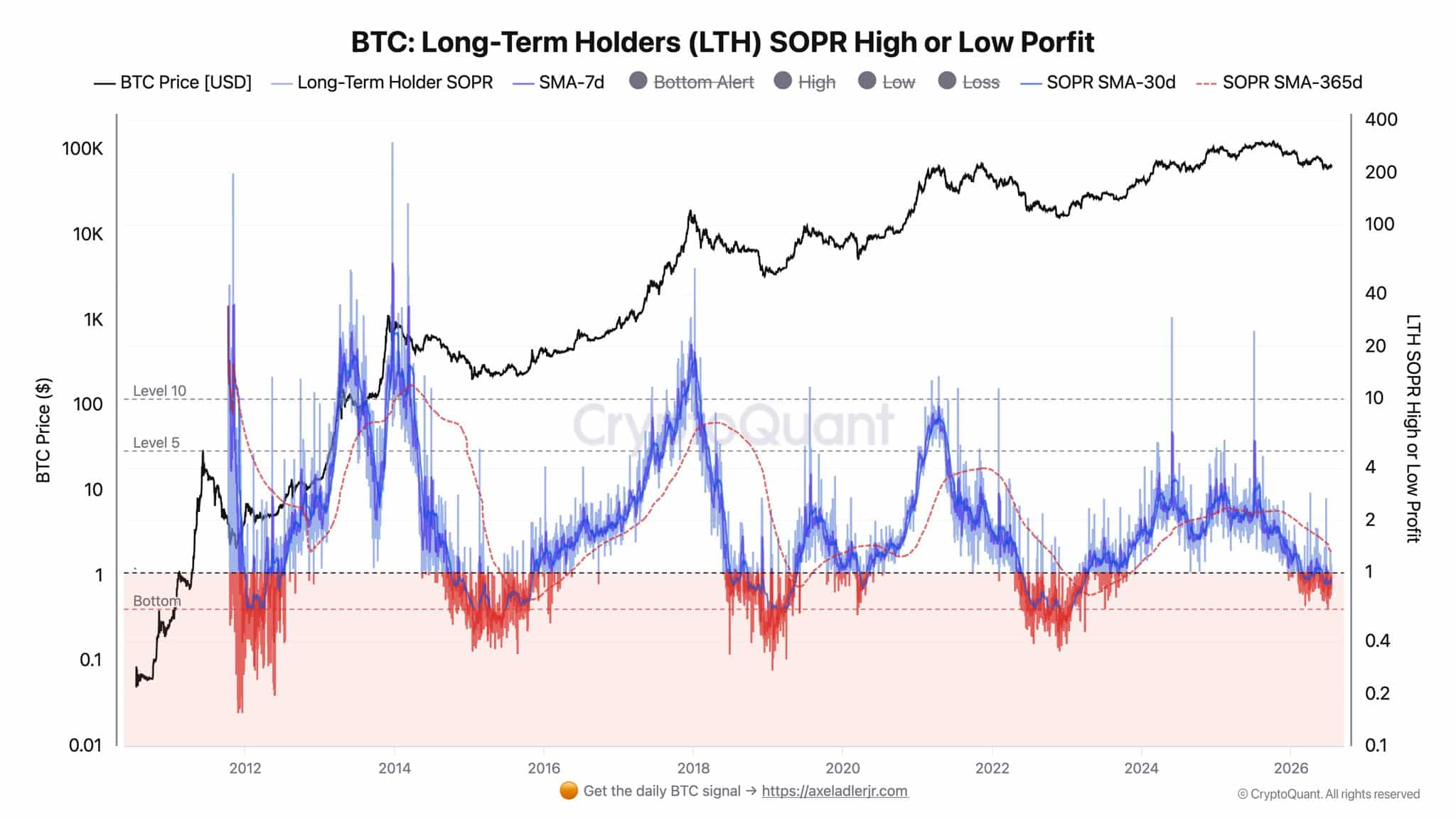
Long-term holder SOPR compares the sale price of older coins with their purchase price. A reading above 1 means the group is selling in profit, while a reading below 1 means coins are moving at a loss. The latest available reading was around 0.74, showing that experienced holders were still realizing losses.
The indicator fell to about 0.615 at the end of June, its weakest level since July 2023. The recovery from that low does not show full confidence, but it suggests pressure has eased. Fewer investors now appear willing to sell at deeply discounted prices.
That shift supports the Bitcoin price because long-term holders control a large share of supply. When their selling slows, the market needs less fresh demand to absorb available coins. It resembles a housing market where fewer owners list properties after prices fall.
Exchange supply offers quiet support
Bitcoin held on exchanges reportedly declined from about 2.718 million BTC to 2.704 million BTC. Lower balances can suggest investors are moving coins into private storage instead of preparing to sell. It does not guarantee a rally, but it can reduce immediate liquid supply.
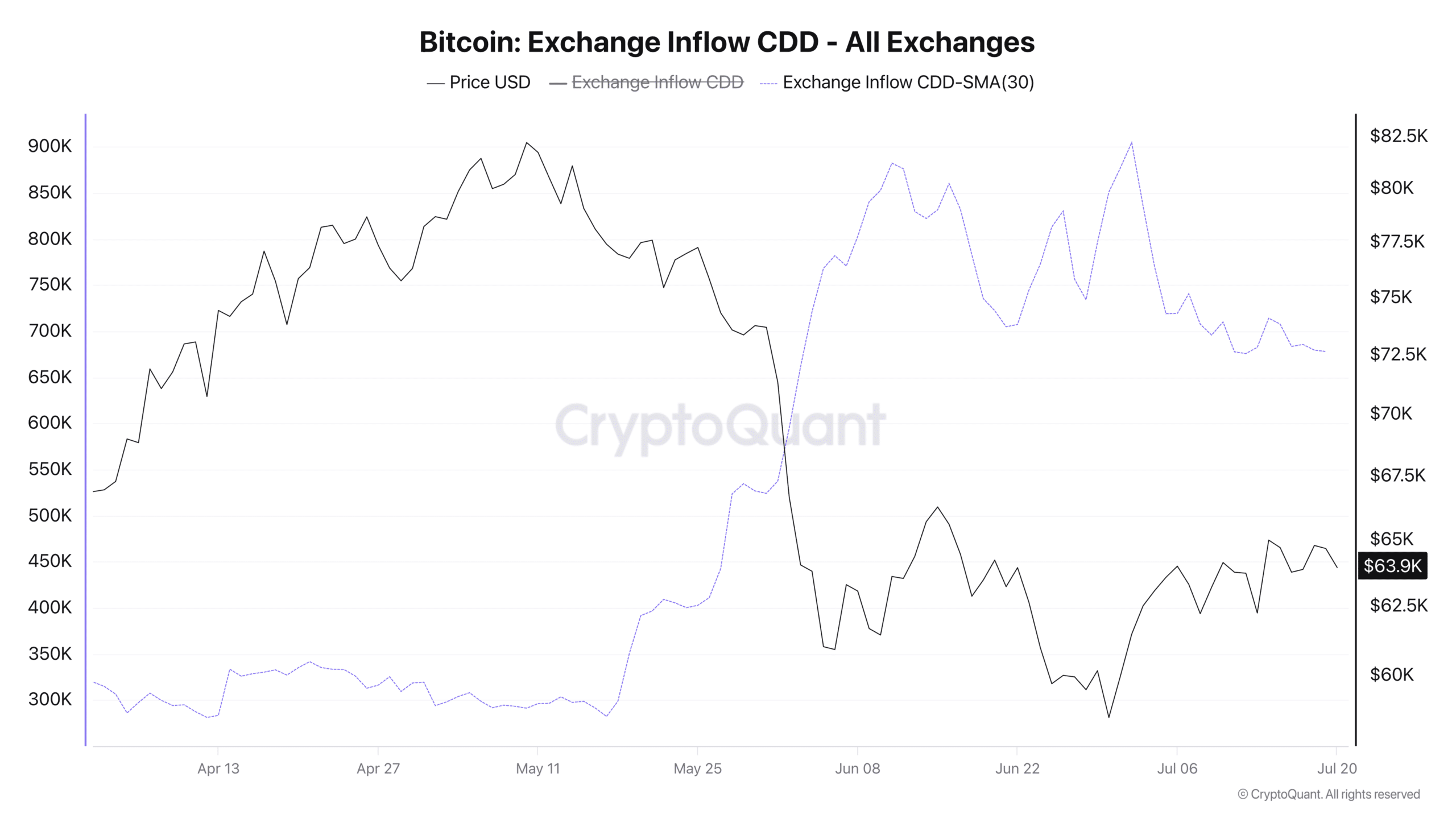
Exchange Coin Days Destroyed also remains subdued, meaning older coins are not moving aggressively. Together, these indicators suggest the Bitcoin price is receiving support from restrained selling rather than broad speculation.
ETF demand remains the missing piece. Recent flow estimates have differed, with some readings showing modest inflows and others pointing to net outflows over the same period. Until several sessions show consistent buying, ETF flows should be treated as confirmation rather than the main bullish argument.
Bitcoin price analysis table
| Level | Market role | What it may signal |
|---|---|---|
| $63,700 | Near-term support | Holding it keeps the rebound intact |
| $65,700 | Immediate resistance | A clean break may attract momentum buyers |
| $68,000 | Confirmation zone | Reclaiming it improves short-term structure |
| $60,000 | Major support | Losing it could reopen deeper downside |
| $76,000 | Long-term barrier | A sustained break strengthens recovery |
The Bitcoin price needs a close above $65,700 before the move can be treated as more than a relief rally. A push through $68,000 would carry greater weight because it would show buyers can hold gains beyond the recent range. Failure at resistance, especially alongside another oil spike, could pull the market toward $63,700 or $60,000.
What comes next for Bitcoin
The next phase depends on oil, institutional demand, and holder behavior. If crude cools, ETF buying improves, and long-term holder losses keep narrowing, the Bitcoin price could form a stronger base. If oil stays elevated, the market may remain trapped in a broad range despite better on-chain data.
Conclusion
Bitcoin has regained ground, but the recovery is not settled. Long-term holders are selling at smaller losses, exchange supply is tightening, and older coins remain relatively quiet. Those are useful signals. However, resistance near $65,700 remains firm, while higher oil prices threaten to revive macro pressure across risk assets. Confirmation will require stronger demand and a calmer energy backdrop.
Frequently Asked Questions
Why do oil prices matter for Bitcoin?
Higher oil prices can raise inflation expectations, support tighter monetary policy, and reduce demand for risk assets.
What does long-term holder SOPR show?
It shows whether older holders are selling Bitcoin at an average profit or loss.
Is Bitcoin bullish above $65,000?
The move is constructive, but breaks above $65,700 and $68,000 would provide stronger confirmation.
Glossary of key terms
SOPR: A ratio showing whether transferred coins were sold at a profit or loss.
Exchange balance: Bitcoin held on trading platforms and potentially available for sale.
Coin Days Destroyed: A measure giving more weight to coins unmoved for long periods.
ETF flows: Net money entering or leaving spot Bitcoin exchange-traded funds.
Sources