
MetaMask security came into focus after Consensys disclosed that a contractor who was later described as being linked to North Korea contributed to MetaMask-related code for about one month before the company terminated the individual’s access in April. The contractor joined through an existing relationship with a third-party service provider and worked from March 9 until access was revoked.
After identifying the potential risk, Consensys suspended product releases, launched a comprehensive investigation, and notified law enforcement. The company said the investigation found no misappropriation of assets or data, no malicious code deployment, and no impact on user safety or security, while also prompting a review of its third-party service practices.
What does MetaMask security reveal about the incident?
MetaMask security became part of the discussion after Consensys identified the issue before any confirmed harm occurred. General Counsel Matt Corva said the company quickly detected the potential threat, terminated the contractor’s access, launched a comprehensive investigation, and informed law enforcement.

The contractor contributed to MetaMask-related code from March 9 until April through a third-party service provider. Consensys later described the individual as being linked to North Korea. Corva said the investigation confirmed there was no misappropriation of assets or data, no malicious code deployed, and no impact on user safety or security.
Why were product releases paused?
MetaMask security procedures included temporarily suspending product releases while the company investigated the matter. An internal alert issued in April instructed teams to halt all product releases and advised employees not to interact with the contractor during the investigation. Corva said the contractor had been introduced through an existing relationship with a reputable third-party service provider.
He added that Consensys has since reviewed its third-party service practices to ensure the rigorous standards applied to employees also extend to more complex external relationships. Corva also said the company’s response showed its security protocols identified the issue quickly and supported coordination with law enforcement.
How can MetaMask security strengthen contractor oversight?
MetaMask security guidance emphasizes that contractor access should remain subject to continuous oversight rather than relying only on checks completed before onboarding. The company’s guidance warns that malicious actors may use false identities or forged documents to obtain remote engineering roles.
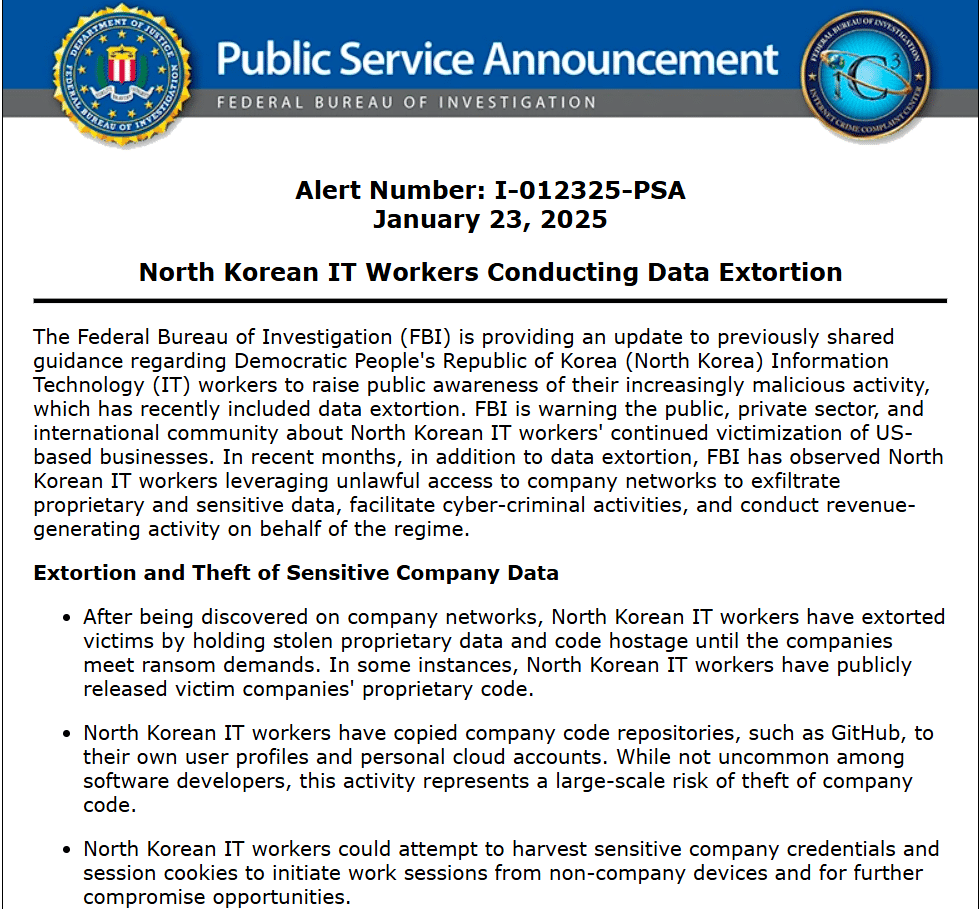
The FBI has also warned that North Korean IT workers may exploit company network access to copy source code repositories. The agency recommends verifying identities throughout hiring and employment, conducting regular audits of third-party staffing providers, limiting system access, and monitoring for unusual remote activity or attempts to extract repository data
It recommends verifying identities through authentic documentation, conducting multiple interviews, using hardware authentication, verifying IP addresses and locations, performing reference checks, and limiting access to critical systems. Consensys also recommends narrowly scoped repository permissions, independent reviews for production-bound code changes, additional scrutiny for external contributions, and immediate removal of access when it is no longer required.
Why does the incident matter for development teams?
MetaMask security also highlights the importance of having clear operational controls when external contributors are involved in software development. The company said there was no indication that user accounts, wallet assets, or company data were compromised.

Even so, the incident demonstrated the value of limiting repository access, continuously reviewing permissions, and maintaining a predefined process to pause releases while suspicious activity is investigated. These measures help reduce operational risk without suggesting that a compromise has occurred.
Conclusion
MetaMask security remains central to Consensys’ review of its third-party engineering practices following the incident. The company maintained that its investigation found no evidence of compromised assets, data, malicious code deployment, or harm to users despite the contractor’s temporary access.
The review of vendor practices reflects an effort to strengthen oversight of external contributors while reinforcing existing development safeguards. The incident ultimately highlights the importance of timely detection, controlled repository access, and structured response procedures in software development.
Glossary
MetaMask Security- Protection for MetaMask’s code and users.
Consensys- The company that develops MetaMask.
Identity Verification- Checking a person’s identity before giving access.
Repository Access- Permission to view or change source code.
Code Contribution- A code update made by a developer.
Frequently Asked Questions About MetaMask Security
Were MetaMask users affected?
No consensys said its investigation found no impact on users, wallets, or company data.
Why did Consensys stop product releases?
Consensys paused product releases while it investigated the security concern.
Why did Consensys remove the contractor?
Consensys removed the contractor after identifying a potential security risk.
How long did the contractor work on MetaMask?
The contractor worked on MetaMask-related code from March 9 until access ended in April.
What security steps does MetaMask recommend?
MetaMask recommends identity checks, limited access, code reviews and continuous monitoring.