

On-chain metrics are entering a new phase as cryptocurrency markets adapt to the influence of spot Bitcoin ETFs, institutional custody and expanding blockchain infrastructure. For more than a decade, blockchain activity has provided investors with valuable signals about demand, sentiment and network growth. However, the connection between market movements and visible blockchain data is becoming more complicated.
- What are on-chain metrics and why are their signals changing?
- How have Bitcoin ETFs changed crypto market visibility?
- Which off-chain channels are affecting crypto data interpretation?
- Why are Layer 2 networks creating new challenges for blockchain analysis?
- Are exchange inflows still a reliable market warning signal?
- When do on-chain metrics still provide the strongest insights?
- Which indicators should analysts combine in the current crypto market?
- How should investors understand crypto data in the ETF era?
- Conclusion
- Glossary
- Frequently Asked Questions About On-Chain Metrics
Since 2011, analysts have relied on blockchain-based indicators to understand investor behavior. These measurements helped track wallet activity, transaction trends, capital movements and market cycles. But the launch of U.S. Spot Bitcoin ETFs in January 2024 introduced a different route for investors to gain exposure to Bitcoin.
Instead of directly purchasing and storing Bitcoin investors can now access the asset through traditional brokerage platforms. This allows significant capital movement without every transaction appearing on the blockchain. The change has created a debate among analysts about whether traditional blockchain signals still provide the same level of insight in a market increasingly influenced by financial products and institutional systems.
What are on-chain metrics and why are their signals changing?
For a long time, blockchain data gave analysts a fairly reliable way to gauge what was happening in the crypto market. If more wallets were active, transactions were rising, and coins were moving across the network, it was often taken as a sign that participation and demand were increasing. That approach worked well when most investors interacted directly with blockchains.

Today, the market looks very different. A growing share of capital reaches crypto through ETFs, institutional custody services, and other channels that operate outside the day-to-day activity visible on public networks. In many cases, investors can gain exposure to Bitcoin without ever touching a wallet themselves. That has made interpretation more difficult. The data still offers useful clues, but it no longer provides the complete picture it once did.
How have Bitcoin ETFs changed crypto market visibility?
January 2024 marked a turning point for Bitcoin investing. With the launch of U.S. Spot Bitcoin ETFs, market participants were able to add Bitcoin exposure through familiar investment platforms without setting up wallets or handling the asset directly. ETF creation and redemption mechanisms also influence how blockchain activity appears. When demand rises, authorized participants can create new ETF shares, which may require acquiring Bitcoin.
During redemptions, underlying assets may move in the opposite direction. This has created a gap between what investors are doing and what blockchain data shows. Strong buying interest can emerge even when network activity remains relatively unchanged. Bitcoin’s move above $70,000 in early 2024 highlighted this difference. The asset reached those levels while active addresses remained below the peak recorded during the 2021 cycle.
The example showed that price appreciation can occur even when certain blockchain indicators do not show similar growth. Still, the ETF impact should not be generalized across the entire cryptocurrency market. The effect is strongest for Bitcoin because of the availability of U.S. spot ETF products. Many altcoins without similar financial structures continue to depend more heavily on direct blockchain activity.
Which off-chain channels are affecting crypto data interpretation?
ETFs are not the only reason blockchain signals have become harder to read. Institutional investors increasingly use off-chain channels such as OTC desks, prime brokers, and professional custody providers. Large holders may store assets with institutional custodians or manage positions through internal systems operated by exchanges and financial firms.
These arrangements can reduce visible wallet movements despite significant market activity. Custody services also allow institutions to manage large holdings without frequently transferring assets across public networks. Because of this, analysts now examine a wider group of indicators.
Exchange balances, custody wallet movements, derivatives activity, and liquidity conditions are often studied alongside traditional on-chain metrics. Exchange deposits no longer carry the same message they once did. Assets may be moved for custody purposes, collateral requirements, or internal rebalancing rather than outright selling.
Why are Layer 2 networks creating new challenges for blockchain analysis?
Layer 2 networks have significantly changed how blockchain activity is measured. Before their expansion, analysts could often study a single main chain to understand ecosystem usage. Ethereum’s growth illustrates this shift. Networks such as Arbitrum, Optimism, Base, and zkSync now process large amounts of activity outside Ethereum’s main chain. Adding to the challenge, activity is spread across multiple Layer 2 networks, each with its own structure and reporting standards.
That can make it harder to measure overall ecosystem growth using a single set of data. These networks combine multiple transactions and settle them on the main chain. As a result, Layer 1 transaction figures may not represent the complete level of user activity. A decline in transactions on Ethereum’s main network does not automatically point to lower demand. Instead, users have increasingly migrated to Layer 2 platforms that handle a growing share of the ecosystem’s activity.
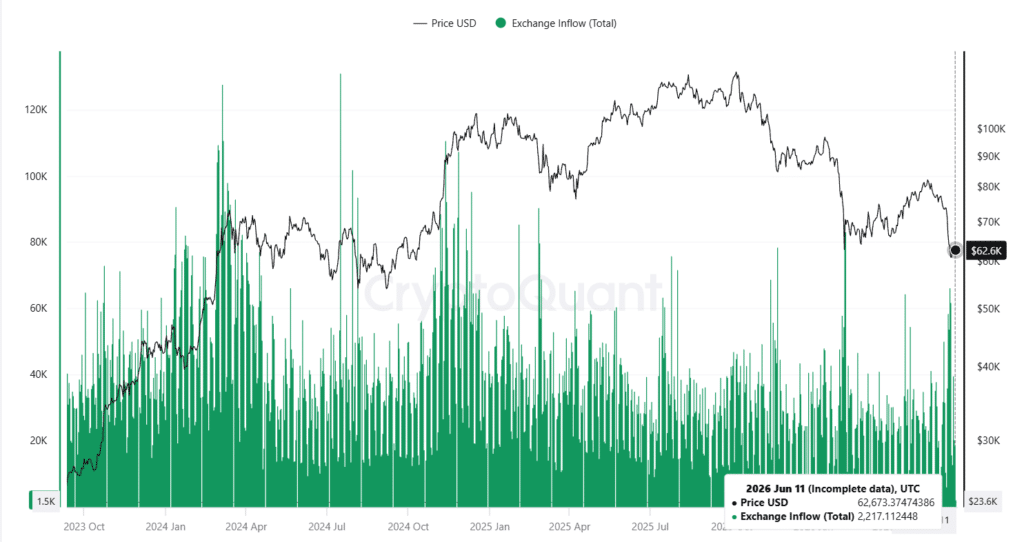
Are exchange inflows still a reliable market warning signal?
Exchange inflows were historically considered a bearish indicator because investors often moved assets from private wallets to exchanges before selling. During previous market cycles, including 2018 and 2021, significant exchange inflows appeared around major market tops.
However, institutional participation has changed the interpretation of these movements. Exchanges now serve as trading hubs, custody locations, and collateral centers for professional market participants. A more accurate assessment requires combining exchange inflow data with additional signals.
Analysts can examine exchange hot and cold wallet ratios, withdrawal patterns, time taken before assets leave exchanges, derivatives open interest, and funding rates. These measurements help separate genuine selling pressure from operational transfers connected to institutional trading activity.
When do on-chain metrics still provide the strongest insights?
Despite the changes in market structure, on-chain analysis remains one of the most valuable tools in cryptocurrency research. Blockchain data continues to provide important information about areas where traditional financial data is limited. Some signals still matter regardless of how the market evolves.
A sudden movement from a whale wallet or an unusual surge in network activity can quickly draw attention and influence sentiment. They are also highly relevant for smaller cryptocurrencies and ecosystems without ETF exposure, where direct user activity remains a major driver.
Which indicators should analysts combine in the current crypto market?
Modern market analysis requires multiple data points working together. No single measurement can fully explain investor behavior in a market influenced by traditional finance and blockchain innovation. A broader approach can include: ETF assets under management and creation or redemption activity can show institutional demand.
Exchange netflows and exchange balances can help evaluate potential selling pressure. Stablecoin supply and minting or redemption trends can indicate available liquidity. Major assets such as USDT and USDC require additional attention because issuer reserves, regulations, and market confidence can affect interpretation. Total value locked and decentralized application activity can show ecosystem participation.
Layer 2 transaction throughput and bridge activity can reveal where blockchain usage is moving. Derivatives open interest and funding rates can provide insight into market positioning. Total value locked remains an important measure because increasing liquidity in decentralized applications can indicate stronger user participation. However, TVL should also be viewed alongside other indicators because capital movements can have different explanations.
How should investors understand crypto data in the ETF era?
On-chain metrics remain essential, but they now represent only one part of a wider analytical framework. The rise of ETFs, institutional custody, OTC markets, and Layer 2 networks has created a market where activity is distributed across several systems.

While ETF flows are now an important part of the Bitcoin story, blockchain activity continues to play a bigger role in shaping trends across much of the broader crypto market. That is why analysts rarely rely on a single dataset. Instead, they piece together information from different parts of the market.
Conclusion
On-chain metrics are changing because the cryptocurrency market itself has changed. The growth of ETFs, institutional infrastructure, and scaling networks has altered how capital enters and moves through digital asset markets. The value of blockchain data remains strong but interpretation requires additional context.
In the current environment, analysts who combine ETF activity, exchange behavior, stablecoin movements, Layer 2 growth, decentralized application usage and derivatives data can develop a clearer understanding of market conditions. The future of crypto analysis will not depend on abandoning on-chain metrics. It will depend on using them alongside other signals to reflect the increasingly complex structure of digital asset markets.
Glossary
On-Chain Metrics: Data that shows activity and trends on a blockchain.
Spot Bitcoin ETF: A fund that offers Bitcoin exposure without holding Bitcoin directly.
Layer-2 Network: A network that helps blockchains handle transactions more efficiently.
Exchange Inflows: Crypto transferred to exchanges for trading or storage.
TVL: The total amount of assets locked in DeFi applications.
Frequently Asked Questions About On-Chain Metrics
Why are on-chain metrics changing?
On-chain metrics are changing because ETFs, institutions, and Layer-2 networks affect how activity appears on blockchains.
How do Bitcoin ETFs affect blockchain data?
Bitcoin ETFs can bring capital into Bitcoin without creating much visible blockchain activity.
Why is Ethereum activity moving to Layer-2s?
Many users prefer Layer-2 networks because they offer lower costs and higher transaction speeds.
Are exchange inflows still important?
Yes, exchange inflows remain useful, but they should be analyzed with other market indicators.
What indicators are useful alongside on-chain metrics?
TVL, stablecoin activity, whale movements, and ETF flows can provide additional market insights.