



Metaverse crypto 2026 is defining the next phase of digital economies, marking a structural shift in how virtual environments operate across enterprise, social, and commerce layers. The metaverse is no longer limited to gaming. It has evolved into a hybrid ecosystem where blockchain infrastructure enables ownership, interaction, and value exchange. Cryptocurrencies are now deeply embedded in these systems, supporting how users transact, build, and monetize across interconnected digital worlds.
- How does metaverse crypto 2026 reshape its foundational structure?
- What explains the shift from early cryptocurrencies to platform-native tokens?
- Why is metaverse crypto 2026 central to virtual land and services?
- Why is cross-chain interoperability changing how the metaverse works?
- How are NFTs and identity frameworks evolving in virtual ecosystems?
- How is metaverse crypto 2026 integrating AI and autonomous agents?
- What impact do regulation and institutional interest have on growth?
- Conclusion
- Glossary
- Frequently Asked Questions About Metaverse Crypto 2026
Advancements in generative AI and real-time rendering are accelerating this transformation. Users can create complex environments using prompt-based tools without deep technical expertise. At the same time, regulatory developments in regions such as India are guiding clearer token classification and compliance practices. This is pushing crypto toward a more structured and accountable role within digital economies.
How does metaverse crypto 2026 reshape its foundational structure?
Metaverse crypto 2026 reflects a transition toward interoperable and identity-driven ecosystems. Platforms are increasingly designed to allow seamless movement of assets and data across multiple environments. This reduces dependency on single platforms and enhances user ownership.
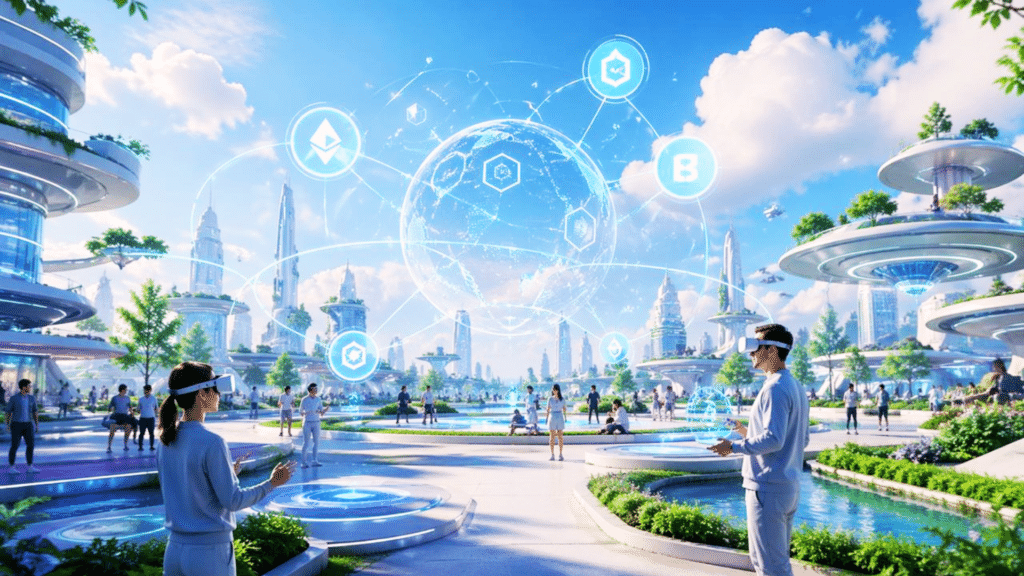
Cross-chain bridges and shared standards are improving token interaction, though full standardization is still evolving. Analysts emphasize that crypto is shifting from speculative use to becoming core infrastructure for digital platforms. This change is central to the expansion of the metaverse into broader use cases.
What explains the shift from early cryptocurrencies to platform-native tokens?
Bitcoin initiated decentralized value transfer, paving the way for Ethereum’s smart contracts and NFTs that established foundations for programmable virtual economies. By 2026, ecosystems rely on native tokens such as MANA, SAND, and ILV.
These tokens support governance, virtual land ownership, incentives, and transactions. Platforms have shifted from single-currency models to sophisticated layered systems incorporating stablecoins and tokenized assets.
Why is metaverse crypto 2026 central to virtual land and services?
Metaverse crypto 2026 keeps virtual real estate and services running smoothly. These coins act as money, savings, and trade tools inside digital worlds. Virtual land operates as a yield-bearing asset. Users acquire parcels via platform tokens or stablecoins, then generate revenue through events, rentals, and branded activations.
Value derives from scarcity and prime positioning. Service markets are also expanding. Developers, designers, and event hosts are paid in tokens for their work. Autonomous agents are increasingly managing virtual shops and liquidity pools. This creates a hybrid system where human and automated contributions coexist.
Why is cross-chain interoperability changing how the metaverse works?
Users jump their avatars and NFTs between spots like Decentraland and Sandbox using cross-chain bridges. Interoperability across virtual worlds keeps getting better. Enterprises are also leveraging this structure. They run campaigns across multiple metaverse platforms while using shared stablecoin settlement systems.
This reduces fragmentation and enables consistent financial operations across environments. Developers benefit as well. They can build tools such as wallets, marketplaces, and analytics dashboards that function across several worlds. This reduces dependence on single platforms and makes asset movement between virtual worlds more practical.
How are NFTs and identity frameworks evolving in virtual ecosystems?
NFTs power the metaverse backbone now. They represent ownership of land, venues, and digital storefronts. They also function as access passes for exclusive communities and events. Self-sovereign identity systems are emerging alongside this trend.
Users can verify credentials through decentralized identifiers and access token-gated environments securely. It boosts trust and cross-platform ease. New NFT standards add dynamic features like changing metadata and interaction, turning NFTs into programmable assets over time.
How is metaverse crypto 2026 integrating AI and autonomous agents?
Projections suggest continued growth in AI-powered virtual economies, though estimates vary depending on methodology. Intelligent NFTs are evolving into adaptive assets that respond to user interaction and generate content within virtual environments. Autonomous agents are becoming active participants in these economies.
On-chain analytics platforms indicate growing activity in automated systems managing liquidity, trading, and marketplace operations. Projections point to AI-boosted virtual economies expanding, though estimates vary depending on methodology.
What impact do regulation and institutional interest have on growth?
Regulatory frameworks gain clarity on token classification and disclosure standards, prompting platforms to implement compliant tokenomics and transparent reporting mechanisms. Stablecoins facilitate price-stable transactions such as wages, rentals, and advertising.
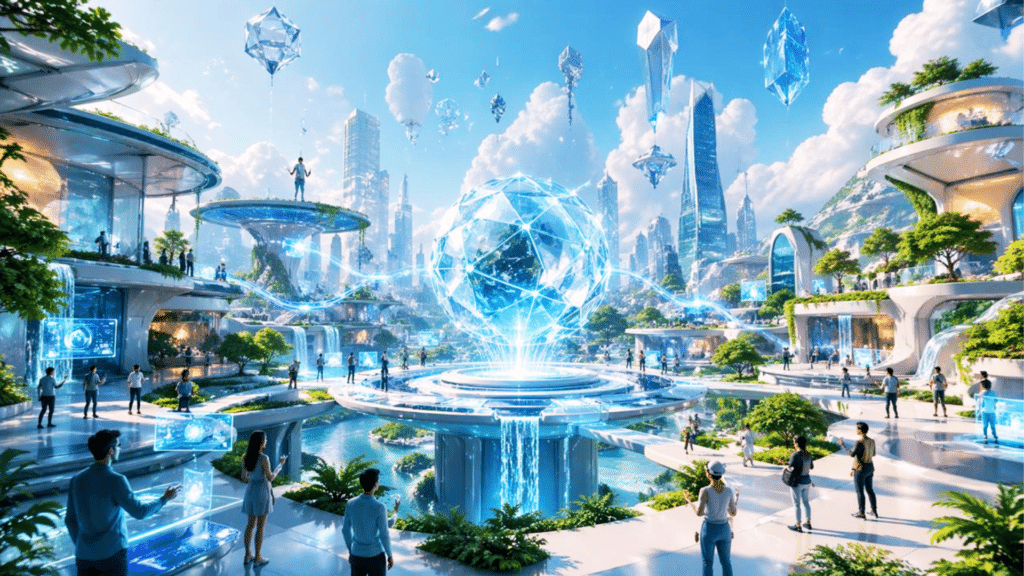
There is also growing experimentation with tokenized real-world assets such as real estate and intellectual property. Institutional participation is rising. Surveys indicate that more firms are allocating capital to crypto-related assets.
Conclusion
Metaverse crypto 2026 underscores the emergence of cohesive digital economies built on cryptocurrency foundations. Isolated tokens increasingly yield to versatile financial instruments.
Metaverse crypto 2026 NFTs transform into programmable building blocks while cross-chain interoperability and regulatory progress create structured growth. With AI and institutional adoption accelerating progress cryptocurrencies are positioned as the core layer supporting transactions, ownership, and governance across the expanding metaverse.
Glossary
Metaverse Crypto 2026: Crypto powering virtual economies and ownership.
Metaverse Economy: System for earning, trading, and owning digital assets.
Interoperability: Easy transfer of assets across metaverse platforms.
AI-Driven Metaverse: AI-powered virtual world for creating and interaction.
Virtual Land: Digital property that can be owned and monetized.
Frequently Asked Questions About Metaverse Crypto 2026
How do cryptocurrencies work in the metaverse?
Cryptocurrencies power buying, selling, and true ownership of digital assets across virtual worlds like Decentraland and Sandbox.
Why is crypto important in the metaverse?
Metaverse crypto 2026 enables real ownership and seamless value transfer in digital environments, bypassing traditional financial gatekeepers.
How does AI enhance the metaverse?
AI generates dynamic content, runs autonomous agents, and personalizes interactions to create immersive metaverse crypto 2026 experiences.
Are NFTs essential in the metaverse?
Absolutely, NFTs prove ownership of virtual land, items, and access rights, forming the backbone of metaverse crypto 2026 economies.
Is Metaverse Crypto 2026 limited to gaming?
No, metaverse crypto 2026 spans gaming, enterprise meetings, social hubs, virtual real estate, and digital commerce platforms.