
Pi Network is entering a critical phase as its long-running infrastructure migration edges closer to completion. The latest transition toward Protocol 23 has reignited discussions across the crypto market about whether the project is finally preparing for broader blockchain utility after years of gradual development.
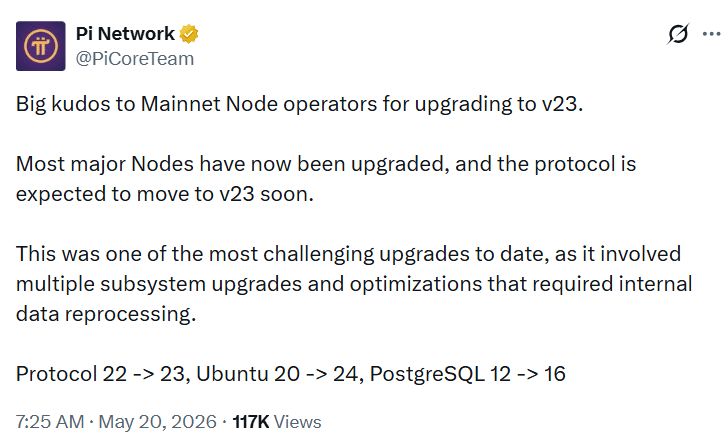
In a May 20 update, the Pi Core Team confirmed that most Mainnet Node operators successfully upgraded to Protocol 23. According to the source, the migration represents one of the largest and most technically demanding backend transitions in the project’s history. The team thanked node operators for their support and described the process as “one of the most challenging” upgrades Pi Network has handled so far due to major subsystem modifications and large-scale internal data reprocessing.
Pi Network Pushes Through a Complex Infrastructure Shift
The migration includes several major upgrades happening simultaneously across the network. Pi Network upgraded its blockchain protocol from version 22 to Protocol 23 while also moving Ubuntu operating systems from version 20 to 24 and PostgreSQL databases from version 12 to 16.
These upgrades may sound technical, but they play a vital role in blockchain performance. Faster databases and updated operating systems help networks process larger transaction volumes while improving security and system stability. Recent updates shared through Pi Network announcements suggest the project is building stronger infrastructure before introducing broader ecosystem functions.
The network also confirmed that the migration is not fully complete yet. While most nodes upgraded successfully, several remaining nodes still need to finish the process before Pi Network fully transitions to Protocol 23.
Why Protocol 23 Matters Beyond a Routine Upgrade
Protocol 23 is widely viewed as an important step toward improving Pi Network’s scalability and future Web3 readiness. Earlier this month, the Pi Core Team set a May 15 deadline for node operators to complete the migration as part of preparations for expanded mainnet functionality.
The upgrade may also help prepare the Pi ecosystem for smart contracts, which allow blockchain applications to run automatically without intermediaries. Smart contracts are essential for decentralized finance platforms, NFT ecosystems, and many modern blockchain services.
Blockchain research published through blockchain infrastructure analysis continues to highlight scalability and validator reliability as major challenges for growing crypto ecosystems. The project’s latest backend upgrades appear designed to address those exact concerns before user activity expands further.
AI Verification System Expands Alongside Mainnet Growth
Another major development involves Pi Network’s AI-powered KYC verification system. The project recently confirmed that migrated users surpassed 16.7 million as the ecosystem continues expanding.
As blockchain networks grow, identity verification often becomes harder to manage. Pi Network says its AI-assisted system helps detect fraudulent accounts while improving onboarding efficiency for legitimate users entering the mainnet ecosystem.
The company also explained that additional verification checks are helping improve fairness and strengthen ecosystem security. These efforts reflect a wider crypto industry trend where blockchain firms increasingly rely on automation to manage identity verification and fraud prevention.
Market Speculation Surrounds Pi Network’s Next Move
Community reactions across X remained mixed following the Protocol 23 update. Supporters praised Pi Network’s continued development efforts and viewed the migration as a positive sign for long-term ecosystem growth.
At the same time, some users questioned whether the network’s years of development have produced enough real-world utility compared with larger blockchain projects. Others speculated that completing Protocol 23 could eventually influence Pi Network’s future market activity, ecosystem expansion, and token adoption.
While no direct market announcements accompanied the migration update, infrastructure upgrades often attract attention because they can improve blockchain usability and developer interest over time. In crypto markets, backend improvements sometimes plant the seeds for larger ecosystem growth long before mainstream adoption arrives.
Conclusion
Pi Network now appears closer than ever to completing one of its most ambitious technical transitions. The move toward Protocol 23 reflects more than routine maintenance because it signals deeper preparation for scalability, smart contracts, and expanded blockchain functionality.
Although skepticism surrounding adoption and utility still lingers, the scale of this migration suggests Pi Network is positioning itself for heavier future demand rather than short-term market excitement. If the remaining node upgrades finish smoothly, Protocol 23 could become a defining milestone in the network’s long-term blockchain journey.
Glossary of Key Terms
Protocol 23: The latest Pi Network upgrade focused on scalability and infrastructure improvements.
Mainnet Nodes: Computers that validate blockchain transactions and support network operations.
Smart Contracts: Automated blockchain programs that execute transactions when conditions are met.
KYC Verification: Identity checks used to confirm legitimate users and reduce fraud.
Web3: A decentralized version of the internet powered by blockchain technology.
FAQs About Pi Network
What is Protocol 23 in Pi Network?
Protocol 23 is Pi Network’s latest infrastructure upgrade designed to improve network performance and scalability.
Is the Protocol 23 migration complete?
No. Most nodes upgraded successfully, but some remaining nodes still need to complete the process.
Why is Pi Network upgrading its systems?
The upgrade helps improve scalability, security, database efficiency, and future smart contract readiness.
How many users migrated to Pi Network mainnet?
Pi Network says more than 16.7 million users migrated to the mainnet ecosystem.