

Crypto markets are entering another sensitive macro phase as bond yields in Japan and the United States move higher, forcing investors to rethink risk exposure across Bitcoin, altcoins, and high-growth assets.
- Crypto Macro Pressure Builds as Bond Yields Rise
- Why Japan Matters More Than Usual
- U.S. Yields Keep Bitcoin Traders on Alert
- Marketing Analysis: The Narrative Is Shifting
- What Traders Should Watch Next
- Conclusion
- Frequently Asked Questions
- Why do rising bond yields hurt crypto?
- Is Bitcoin still a hedge during yield spikes?
- What is the most important indicator now?
- Can altcoins recover if yields stay high?
- Glossary of Key Terms
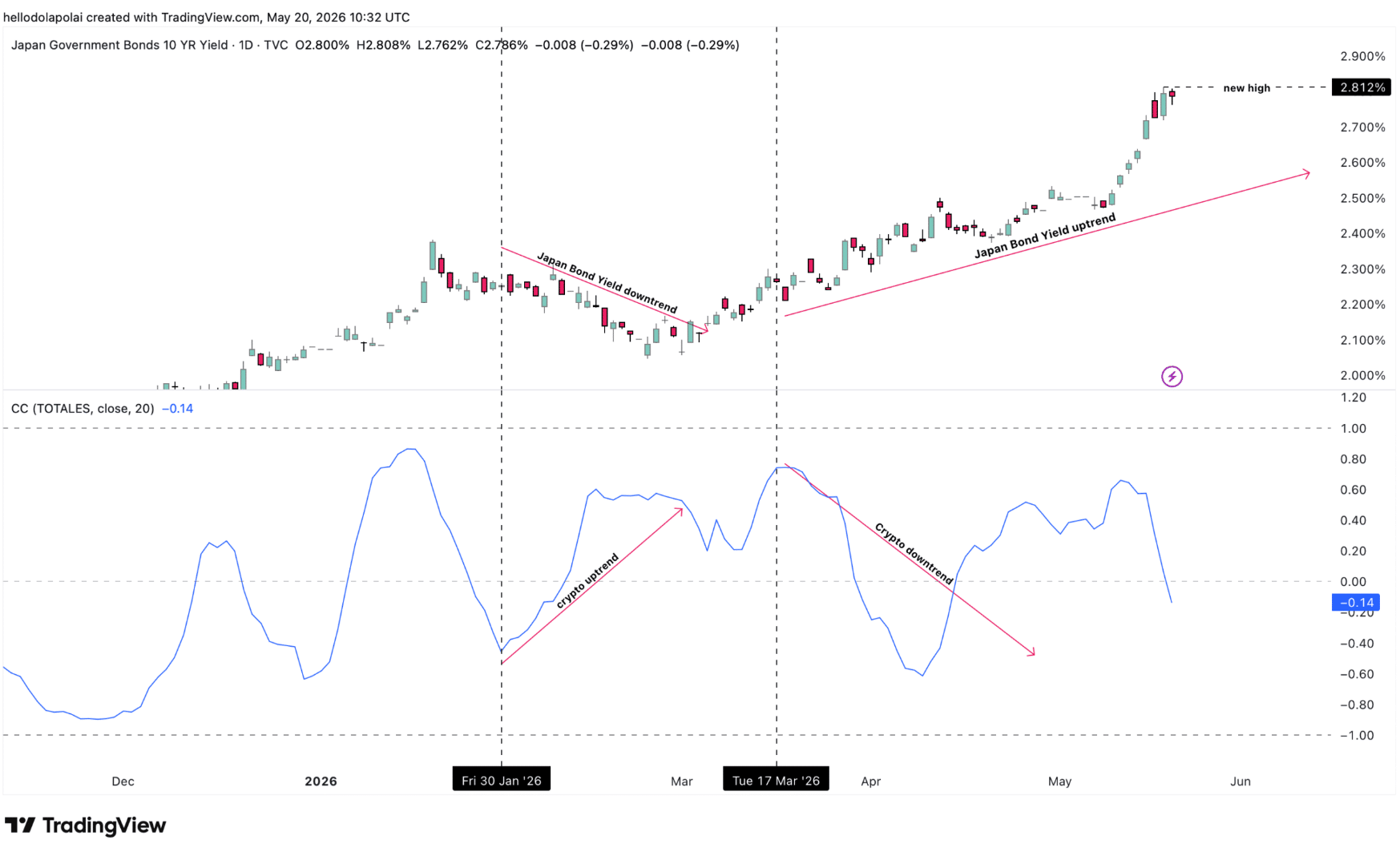
The latest market setup shows how crypto macro pressure can build quickly when inflation worries, sovereign debt concerns, and rate expectations all move in the same direction. U.S. 10-year Treasury yields recently traded around 4.67%, while Japan’s 10-year government bond yield remained near multi-year highs after a sharp monthly climb, keeping traders focused on liquidity rather than hype.
Crypto Macro Pressure Builds as Bond Yields Rise
The main issue is not only that yields are higher. It is that higher yields change the market’s risk math. When government bonds offer stronger returns, investors have less reason to chase volatile assets unless the reward looks much better. That is why crypto macro pressure often rises during bond selloffs, especially when Bitcoin is still treated by many institutions as a risk asset rather than a pure safe haven.
This matters because crypto depends heavily on liquidity. When money is cheap, speculative appetite tends to widen. When money becomes expensive, capital moves toward safer income and away from assets that need strong sentiment. In that environment, Bitcoin can still hold up better than smaller tokens, but altcoins usually feel the squeeze first.
Why Japan Matters More Than Usual
Japan’s bond market deserves attention because it has long been a key part of global liquidity. For years, low Japanese rates helped support carry trades, where investors borrowed cheaply in yen and deployed money into higher-return markets. When Japanese yields rise, that trade becomes less comfortable. Investors may reduce leverage, hedge currency exposure, or bring capital home.
That is where crypto macro pressure becomes a wider market issue. It is not only about Japanese bonds. It is about whether global capital is becoming more cautious at the same time. A Reuters report noted that global bond markets have been under strain as U.S. Treasury yields hit one-year peaks and Japanese government bond yields reached record levels, with inflation and geopolitical risks adding to the stress.
For crypto investors, this is similar to driving uphill with a heavier load. Bitcoin can still move higher, but it needs stronger demand, stronger ETF flows, and better risk sentiment to overcome the drag.
U.S. Yields Keep Bitcoin Traders on Alert
U.S. Treasury yields remain the market’s most watched signal because they influence the dollar, borrowing costs, equity valuations, and institutional portfolio decisions. The 10-year Treasury yield was listed at 4.67% on May 19, 2026, according to Federal Reserve data, before easing toward the 4.58% area on May 21.
That pullback offered some relief, but the broader message remains clear. Crypto macro pressure is still present as long as yields stay elevated and inflation expectations remain sticky. If investors believe rates may stay higher for longer, Bitcoin can face resistance near key supply zones while altcoins struggle to attract fresh inflows.
The key indicators to watch are Treasury yields, the U.S. dollar index, Bitcoin ETF flows, open interest, funding rates, and stablecoin supply. If yields rise while ETF demand weakens, the market may turn defensive. If yields cool and stablecoin liquidity expands, crypto could regain momentum.

Marketing Analysis: The Narrative Is Shifting
From a marketing angle, crypto brands, exchanges, and token projects need to adjust their messaging. In easier markets, growth stories and high-return narratives often work. Under crypto macro pressure, investors look for proof, not slogans. They want liquidity depth, real users, clean tokenomics, security, and a clear reason to stay exposed.
This is especially important for altcoin projects. When macro conditions tighten, weak narratives fade quickly. Projects with strong communities may still generate attention, but attention alone does not support price for long. The market starts asking harder questions: Is there revenue? Is there utility? Are unlocks controlled? Is the token actually needed?
That shift changes content strategy too. Search demand often moves from “best crypto to buy” toward “why is crypto down,” “Bitcoin support levels,” “Treasury yields impact on crypto,” and similar intent-based queries. Publishers and marketers that answer those questions clearly can capture stronger organic traffic while the market is uncertain.
What Traders Should Watch Next
The next phase depends on whether yields keep cooling or resume climbing. A sustained drop in U.S. yields could improve liquidity expectations and support Bitcoin’s risk bid. A fresh spike, especially alongside stronger inflation data, would likely deepen crypto macro pressure and push traders toward cash, stablecoins, or lower-beta exposure.
Bitcoin’s reaction around major support zones will be important. If spot demand holds and ETF inflows remain steady, the market may absorb macro stress better than expected. If leverage builds while price fails to move, liquidation risk can increase. Altcoins need even more caution because they usually depend on broader confidence, not just Bitcoin stability.
Conclusion
The current market is a reminder that crypto does not trade in a vacuum. Rising yields in Japan and the U.S. are tightening the financial backdrop and forcing investors to price risk more carefully. Crypto macro pressure does not mean the market must collapse, but it does mean rallies may need stronger evidence behind them. For now, the smartest reading is simple: liquidity, yields, and inflation signals are leading the market, while sentiment is following.
Frequently Asked Questions
Why do rising bond yields hurt crypto?
Rising bond yields can make safer assets more attractive, so investors may reduce exposure to volatile markets like Bitcoin and altcoins.
Is Bitcoin still a hedge during yield spikes?
Bitcoin can act as a hedge in some situations, but during liquidity stress it often trades like a risk asset, especially when the dollar and yields rise together.
What is the most important indicator now?
The U.S. 10-year Treasury yield is one of the most important signals because it affects global liquidity, risk appetite, and institutional allocation.
Can altcoins recover if yields stay high?
Altcoins can recover, but the path is harder when crypto macro pressure remains strong because speculative liquidity becomes more selective.
Glossary of Key Terms
Bond Yield
The return investors receive for holding government debt. Higher yields can pull money away from risk assets.
Liquidity
The amount of available money moving through markets. Crypto usually performs better when liquidity is expanding.
Risk Asset
An asset that can offer high returns but carries higher volatility, such as crypto or growth stocks.
Treasury Yield
The return on U.S. government bonds. It is a major benchmark for global financial markets.
Stablecoin Supply
The amount of dollar-linked crypto liquidity available on-chain, often used to measure buying power.
Sources
Disclaimer: This article is for informational purposes only and does not provide financial advice. Cryptocurrency markets are volatile, and readers should conduct independent research before making investment decisions.