



Ethereum stablecoin inflows are quietly reshaping market dynamics, offering a subtle yet powerful signal that Q2 could unfold very differently. Beneath the surface, liquidity is moving with intent, not noise.
According to the source, Tether minted $1 billion USDT on Ethereum, shifting liquidity balance at a critical moment. Data from suggests that capital rotation is accelerating, with Ethereum gaining renewed traction as a settlement layer.
A $1B Mint That Rebalances Ethereum Liquidity in Real Time
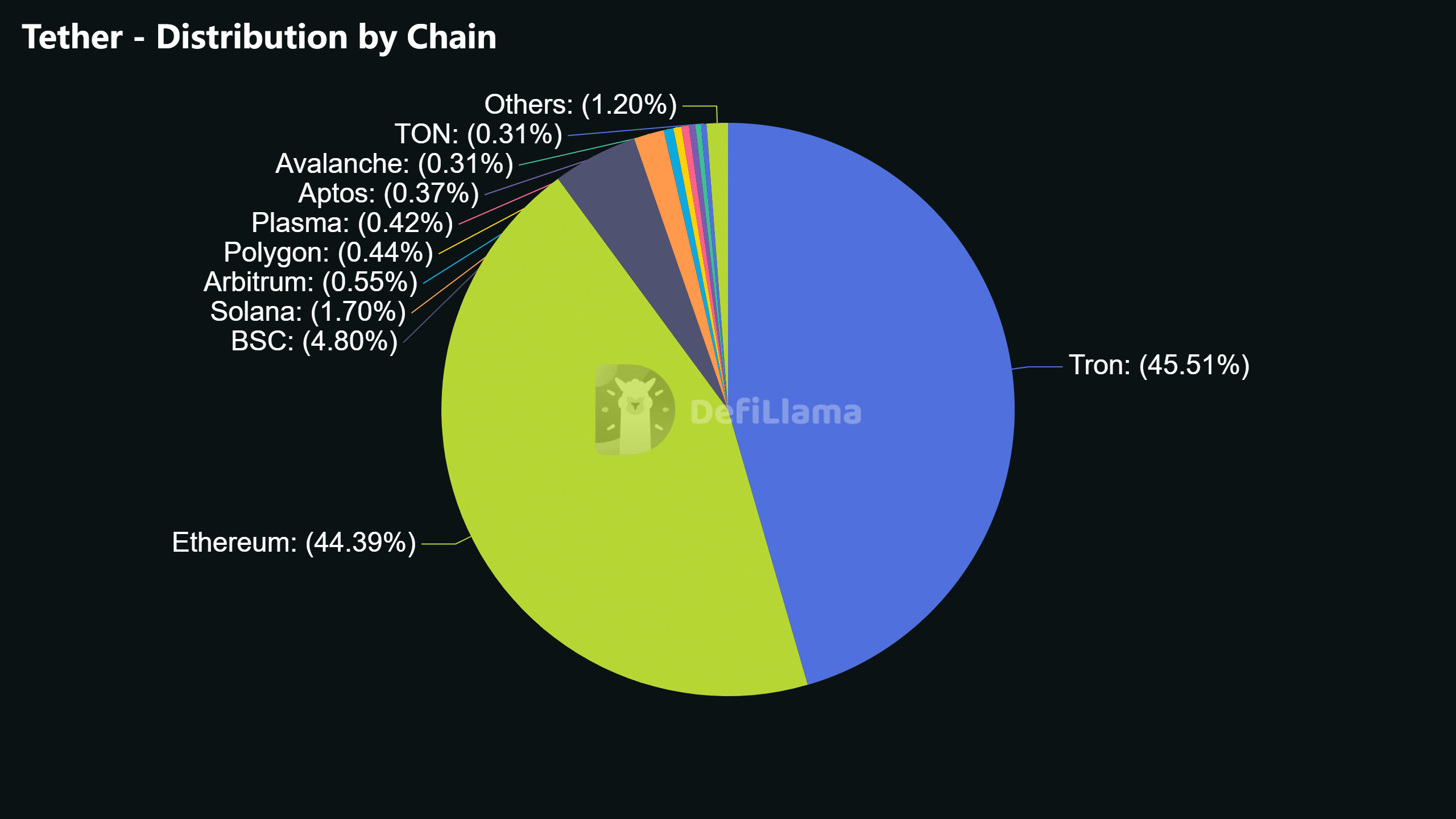
The recent mint did not happen in isolation. It arrived when TRON was holding a slight edge in USDT supply. Current figures show TRON at 45.57% and Ethereum close behind at 44.34%.
However, growth trends tell a more revealing story. Ethereum recorded a 3.19% increase in USDT supply, while TRON managed only 0.44%. This gap signals a gradual but meaningful shift. Ethereum liquidity is strengthening where activity matters most, within active transaction layers rather than idle reserves.
Ethereum Stablecoin Inflows Drive Record-Breaking Activity
Ethereum stablecoin inflows are not sitting still. They are fueling real usage across the network. Ethereum processed over 200 million transactions in Q1, marking its busiest period on record.
March alone contributed nearly 35% of that volume. This spike aligns closely with rising inflows, suggesting a direct link between liquidity and activity. A recent notes, “Stablecoin flows often act as early signals of rising network demand,” reinforcing the role of Ethereum stablecoin inflows as a leading indicator.
At the same time, USD Coin reached a new milestone, with monthly volume exceeding $1.8 trillion. Tether-related metrics also showed a 714% market cap surge within a month. These figures highlight how Ethereum liquidity is actively circulating, not stagnating.
From Liquidity to Performance: Ethereum Gains Ground
Market performance reflects the same trend. Ethereum delivered a 6.97% return in March, significantly outperforming Bitcoin, which lagged behind.
This shift came after two months of underperformance. The ETH/BTC ratio rose by 5.15%, marking its strongest monthly gain since August 2025. Here, Ethereum stablecoin inflows played a quiet but decisive role.
Liquidity did not follow price. Instead, it helped shape it. Ethereum liquidity translated into stronger technical positioning, reinforcing Ethereum’s standing against Bitcoin.

Ethereum Stablecoin Inflows Could Define Q2 Momentum
The broader market remains cautious due to geopolitical tension between Iran and the United States. Risk sentiment is fragile, and volatility continues to linger.
Yet, Ethereum stablecoin inflows remained strong throughout March. This consistency signals confidence beneath the surface. Nearly 35% of quarterly transaction volume occurred during that single month, reflecting sustained engagement.
If this trend continues, Ethereum liquidity could drive another phase of expansion. More inflows would likely support higher transaction counts, deeper DeFi usage, and stronger relative performance. The recent $1B mint may be an early signal, not an isolated event.
Conclusion
Ethereum stablecoin inflows are shaping a narrative that goes beyond short-term speculation. They reveal where capital is positioning ahead of broader market moves.
The $1 billion USDT mint highlights how Ethereum liquidity is strengthening at both structural and technical levels. Activity is rising, performance is improving, and the network is regaining momentum.
Markets often react late to such signals. Liquidity, however, tends to move early. If current patterns hold, Ethereum’s Q2 could reflect the groundwork being laid today.
Glossary of Key Terms
Stablecoin Inflows: Movement of stablecoins into a blockchain, signaling rising liquidity and trading demand.
Ethereum Liquidity: Available capital within Ethereum used for trading, lending, and decentralized finance activity.
On-Chain Activity: Transactions recorded directly on a blockchain network, reflecting real usage.
ETH/BTC Ratio: A metric comparing Ethereum’s performance against Bitcoin.
DeFi: Decentralized finance applications that operate without traditional intermediaries.
FAQs About Ethereum Stablecoin Inflows
What are Ethereum stablecoin inflows?
They refer to the movement of stablecoins like USDT and USDC into Ethereum, increasing available liquidity and activity.
Why is Ethereum liquidity important?
It supports trading, DeFi growth, and overall network efficiency by ensuring smooth capital flow.
How did Ethereum outperform Bitcoin recently?
Strong inflows boosted demand and activity, helping Ethereum gain nearly 6.97% in March.
Can stablecoin inflows predict market trends?
They often act as early indicators, showing where capital is moving before price changes.