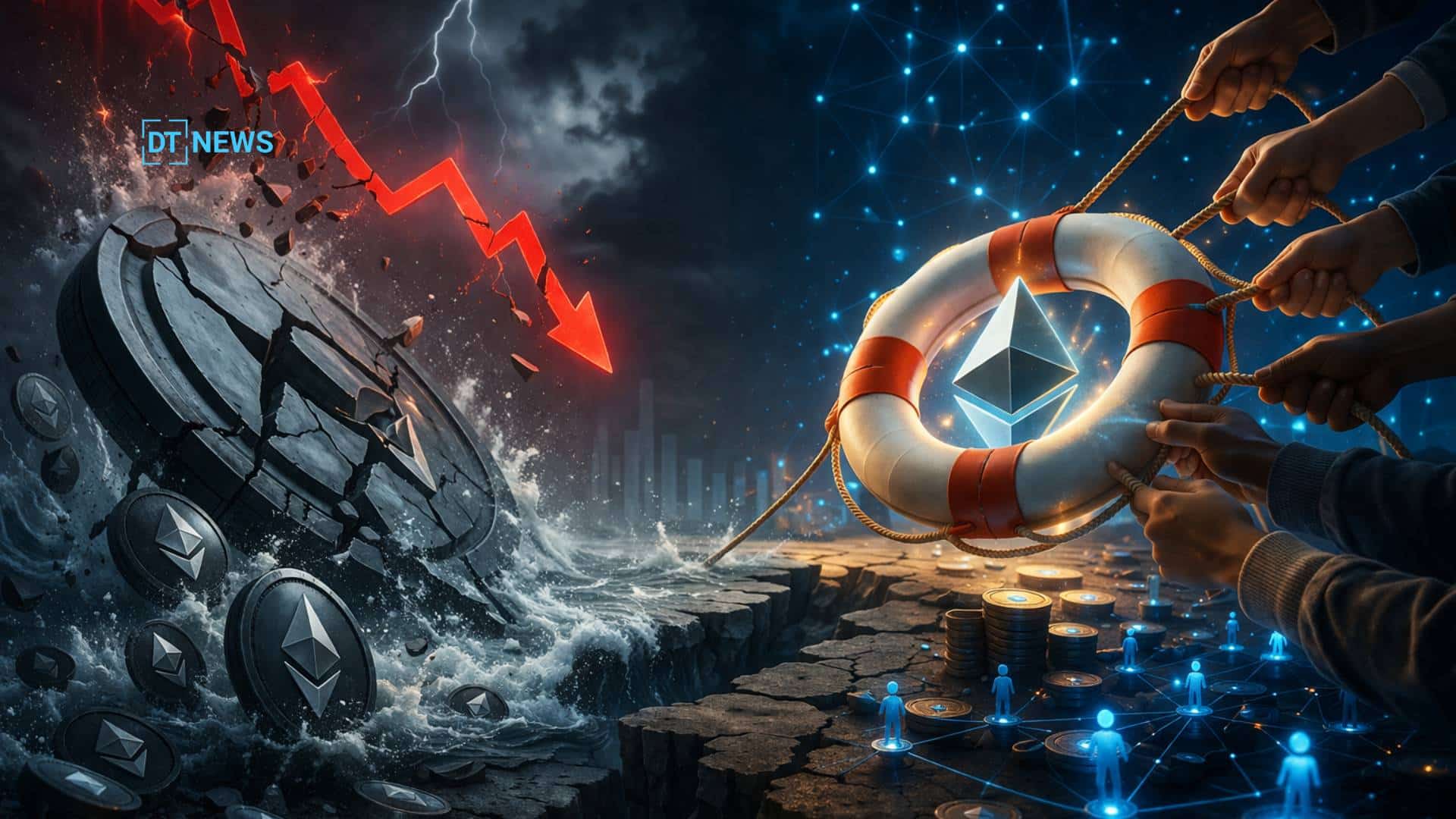

Decentralized finance has entered another uncomfortable stress test after the KelpDAO crisis helped trigger a sharp fall in DeFi TVL, exposing how fast confidence can leave the market when bridge security, lending collateral, and liquidity risk collide. The incident has also shown the other side of DeFi: fast coordination, emergency funding, and public on-chain efforts to contain damage before it spreads deeper into the ecosystem.
DeFi TVL Falls as KelpDAO Fallout Hits Confidence
DeFi TVL reportedly fell by around $13 billion this month after the KelpDAO exploit disrupted confidence across lending and restaking markets. The incident involved around 116,500 rsETH, while reports placed the exploit size near $292 million to $293 million. The shock moved quickly because the affected asset was connected to lending activity, collateral use, and liquidity pools across major DeFi platforms.
This is why DeFi TVL matters beyond one protocol. It is not just a scoreboard for locked funds. It reflects trust, available liquidity, and user willingness to keep capital inside smart contracts when risk rises. When that number drops sharply, the market is usually saying one thing first: investors want room to breathe.
KelpDAO Rescue Reveals DeFi’s Strong Side
The KelpDAO rescue effort showed that DeFi can still move with surprising speed when pressure builds. A coordinated recovery effort reportedly lined up tens of thousands of ETH, reducing the remaining rsETH shortfall after recoveries, freezes, and community support. That kind of response is not perfect, but it does show that open financial networks can organize capital without waiting for a bank, court, or regulator to lead the process.

For DeFi TVL, this matters because recovery confidence can slow exits. If users believe losses are being addressed, liquidity may return gradually. Still, the market does not forget easily. In crypto, trust is rebuilt block by block, not through one reassuring update.
Bridge Risk Remains the Weakest Link
The reported attack route again placed cross-chain infrastructure under scrutiny. Security researchers said the exploit involved compromised infrastructure and a bridge-related weakness, with some reports pointing to a verifier configuration problem. In plain English, one weak setup can become a wide-open door when large assets move across chains.
That is a serious signal for DeFi TVL because restaking assets, wrapped tokens, and cross-chain collateral now sit at the center of many yield strategies. If bridge security fails, the risk does not stay in one corner. It can spill into borrowing markets, stablecoin pools, and liquidation engines.
Key Crypto Indicators Investors Are Watching
The first key indicator is DeFi TVL, because it shows whether capital is returning or still leaving. The second is liquidity utilization, especially when lending pools hit extreme levels and withdrawals become harder. The third is collateral quality, since unbacked or questionable assets can pressure lending protocols fast.
Another signal is governance speed if DAOs take too long to vote during a live crisis, losses can grow while the market waits. Finally, investors are watching ETH flows, stablecoin liquidity, and protocol revenue. These indicators help show whether the sector is healing or simply patching holes.
Conclusion
The KelpDAO crisis has become a clear example of DeFi’s mixed reality. The sector can coordinate rescue capital quickly, but it still carries deep technical and governance risks. DeFi TVL will be the key number to watch now, because capital returning would suggest confidence is recovering. If it keeps falling, the market may be warning that bridge risk and collateral design need a harder reset.
FAQs
What happened to KelpDAO?
KelpDAO was hit by a major exploit involving rsETH, with reported losses near $292 million to $293 million.
Why did DeFi TVL drop?
DeFi TVL dropped as investors pulled liquidity after the exploit raised concerns about collateral safety, bridge risk, and lending exposure.
Is DeFi still safe?
DeFi can offer transparency and fast coordination, but users must still review smart contract risk, bridge exposure, liquidity depth, and protocol audits.
Glossary of Key Terms
DeFi TVL: Total value locked in decentralized finance protocols.
rsETH: A liquid restaking token connected to ETH-based restaking activity.
Bridge: Technology used to move assets between blockchains.
Collateral: Assets used to borrow funds in lending protocols.
Liquidity: Available funds that allow trading, borrowing, or withdrawals.
Sources
Disclaimer: This article is for informational purposes only and does not provide financial advice. Cryptocurrency and DeFi investments carry high risk.