



BNB Chain Layer 1 is undergoing a major architectural overhaul aimed at supporting artificial intelligence-powered transactions, institutional settlement, and higher network throughput as BNB trades near its lowest level since October 2024. The long-term roadmap targets up to 1 million transactions per second while introducing native privacy, account abstraction, and planned post-quantum security research.
- How does the BNB Chain Layer 1 roadmap reshape the network?
- Why is artificial intelligence becoming a central focus?
- How will the new network strengthen privacy?
- What technical upgrades are included in the redesign?
- What are the risks and limitations of the roadmap?
- How has the market reacted to the announcement?
- Conclusion
- Glossary
- Frequently Asked Questions About BNB Chain Layer 1 Upgrade
The initiative comes as the network looks to address slowing on-chain activity and growing competition from rival blockchain ecosystems. However, the redesigned network is not expected to reach its public testnet until late 2026, and while its new transaction-routing model is designed to reduce front-running, it does not completely eliminate transaction-ordering risks.
How does the BNB Chain Layer 1 roadmap reshape the network?
The BNB Chain Layer 1 roadmap focuses on building infrastructure for applications that extend beyond conventional decentralized finance. Rather than concentrating only on consumer-facing blockchain use cases, the redesign is intended to support institutional finance, high-frequency trading, autonomous AI agents, and machine-to-machine commerce.

The proposed architecture begins with a target of more than 100,000 transactions per second and has a long-term design goal of reaching 1 million TPS. Developers view that level of throughput as necessary for future applications such as high-frequency trading, autonomous payments, and institutional settlement. The network is also designed to achieve transaction pre-confirmations below 50 milliseconds and block finality in under one second to improve execution speed for latency-sensitive applications.
Why is artificial intelligence becoming a central focus?
The BNB Chain Layer 1 overhaul is largely driven by expectations that autonomous AI agents will play a growing role in digital finance. These software systems are expected to execute financial transactions, purchase digital services, rebalance portfolios, and complete micro-payments without continuous human involvement.
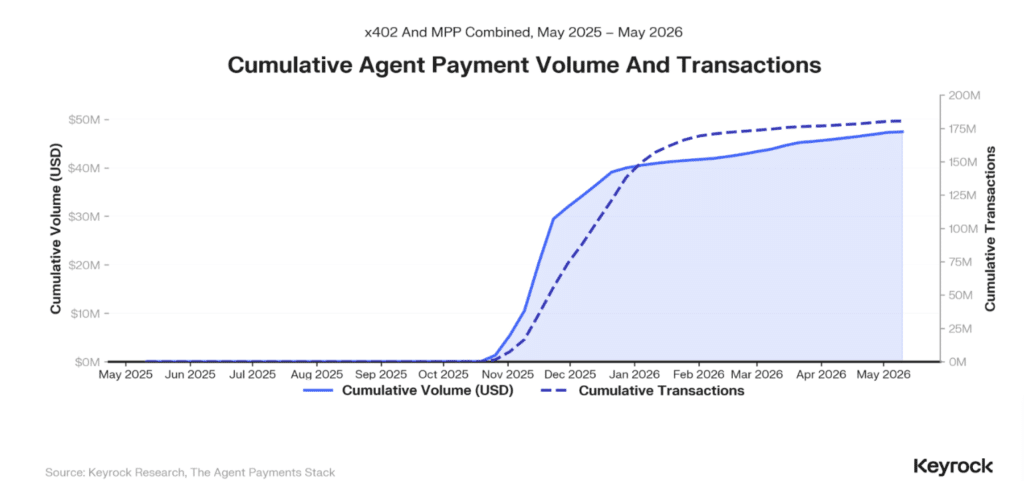
Research cited by the network estimated that autonomous agents settled around $73 million through 176 million blockchain transactions between May 2025 and April 2026. Although the market remains at an early stage, companies including Google, Coinbase, and Visa are already developing competing systems for agentic commerce.
Industry projections also point to significant long-term growth. McKinsey estimates that retail agentic commerce could reach as much as $5 trillion by the end of the decade. To prepare for that opportunity, BNB Chain has introduced BNB Agent Studio along with a software development kit that integrates with large language models and cloud services such as AWS Bedrock, allowing developers to deploy autonomous on-chain agents with built-in payment infrastructure.
How will the new network strengthen privacy?
The BNB Chain Layer 1 redesign also introduces protocol-level privacy features to meet growing demand for confidential blockchain transactions. Public blockchain networks typically expose wallet balances, transaction histories, and trading activity, creating transparency that supports auditing but also allows competitors and outside observers to monitor financial activity.
That challenge has become increasingly important as institutions move more assets on-chain through tokenized products and settlement systems. To address those concerns, the network is developing confidential transactions and selective disclosure, allowing users to keep sensitive financial information private while still sharing data required for compliance, audits, or regulatory reporting.
Zero-knowledge proofs are expected to play a central role by verifying transactions without exposing underlying information. The shift also reflects wider industry trends. Many older privacy coins continue to face regulatory pressure, encouraging blockchain networks to integrate confidentiality directly into smart contract infrastructure instead of relying on separate privacy-focused ecosystems.
What technical upgrades are included in the redesign?
The BNB Chain Layer 1 architecture combines several infrastructure improvements designed to increase performance while supporting more sophisticated financial applications. One of the key additions is TxStream, which removes the traditional public mempool by routing transactions directly to the block leader.
This approach is intended to reduce front-running and transaction reordering because pending transactions are no longer publicly visible before confirmation. However, it reduces rather than completely removes transaction-ordering risks, including potential validator-side or latency-based advantages. Another feature, PriorityLane, reserves block space for critical operations such as oracle updates, bridge transactions, and liquidations during periods of market volatility or network congestion.
The roadmap also includes account abstraction, allowing developers to sponsor gas fees, batch multiple transactions, schedule execution, and support passkey signing. Together with co-optimized consensus, parallel execution, and LtHash-based storage, these upgrades are intended to improve transaction processing while supporting AI-driven financial systems and institutional users.
What are the risks and limitations of the roadmap?
The BNB Chain Layer 1 project remains under active development, meaning several of its headline features are still years away from deployment. The public testnet is scheduled for late 2026, while the mainnet is planned for early 2027. As a result, the proposed performance improvements remain long-term objectives rather than immediately available capabilities.
Although TxStream is expected to reduce exposure to front-running and transaction manipulation, it does not fully eliminate transaction-ordering risks. Likewise, the planned privacy framework will still need to satisfy regulatory and compliance requirements as institutions increase blockchain adoption.
The target of 1 million transactions per second is also a long-term design goal rather than an immediate network benchmark, reflecting the level of scalability developers believe future AI-powered financial systems may eventually require.
How has the market reacted to the announcement?
The announcement comes during a period of weaker network performance and softer market conditions for BNB. The token has declined more than 35% this year to $563, marking its lowest valuation since October 2024. BNB is currently trading around $573.69 after rising 1.38% over the past 24 hours following the Layer 1 announcement.

Over the past month, the token remains down 5%. Its market capitalization stands at $77.34 billion after a 1.4% increase, while 24-hour trading volume is $1.06 billion, down 3.73%. The volume-to-market-cap ratio is 1.37%. Network activity has also weakened.
Transactions on BNB Chain fell 12.5% during the first quarter of the year, while Solana and Ethereum recorded growth of 46.4% and 38%, respectively. The roadmap reflects the network’s effort to strengthen its position by focusing on lower latency, greater scalability, enhanced privacy, and infrastructure designed for AI-powered financial applications.
Conclusion
BNB Chain Layer 1 represents a long-term effort to redesign the network around the evolving needs of artificial intelligence, institutional finance, and higher-value blockchain activity. The roadmap combines faster transaction processing, native privacy, account abstraction, and planned post-quantum security research into a single development strategy.
At the same time, the project carries execution risks because several of its core features will not reach testing until late 2026 and some technical limitations, including transaction-ordering risks, remain. Whether the overhaul can improve network activity and support broader adoption will become clearer as development progresses toward its planned testnet and mainnet milestones.
Glossary
BNB Chain Layer 1: The network’s upgraded core blockchain.
1 Million TPS: Goal of handling one million transactions per second.
AI Payments: Payments made automatically by AI systems.
AI Agents: Software that completes tasks without human input.
Native Privacy: Built-in protection for blockchain transaction data.
Frequently Asked Questions About BNB Chain Layer 1 Upgrade
What is the goal of the BNB Chain upgrade?
The goal is to process up to 1 million transactions per second and support future blockchain applications.
Why is BNB Chain focusing on AI payments?
BNB Chain wants to help AI agents make fast and automatic digital payments.
What is the target speed of the new network?
The long-term target is to process up to 1 million transactions every second.
When will the new BNB Chain network launch?
The testnet is planned for late 2026, and the mainnet is expected in early 2027.
Why is this upgrade important for institutions?
It offers faster transactions, better privacy, and features that support large financial operations.