
This article was first published on Deythere.
- The Big Picture: Crypto Custody in 2026
- What Are Custodial Wallets?
- What Are Non-Custodial Wallets?
- Custodial vs Non-Custodial Wallets: A Comparison
- Expert Weighs In: Finding the Right Balance Between Security, Control and Convenience
- Conclusion
- Glossary
- Frequently Asked Questions About Custodial vs Non-Custodial Wallet
The fact that more than 6.8% of the global population is holding onto cryptocurrency means that we’re dealing with a situation where hundreds of millions of people have to figure out how to keep their digital assets safe.
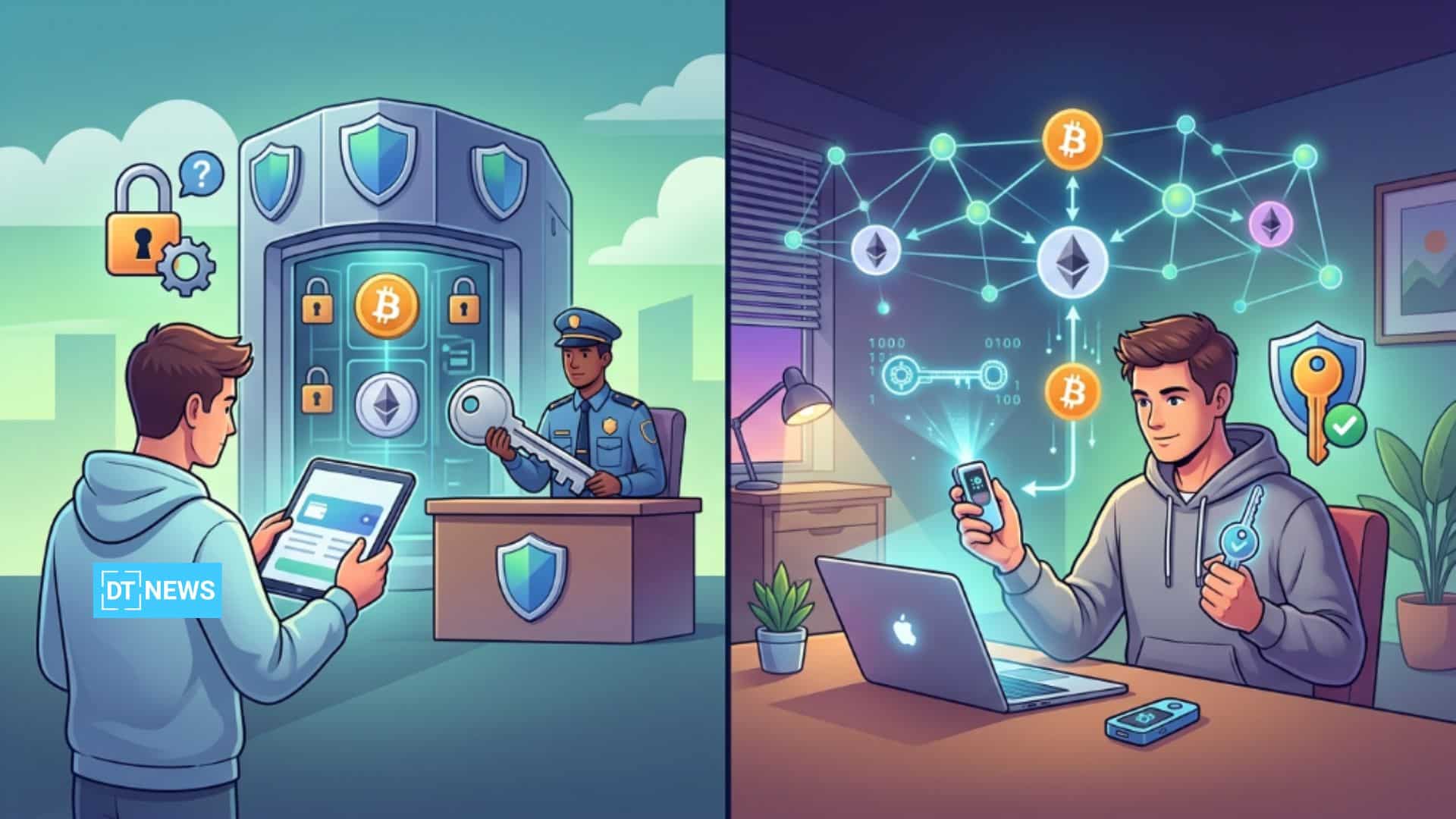
The two main options are custodial wallets (where a third party is holding onto your keys) and non-custodial wallets (where you hold the keys yourself ). Each of these custodial vs non-custodial Wallet models has their own pros and cons when it comes to convenience, security and control.
Custodial wallets are easy to use and many of them offer account recovery if you lose your password. However, in order to use one of these wallets, you have to trust the company that is holding onto your funds.
Non-custodial wallets (software or hardware you control) give you full ownership and privacy, but they place full responsibility on you: lose your keys and you lose your crypto.
The Big Picture: Crypto Custody in 2026
There’s currently over 250 million people around the world who make use of crypto wallets and the way people choose to hold onto these keys has never mattered more.
In 2025, about $3.4 billion was stolen from crypto platforms and wallets. It is especially worth noting that a lot of these huge losses came from centralized exchange hacks, a major risk when using custodial wallets. For instance, a single hack on a major exchange in February of 2025 resulted in a loss of $1.5 billion.
At the same time, however, the number of personal wallet hacks (where the hacker goes straight after the individual user) is on the rise.
Chainalysis says that individual wallet compromises went from 7.3% of all thefts back in 2022 up to roughly 37% in 2025. All in all, this shows that both custodial and non-custodial models have their own set of security risks.
What are you really risking? Custodial wallets work a lot like bank accounts (login, password, customer support). They make trading and recovery a breeze if you lose your password. But by giving control to a third party, you have to trust that company to keep your assets safe and if that provider fails or freezes assets, you are affected.
On the other hand, non-custodial models put you firmly in charge. You’re the one who gets to keep your keys safe (and the seed phrase too). This is more in line with the ethos of crypto, hence the motto “Not your keys, not your coins”, but it also means that you’re the one who is entirely responsible for making sure things stay safe. There is no password recovery if you lose your seed phrase.
In reality, between Custodial vs Non-Custodial Wallets, users have to weigh the pros of having easy access to their money and decent customer support (custodial) against the benefits of having control and being able to keep their finances private (non-custodial). On top of all that, there’s the added impact of regulatory trends in 2026.
What Are Custodial Wallets?
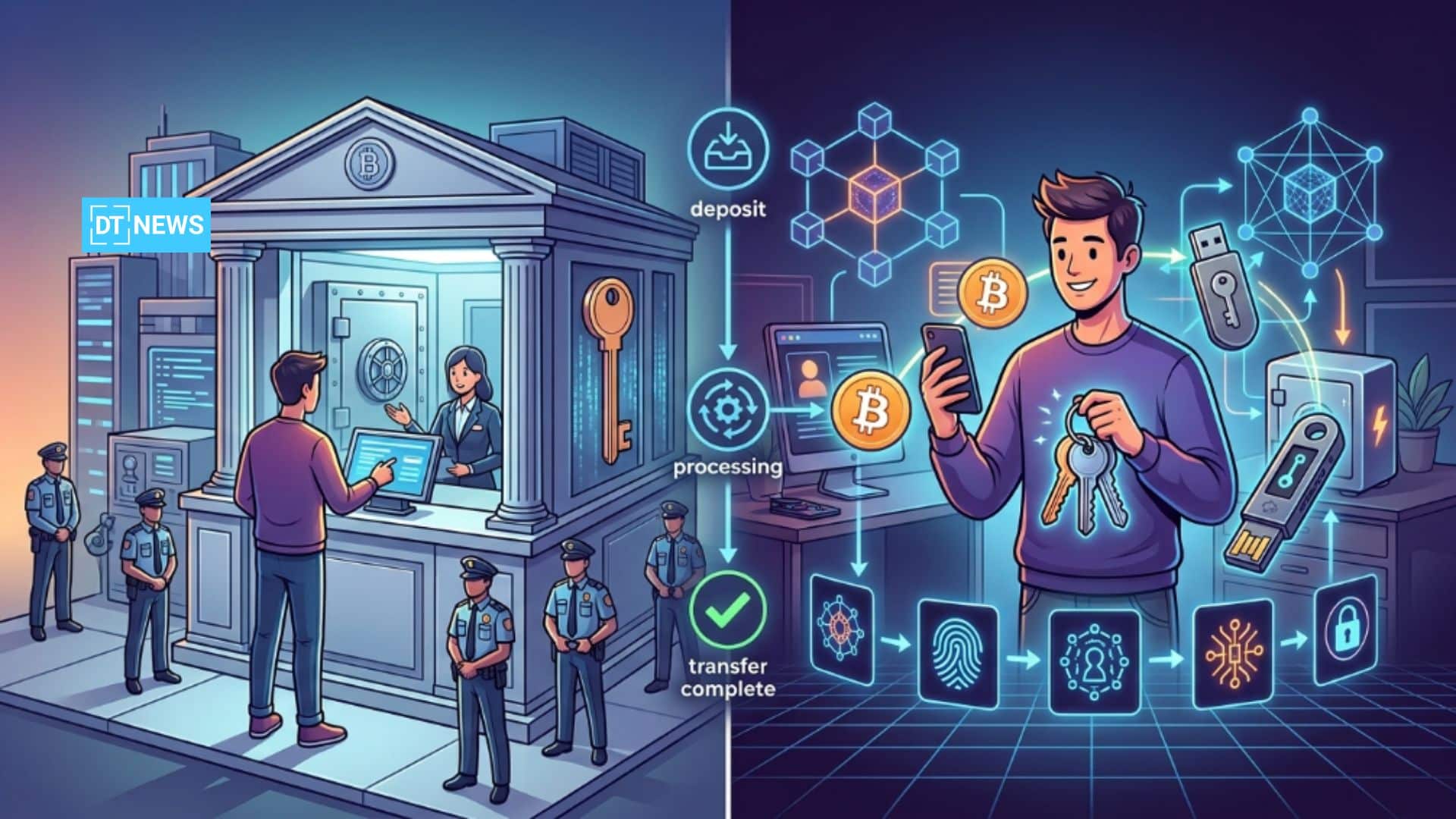
A custodial wallet is one where a third party like a crypto exchange, a bank, or a fintech holds your private keys locked away on your behalf. In essence, you’re trusting them to keep your crypto safe.
To the user , it’s just another account, you just log on with a username and password (and maybe two-factor authorization) and the service handles the keys behind the scenes. Coinbase, Kraken and Binance are all good examples of exchange wallets.
Pros of Custodial Wallets:
- It’s easy to use: You don’t have to hassle with trying to manage keys or backup phrases, the platform takes care of it all for you and usually provides a simple interface and easy ways to get fiat into your wallet. This has made custodial wallets more popular among beginners. For instance, Kraken notes that by letting a trusted exchange handle your keys, users get relieved from a technical burden.
- Account recovery: If you forget your password or get locked out of your wallet, custodial services usually have a system in place to help you get back in (email reset, customer support etc).
- Integrated services: Many custodial wallets come with extra features – trading, staking, lending or 24/7 support, making them convenient one stop shops.
- Security Resources: Large custodians often invest heavily in security like cold storage, multi signature wallets, and regular audits. A well-funded exchange can have stronger defenses than most individual users could ever hope for.
Cons of Custodial Wallets:
- Counterparty risk: You don’t actually hold the keys. If the custodian mismanages funds, tanks, or acts maliciously, you could end up losing out. Custodial accounts mean the centralized entity that issued the account still owns the private keys, even though they’re looking after your funds. This means in extreme cases (exchange bankruptcy, theft, or censorship), you may have no recourse.
- Centralization and Censorship: Custodial wallets re-introduce single points of failure. Trusting a centralized intermediary opens users up to some of the same limitations and risks of the traditional financial system. Governments or courts may order custodians to freeze or seize assets under certain conditions.
- Target for hackers: Big custodial services end up with huge balances, which makes them prime targets for hackers. High profile hacks like Mt. Gox in 2014, Coincheck in 2018, or Bybit in 2025 show that even the biggest players can get breached. A stolen private key or an insider exploit can result in devastating losses.
- Privacy / KYC requirements: Custodial platforms usually require users to verify their identity. You get convenience, but at the expense of some of your privacy. Your transactions and identity get logged, and funds may be reportable under KYC/AML laws.
What Are Non-Custodial Wallets?
Non-custodial wallets are also known as self-custody or Web3 wallets, and they give users complete control over their private keys. This includes software wallets (e.g. MetaMask, Trust Wallet) and hardware wallets (e.g. Ledger, Trezor).
When using a non-custodial wallet, you generate a recovery seed phrase or private key that you get to keep to yourself, no one else sees it. No company gets to hold your keys or access your funds ever.
Pros of Non-Custodial Wallets:
- Full ownership: You really do “own” your crypto, no question. No third party can freeze or move your funds without your say so. Non custodial wallets give users full control over their keys. With a hardware wallet, for instance, your private keys are never connected to the internet, so if an exchange gets hacked, your vault is completely safe from it.
- Privacy: These wallets usually don’t require any identity verification. You can make transactions in a more pseudonymous way (even though on-chain analysis is still possible).
- DeFi and dApp access: Non-custodial wallets are essential for interacting with decentralized applications, smart contracts, and DeFi protocols. They let you stake, swap, lend and participate in on-chain governance directly, which custodial accounts often restrict access to.
- No counter-party risk: Without a custodian, there’s no risk of some middleman misplacing or taking your funds. You’re completely immune to an exchange’s business failures .
Cons of Non-Custodial Wallets:
- Security burden on user: You alone are responsible for safeguarding keys. Forgetting your password or losing your recovery phrase can be catastrophic. As experts warn, if a private key is lost or compromised, there is no way to recover the funds. There’s no customer support hotline.
- Technical complexity: Using self-custody often requires more crypto-savviness. You must learn to handle seed phrases, backup wallets, and cold storage devices. Mistakes like sending funds to the wrong address or plugging a fake USB device can irreversibly lose assets.
- Vulnerable to personal hacks: While you avoid big exchange hacks, attackers target individual wallets. Malware, phishing sites, and malicious browser extensions can trick you into signing fraudulent transactions. Non-custodial users face “malware, phishing attacks, and malicious browser extensions” targeting their keys. Unlike a large custodian breach affecting many users, a compromise here usually affects only you with no insurance or recovery.
- No third-party recovery: If you lose access (loss of device, deletion of app), your funds are gone unless you have properly backed up keys or seed. Even hardware wallets require you to keep the seed safe; it is wise to write it on metal or paper and store it securely.
Custodial vs Non-Custodial Wallets: A Comparison
The following table summarizes key differences between custodial vs non-custodial wallets:
| Feature / Aspect | Custodial Wallets | Non-Custodial Wallets |
| Key Ownership | Third party (exchange or service) holds your private keys. | You hold the private keys/seed; no intermediary. |
| Ease of Use | Very user-friendly; login like any app. No key management needed. | Requires managing keys/seed. More technical setup. |
| Security Responsibility | Custodian handles security (e.g. cold storage, insurance). | User is fully responsible: safe-keeping keys, avoiding malware. |
| Account Recovery | Usually yes (password reset, KYC verification). | No recovery if keys are lost. |
| Privacy / KYC | High (KYC/AML required; identity on file). | More private (typically no KYC, just wallet addresses). |
| Regulation / Custody Laws | Subject to regulations; funds may be freezeable. Compliant custodians hold assets separately. | Not directly regulated (wallet software is not a custodian). Funds on-chain. |
| Access Speed (Institutional) | Good for rapid trading; instant trades on platform. | Depends on user’s own set-up (e.g. hardware wallet connectivity). |
| Use Cases | Beginners, traders, companies needing compliance, fiat onramps. | Long-term HODLing, DeFi users, privacy-focused crypto holders. |
| Example | Exchange accounts (Coinbase, Kraken, Binance). | Software/hardware wallets (MetaMask, Ledger, Trezor). |
Expert Weighs In: Finding the Right Balance Between Security, Control and Convenience
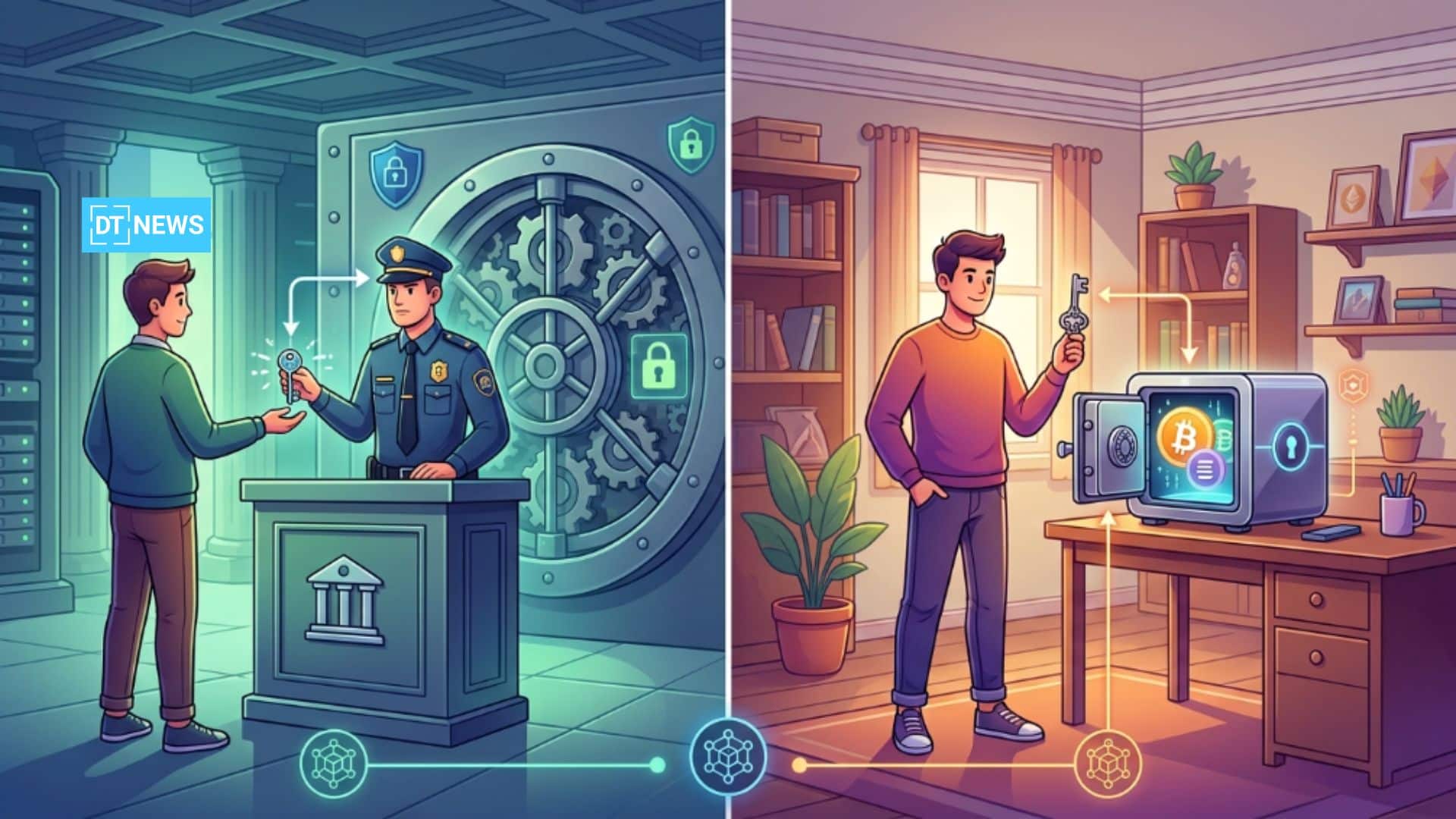
Experts tell us that neither kind of wallet is definitely the better option, choosing between custodial vs non-custodial wallets all depends on what matters most to you. Custodial wallets offer “ease of use” and support, which makes them a great fit for those who are just starting out. But they do come with some risks, like the risk of regulatory oversight and having to trust the provider.
On the other hand, non-custodial wallets give users “full control” and total privacy, but then users are left to deal with all the security problems themselves.
When it comes to institutions, financial auditors say that there’s no one-size-fits-all solution here, it is about having a mix of different options. Institutions often use a combination of different types of wallets: secure offline cold wallets for the money they keep in reserve, hot wallets for day-to-day business, and even custodial accounts for when they need to trade or lend.
Self-custody can remove counterparty risk and make it easier to do audits, but at the same time, using a qualified custodian can give you the security and regulatory compliance you need.
US regulations are changing so that qualified custodians have to meet some strict security standards (like NIST compliance, AML, and separate accounting) for holding customer crypto.
Crypto thought leaders also point out that there’s a psychological aspect of custodial vs non-custodial wallets. A lot of new users like the idea of having someone to hold their hand through the process. On the other hand, there are plenty of crypto purists out there who value their independence. This issue circles around trust vs control.
A lot of users end up taking a hybrid approach. For example, they might keep a bit of money on an exchange to make it easy to do quick trades, but the rest in a hardware wallet for long-term holding. There are also some new services that offer social recovery or multi-sig wallets which blend the two models together.
The right balance for any users depends on how comfortable they feel with technology, how much crypto they’re holding, and how much risk they’re willing to take.
Conclusion
The idea of custodial vs non-custodial wallets is really just a choice between convenience and control. Custodial wallets simplify access and support user needs, but require trusting third parties (and regulators) with your assets.
Non-custodial wallets give you total ownership and privacy, but then you’re stuck with all the security responsibilities yourself.
Some users will stick with custodial platforms because it’s easy and convenient, while others will go for self-custody because it feels more in line with the crypto ethos. To figure out which path is best for you between custodial vs. non-custodial wallets, understanding the pros and cons of each.
Glossary
Private Key : A secret string (like a password) that proves you own and can spend cryptocurrency from a wallet address.
Seed Phrase : A set of words generated by a wallet that can recreate your private key. You must store this securely to recover a non-custodial wallet if needed.
Hot Wallet : A wallet that is always connected to the internet like a mobile or desktop software wallet.
Cold Wallet : A wallet that is not connected to the internet.
KYC/AML : Regulatory processes (Know Your Customer, Anti-Money Laundering) requiring identity verification. Custodial services often enforce these for legal compliance.
DeFi : Decentralized Finance- blockchain-based financial services (lending, trading, etc.) that often require non-custodial wallets to access.
Frequently Asked Questions About Custodial vs Non-Custodial Wallet
What is a custodial wallet?
A custodial wallet is a crypto wallet where a third party, like an exchange or service, is holding onto the keys to your coins for you. You access your funds through their account system. Examples are the wallets on Coinbase, Kraken and Binance.
What is a non-custodial wallet?
A non-custodial wallet is the sort where you hold onto your private keys yourself,m. This includes software wallets (e.g., MetaMask, Trust Wallet) and hardware wallets (e.g., Ledger, Trezor). Nobody else has a copy of your keys, so you’re the only one who can send any transactions.
Which one is safer between Custodial vs Non-Custodial Wallet?
That depends on the situation. Custodial wallets can leverage professional security teams (cold storage, insurance), but if the provider fails or is hacked, you could lose funds. Non-custodial wallets eliminate counterparty risk and give full ownership, but if you personally make a mistake (lose keys or fall for a scam), there’s no recovery. Good practice is to evaluate your own security comfort.
Can I switch between custodial vs non-custodial wallets?
Yes you can. If you have some funds in a custodial wallet, you can take it out to a non-custodial one and the other way round. However, sending crypto (on-chain transfers) will incur network fees.
What happens if a custodial exchange goes bankrupt?
If a custodial service goes bankrupt, the people who used it are at risk of losing their funds outright, unless there’s some kind of insurance or regulatory protection in place.
References
Disclaimer: This article is for general information only. It’s not financial or legal advice. Always do your own research and talk to a professional before making any big decisions.