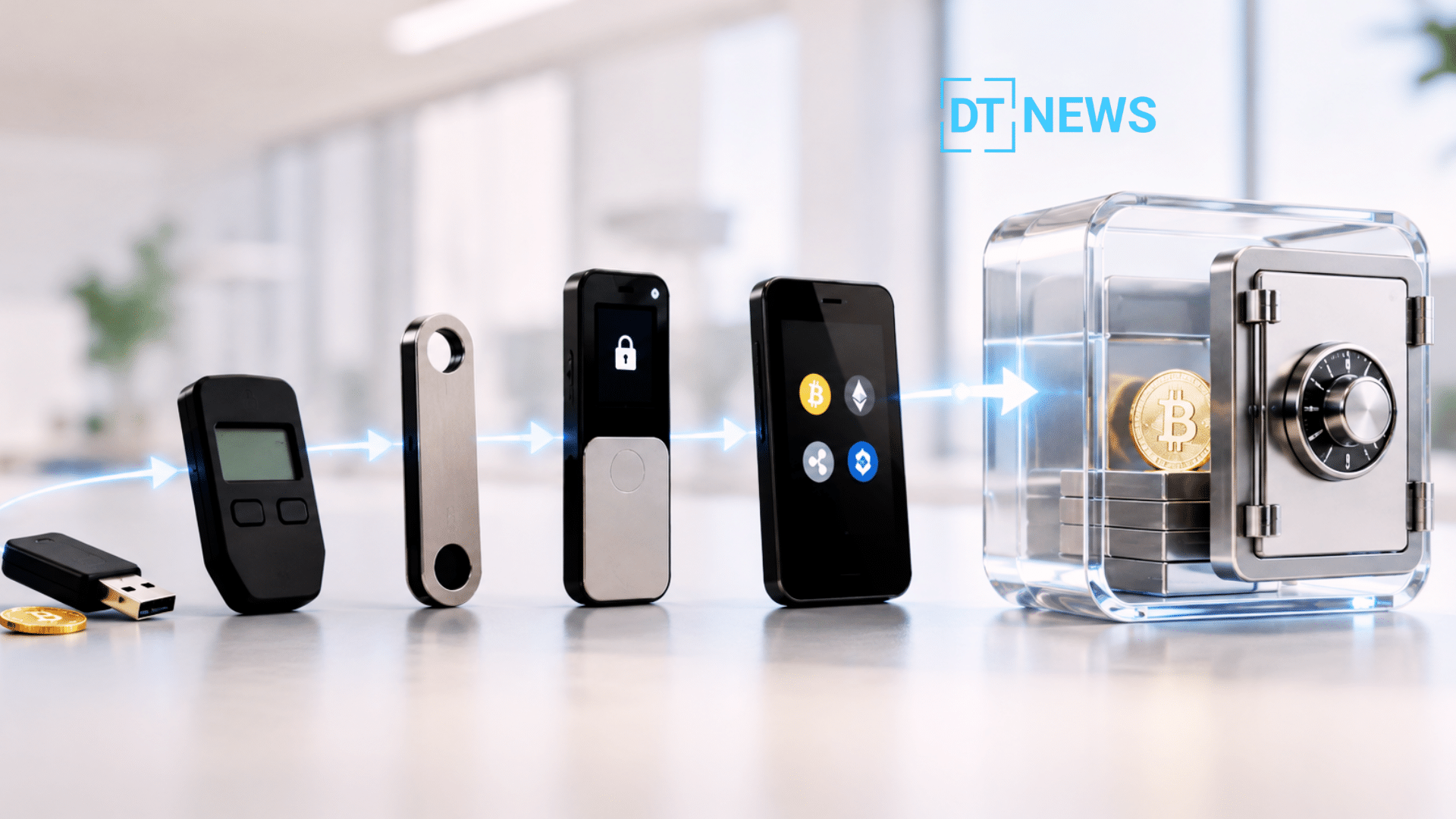

Hardware wallet evolution is reshaping digital asset security as cyber threats intensify across the crypto ecosystem. This shift is tightly linked with cold storage crypto, where private keys are stored completely offline to reduce exposure to hacking attempts and malware risks.
- Hardware wallet evolution and Cold storage security shift
- What makes modern hardware wallets more secure?
- How does cold storage protect against real-world attacks?
- Why is offline signing considered essential in crypto security?
- What risks are shaping the need for stronger wallet systems?
- How are users adopting hybrid storage models?
- How are experts viewing the long-term role of self-custody systems?
- Conclusion
- Glossary
- Frequently Asked Questions About Hardware Wallet Evolution
In this framework, users move away from exchange dependency and toward self-custody systems that prioritize control over convenience. The growing adoption reflects a broader transition in how financial sovereignty is understood in the Web3 era
Hardware wallet evolution and Cold storage security shift
Hardware wallet evolution has progressed from basic USB-like devices into advanced cryptographic security tools built around Secure Element (SE) chips. These chips are the same class of tamper-resistant technology used in passports and banking cards, ensuring private keys never leave the device environment.

The rise of cold storage crypto has become central to this transformation, especially as users respond to increasing incidents of exchange breaches and phishing attacks. In early 2026 alone, over $350 million in crypto assets were reported lost due to exchange breaches, phishing attacks, and hot wallet vulnerabilities.
This statistic highlights why offline storage systems are no longer optional for serious holders. Experts emphasize that hardware wallets evolution now focuses on isolating transaction signing from internet-connected systems, reinforcing long-term asset protection strategies.
What makes modern hardware wallets more secure?
Modern hardware wallets rely on internal key generation and offline transaction signing to eliminate exposure to online threats. When a wallet is set up, a 12, 18, or 24-word seed phrase is generated entirely inside the device.
Hardware wallet evolution ensures that private keys never leave the Secure Element chip. Instead, only cryptographic signatures are transmitted back to the connected device. This structure strengthens cold storage crypto by ensuring that even infected computers cannot extract sensitive data.
How does cold storage protect against real-world attacks?
Cold storage protects assets by removing private keys from any internet-connected environment. Transactions are prepared online but signed offline inside the hardware wallet. cold storage crypto reduces risk from phishing, malware, and remote access tools. Even if attackers compromise a device, they cannot access the private key because it never interacts with external systems.
This separation remains one of the strongest defenses in modern cybersecurity design. Hardware wallet evolution has further improved this system through physical confirmation steps, where users must manually approve transactions on-device before execution.
Why is offline signing considered essential in crypto security?
Offline signing ensures that transaction authorization happens in a fully isolated environment. This prevents attackers from altering transaction details without user awareness. Cold storage crypto relies heavily on this process, making it nearly impossible for hackers to manipulate funds remotely.
A private key, typically a 64-character hexadecimal string, remains locked inside the device at all times. In hardware wallet evolution, air-gapped devices now enhance this model by using QR codes instead of USB or Bluetooth connections, reducing attack surfaces even further.
What risks are shaping the need for stronger wallet systems?
Cybersecurity risks continue to evolve, pushing the industry toward stronger protections. In 2026, discussions around quantum computing intensified after estimates suggested that a system with approximately 500,000 qubits could potentially challenge traditional elliptic curve cryptography.
This has directly influenced hardware wallet evolution, encouraging development toward post-quantum cryptographic standards. At the same time experts stress that human error remains the leading cause of asset loss, especially through phishing scams and malicious links. Cold storage crypto helps mitigate these risks by ensuring that even compromised devices cannot expose private keys, but user behavior still plays a critical role in overall security.
How are users adopting hybrid storage models?
Users are increasingly splitting their holdings between hot and cold systems. A common approach is keeping a small portion in hot wallets for daily transactions while securing the majority in offline devices.
Cold storage crypto is widely chosen for long-term holdings, particularly once portfolios cross the $1,000–$2,000 range, where the impact of potential loss becomes materially higher and security considerations start outweighing day-to-day convenience. Hardware wallet evolution supports this strategy by integrating with trading platforms while keeping core funds offline.
How are experts viewing the long-term role of self-custody systems?
Experts see self-custody as a structural shift rather than a trend, driven largely by repeated exchange failures and growing awareness around personal key ownership. They argue that hardware wallets evolution is no longer just about better devices but about building user habits around security discipline and verification.

Many analysts point out that cold storage crypto is becoming a default standard for anyone holding meaningful value for extended periods. They stress that while trading activity will remain on exchanges, long-term storage is steadily moving offline to reduce systemic risk exposure.
Industry voices also highlight that education is now as important as technology itself. Even the most advanced hardware wallets evolution cannot fully protect users if recovery phrases are mishandled or phishing attempts succeed.
Conclusion
Hardware wallet evolution is now leaning toward more intelligent, air-gapped setups and stronger user verification steps with a clear focus on independence and resilience against both online exploits and physical compromise. These devices are no longer just storage tools but critical infrastructure for self-custody.
Cold storage crypto continues to stand as the most reliable protection against online threats, exchange failures and unauthorized access. As risks grow in scale and complexity, offline security remains the foundation of trust in the digital asset economy.
Glossary
Hardware Wallet Evolution: Crypto wallets becoming secure offline key storage devices
Cold Storage: Keeping crypto keys offline to avoid hacks
Self-Custody: Full control of crypto without third parties
Seed Phrase: Word backup to restore a wallet
Air-Gapped Wallet: Offline wallet using QR-based or no direct connections
Frequently Asked Questions About Hardware Wallet Evolution
Why is cold storage used in crypto?
Cold storage is used to keep crypto keys offline and protect them from hacks.
Are hardware wallets safe?
Yes, hardware wallets are safe because they keep private keys offline.
How does cold storage protect crypto?
Cold storage protects crypto by keeping private keys away from online attacks.
Can hackers access cold storage wallets?
No, hackers cannot access cold storage easily because it is offline.
Why are people using hardware wallets more now?
People use hardware wallets more because they offer stronger security and full control of crypto.