

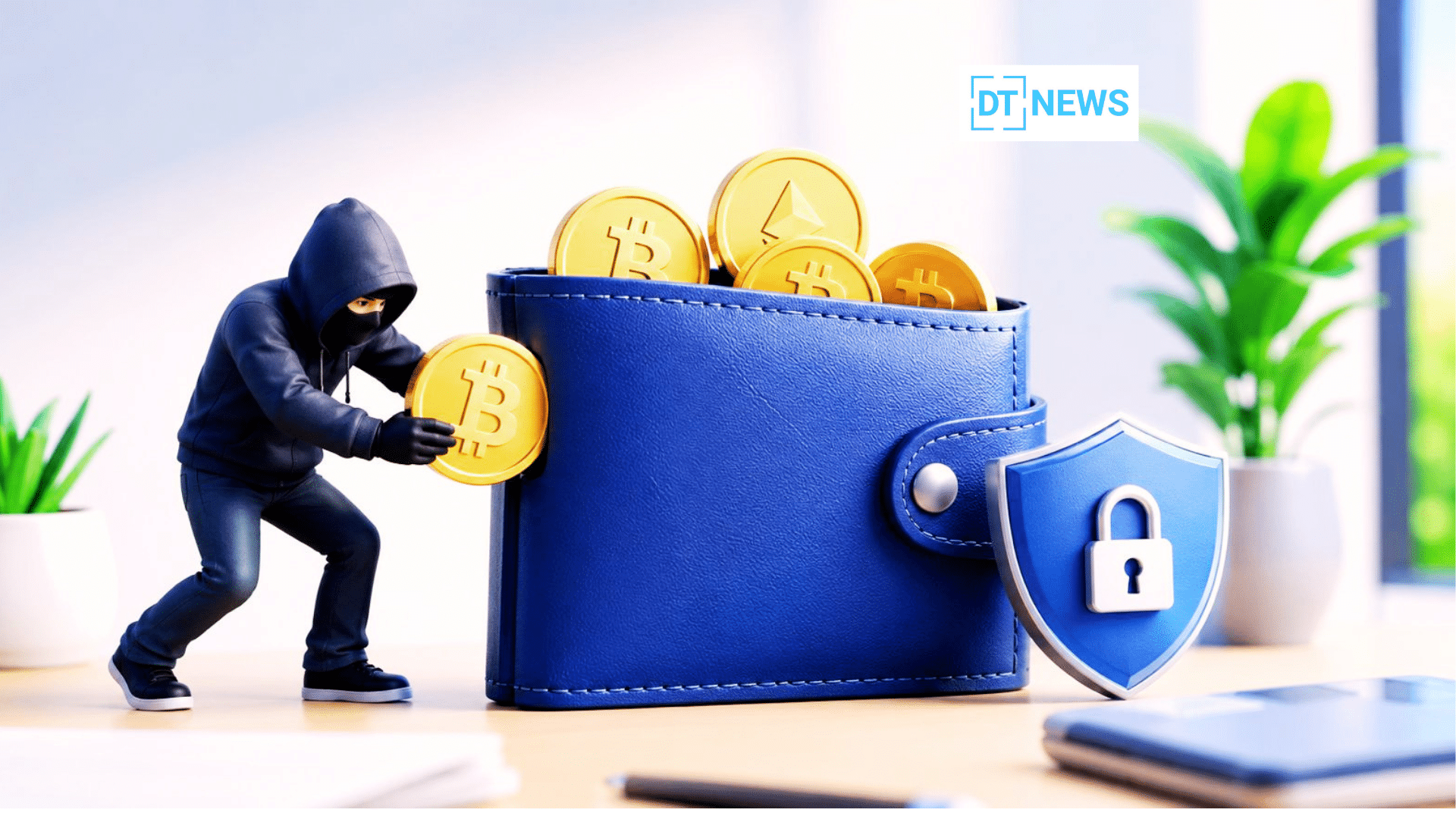

Crypto wallet hack incidents continue to rise as digital asset users face increasing exposure to phishing, malware, and approval-based theft methods. These events are no longer rare technical anomalies but routine security breaches across decentralized platforms.
- What does crypto wallet hack mean and why does it matter?
- How do attackers gain access to digital wallets?
- What immediate actions should be taken after compromise?
- What steps help contain losses and secure remaining assets?
- How should victims document and report the incident?
- What mistakes increase losses after an attack?
- How can future protection be strengthened with new tools?
- Conclusion
- Glossary
- Frequently Asked Questions About Crypto Wallet Hack 2026
Most losses happen within minutes once access is compromised, leaving users with little time to react. The growing frequency highlights how quickly digital finance risks are evolving in 2026.
April 2026 marked one of crypto’s worst months, with around $642M lost in major exploits and scams. Reports link about 76% of the losses ($577M) to North Korea–linked attacks across two major incidents.
Large DeFi breaches, including KelpDAO and a Solana-based exploit on Drift Protocol, added to the impact. Smaller cases like phishing, fake wallet apps, and address poisoning scams also continued to rise, showing that most crypto losses come from user-side mistakes rather than blockchain failures.
What does crypto wallet hack mean and why does it matter?
A crypto wallet hack refers to unauthorized access to a digital wallet that results in theft of cryptocurrency through stolen credentials, exposed seed phrases, or malicious transaction approvals. Crypto wallet hack cases matter because they directly impact user-controlled funds with no central authority to reverse transactions.
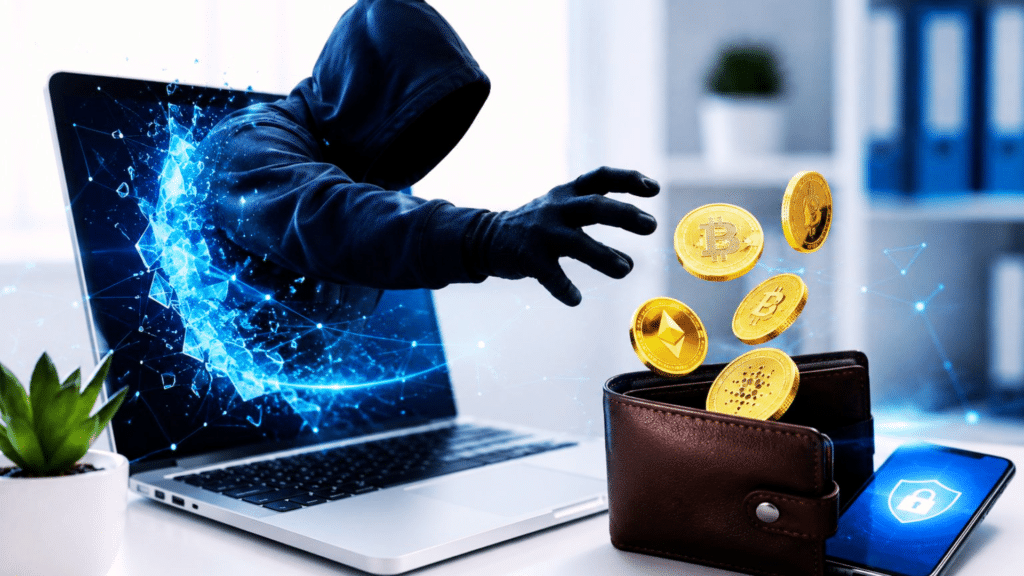
In most situations, attackers do not break blockchain systems but exploit human error, fake interfaces, or weak device security. This makes prevention and awareness more important than any recovery attempt.
How do attackers gain access to digital wallets?
Attackers typically rely on deception rather than technical breaches to execute a crypto wallet hack. Phishing websites are commonly used to mimic real wallet interfaces and trick users into entering recovery phrases. Malware infections also play a major role, as they can silently record keystrokes or modify wallet addresses during transfers.
Social engineering adds another layer, where users are manipulated into approving malicious transactions or revealing sensitive data. Hack can also occur through fake browser extensions that monitor activity in the background without user awareness.
What immediate actions should be taken after compromise?
The first response to a suspected crypto wallet hack is to assume full wallet compromise and stop all activity immediately. The affected device should be disconnected from the internet to prevent further unauthorized transfers. Users should then check blockchain explorers to track outgoing transactions and confirm asset movement.
If funds remain, they must be transferred quickly to a new secure wallet using a clean device. Delays after a crypto wallet hack often result in complete asset loss, especially when attackers are actively monitoring the wallet.
What steps help contain losses and secure remaining assets?
Once immediate transfer is complete, additional security measures become critical to limit further damage after a hack. Wallet permissions should be revoked using approval management tools to remove access granted to decentralized applications. This step is essential because attackers often drain funds through previously approved smart contract permissions even after initial access is cut off.
Security experts also recommend securing linked accounts such as email and exchange platforms. Passwords should be changed immediately, and two-factor authentication must be enabled to prevent re-entry attempts following a crypto wallet hack.
How should victims document and report the incident?
Proper documentation is essential after a hack to support tracking and reporting efforts. Users should record wallet addresses, transaction IDs, timestamps, and screenshots of activity. This information helps exchanges and investigators trace fund movement across the blockchain.
Reporting the incident to relevant exchanges is important, especially if funds are transferred to centralized platforms. A crypto wallet hack report filed early increases the chance of identifying linked accounts or freezing assets on regulated platforms.
What mistakes increase losses after an attack?
Several common mistakes can worsen the impact of a crypto wallet hack if not avoided immediately. One major risk is falling for recovery scams. These scams target victims by promising fund recovery in exchange for fees or private credentials. Another mistake is reusing compromised devices without proper cleaning, which allows attackers to regain access.
Ignoring approval revocation or continuing to use compromised wallets can also lead to repeated theft after a hack. In many cases, victims lose additional funds simply due to delayed action.
How can future protection be strengthened with new tools?
Long-term protection against a crypto wallet hack depends on stronger wallet architecture and disciplined user behavior. Hardware wallets remain a key defense because they keep private keys offline. Multi-signature and MPC-based wallets are also gaining adoption in 2026 as they require multiple approvals before transactions are executed, reducing single-point failure risk.
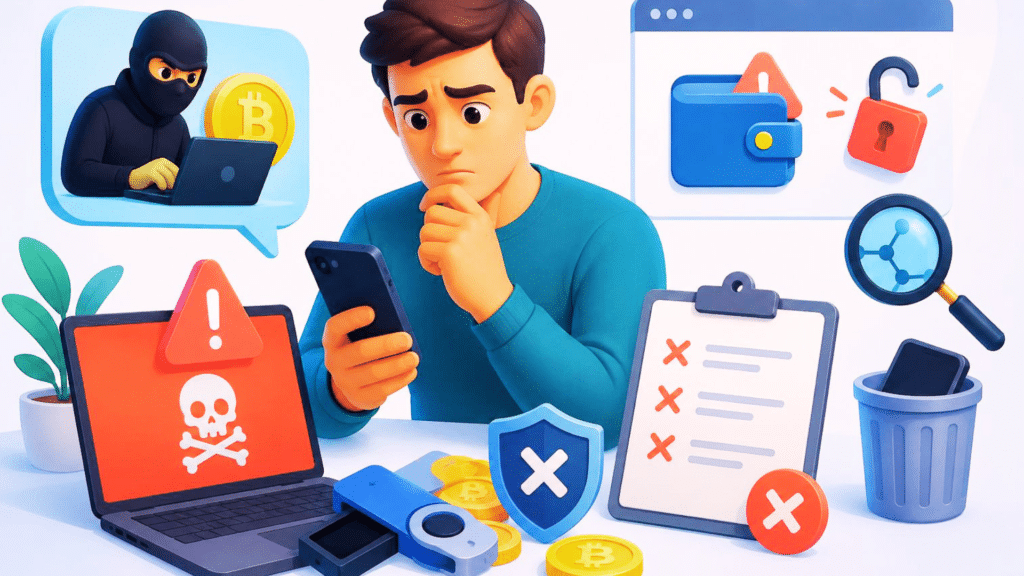
Users are also advised to avoid blind signing and regularly review wallet permissions. Combined with secure device hygiene and strict seed phrase protection, these methods significantly reduce exposure to future attacks.
Conclusion
Crypto wallet hack incidents highlight how quickly digital assets can be compromised when security practices fail or are ignored. Immediate response, including disconnecting devices, revoking permissions, documenting evidence, and reporting to authorities, plays a crucial role in limiting further losses.
However, recovery remains uncertain once funds are transferred across blockchain networks. Long-term safety depends on prevention, stronger wallet systems, and consistent security discipline rather than reactive measures alone.
Glossary
Seed Phrase: Secret code used to recover a wallet
Phishing Attack: Fake sites or messages that steal login details
Malware: Software that secretly steals data or controls devices
Cold Wallet: Offline storage for safe crypto holding
Hot Wallet: Online wallet used for daily transactions
Frequently Asked Questions About Crypto Wallet Hack 2026
Why do crypto wallet hacks happen?
Crypto wallet hacks happen mostly because users click fake links, share details, or use unsafe devices.
Can stolen crypto be recovered after a hack?
Stolen crypto is usually very hard to recover because blockchain transactions cannot be reversed.
What should I do first after a wallet hack?
You should immediately stop using the wallet and disconnect your device from the internet.
What is the safest type of crypto wallet?
A cold wallet is the safest because it stores crypto offline and is harder to hack.
What is the best way to stay safe after a crypto hack?
The best way is to secure your devices, change passwords, and use a new safe wallet immediately.