

This article was first published on Deythere.
Cryptocurrency’s role in conflict-ridden and sanctions-hit regions has really grown. From 2025-2026, the use of crypto in war zones had spread to include state-led sanctions evasion, funding for armed groups and even being a lifeline for civilians and aid organizations.
Main findings are that state-backed actors like in Russia and Iran have really increased their use of crypto to get around sanctions, while ordinary citizens and aid groups in Ukraine, Turkey, Syria and Venezuela are relying on digital assets for everyday transactions and donations. International regulators however, are pushing back with new laws and sanctions on crypto infrastructure.
Sanctions Evasion Drives Up Use of Crypto in War Zones
Crypto in war zones often overlap with countries under sanctions. Based on reports, powers like Russia, Iran and North Korea are using digital assets to circumvent economic restrictions. Recent analysis from Chainalysis has shown that sanctioned entities received 694% more crypto in 2025 than they did the year before. That is $154 billion in illicit transactions.
Iran’s Islamic Revolutionary Guard Corps (IRGC) and its proxies alone accounted for over half of all crypto value received by sanctioned entities in late 2025, approximately $3 billion.
Recent reports also covered how Iran’s biggest exchange, Nobitex, was processing hundreds of millions for the Iranian regime in spite of sanctions and even managed to move assets during a time when the internet was down.
As one US Treasury official noted, “the regime has chosen to use digital asset technologies for its own purposes including to get around sanctions”
Russia’s war economy is also heavily reliant on crypto. A report from the Royal United Services Institute (RUSI) in February 2026 explains that “crypto-enabled settlement is now embedded in Russia’s procurement model”, linking alternative payment methods to sanction-hit supply chains.
Russia legalized cross-border crypto payments back in 2024, and by 2025 had got itself an entire crypto system (like the A7A5 stablecoin) for trading internationally outside the SWIFT banking system. For example a U.S.-backed cryptocurrency called A7A5 (a rouble-backed stablecoin) was processing over $93.3 billion in trade in under a year, acting as a bridge for Russian businesses.
The EU’s April 2026 sanctions package explicitly banned transactions in the RUBx stablecoin and digital ruble CBDC ( Russia’s state-backed crypto tools) precisely to counter this trend.
These country-level efforts are being complemented by crypto-enabled cybercrime funding. North Korea, which is heavily sanctioned for its weapons programs, has been reportedly funding much of its regime by hacking into crypto. Chainalysis reports that in 2025 North Korean hackers stole over $2 billion in cryptocurrency for the regime. (The infamous Lazarus Group alone has managed to raise about $1 billion since 2015 via hacks and mixers.)
Similarly, terror groups and extremist factions are soliciting crypto donations online. There are dozens of militant organizations in Syria and Ukraine that have been tracked collecting crypto, from HTS fighters in Syria to pro-Russian militias in Donbas, raising millions for guns and propaganda.
This has prompted regulators to warn donors: due diligence is critical, since some so-called humanitarian crypto wallets may actually fund sanctioned or illegal groups.
International authorities are responding. In 2025-26, the U.S., EU and UK expanded crypto-related sanctions. The EU’s 20th Russia package (April 2026) for the first time imposes a sector-wide ban on all Russia-based crypto exchanges and DeFi platforms, and explicitly designates Russia’s new state crypto instruments (RUBx and the digital ruble CBDC) as illicit.
The UK also recently banned UK entities from dealing with major Russian crypto networks (like the Kyrgyz exchange Meer, tied to A7A5), freezing any assets and severing correspondent banking. The U.S. Treasury in 2026 even sanctioned Iran’s biggest exchange (Nobitex), explicitly for enabling sanctioned institutions. Such moves mean that crypto assets are now a primary sanctions target.
Table: Notable Crypto Flows in War/Sanction Contexts
| Region / Actor | Crypto Activity | Details (2022-2025) | |
| Russia (2025) | Ruble-backed stablecoin (A7A5) | $93.3 billion processed (cross-border trade) | |
| Russia (2025) | Kyrgyz exchange Grinex | $4.76 billion processed | |
| Russia (2025) | Kyrgyz exchange Meer | $305 million processed | |
| Iran (2025) | IRGC / Central Bank crypto transfers | $3 billion in crypto sent (Q4 IRGC-related) | |
| North Korea (2025) | Crypto thefts (state hackers) | $2 billion stolen (fueled WMD programs) | |
| Ukraine (2022) | Crypto donations (gov’t & charities) | $56 million donated to government wallets (Feb–Mar 2022) | |
| Turkey/Syria (2023) | Crypto earthquake donations | $5.9 million raised for relief (Feb 2023) | |
| Venezuela (2025) | Crypto adoption (sanctioned economy) | Crypto is a key lifeline amid hyperinflation; heavy P2P |
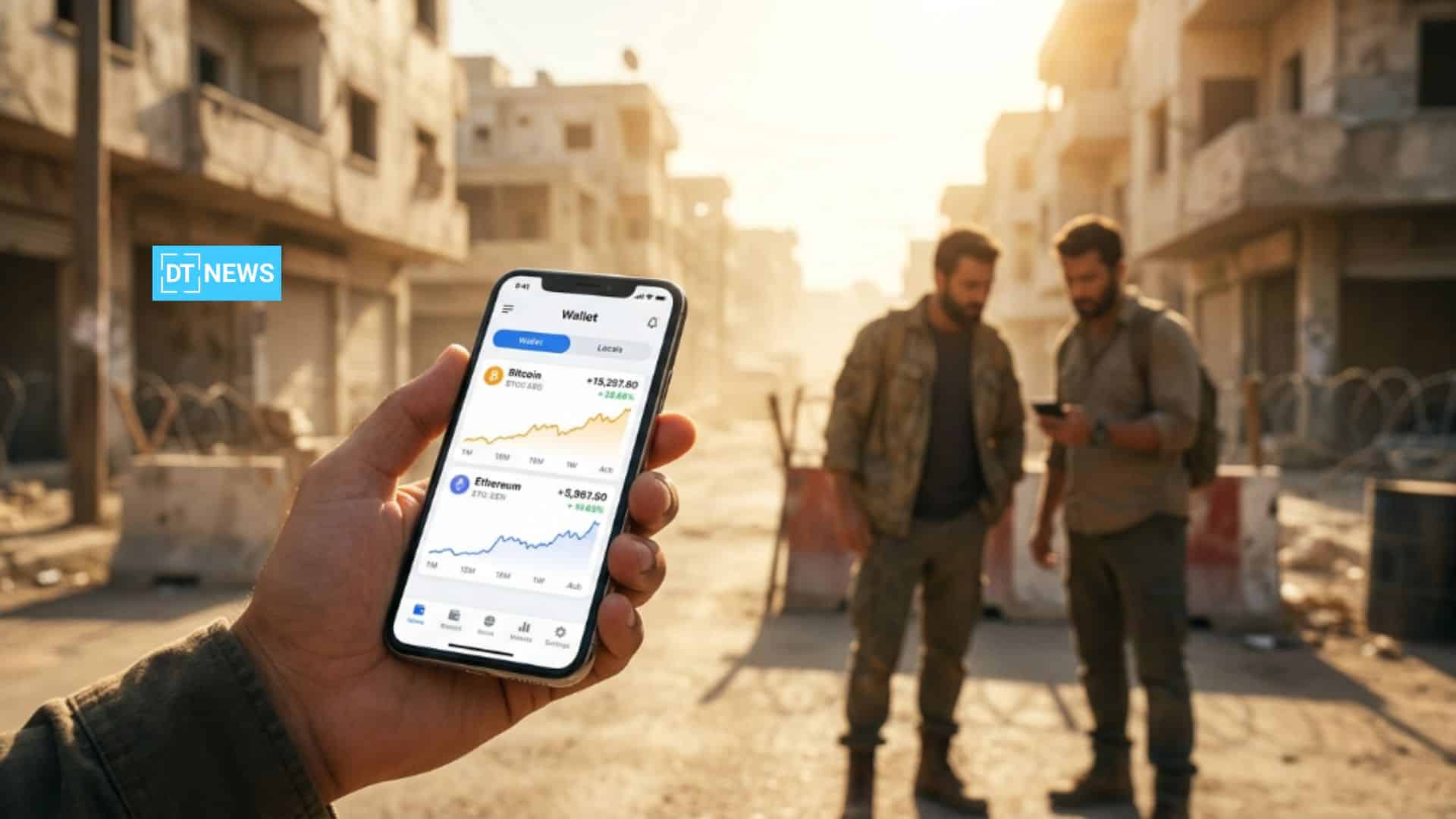
Crypto in War Zones of Ukraine and Middle East Wars
In active war zones, crypto serves a double-edged purpose. The Ukraine conflict has seen a huge outpouring of public crypto support from ordinary people. By early 2023, blockchain analytics firm Elliptic estimated that over $212 million in crypto donations had been sent to Ukrainian war efforts (about $80 million of that to the government), which helped purchase things like helmets, drones, medical gear and all sorts of other supplies that the war effort needed.
This was because of the decentralized and cross-border nature of crypto, which made it a useful tool for getting money into conflict zones quickly.
Also, the World Economic Forum pointed out that in 2022, Ukraine was ranked third in the world in terms of crypto adoption, with a lot of people using crypto to store their savings against inflation and to pay for the basics as the banks shut down.
However, even Ukraine’s opponents have been using crypto too. The same reports from Chainalysis and Elliptic found that around $5.4 million was raised by pro-Russian militias and propaganda groups in 2022-2023. This reveals the two-faced nature of crypto in war zones.
While the Ukrainian officials are publicly thanking crypto donors for helping protect their freedom, security experts are also warning against unchecked flows, noting that only a minority of these funds have illicit origins, but that strong monitoring remains important .
Elsewhere, in the Israel–Hamas conflict and Syrian war, there has also been a growing role for crypto. An Indian analysis (ICWA) reported that Gaza militant groups have amassed over $130 million in crypto since 2021 (with Hamas reportedly having around $41 million).
In Syria, Chainalysis noted that non-state actors (like Hay’at Tahrir al-Sham) have been using social media to solicit crypto donations, particularly during big offensives. Even some humanitarian appeals (like those for Syrian refugees in refugee camps) have been linked to crypto-wallet fundraisers.
Meanwhile, the UN and NGOs have started accepting crypto for refugee aid; for instance, the UNHCR now accepts BTC/ETH donations for Ukraine refugees.
Crypto in War Zones as Humanitarian Aid and Resilience
Cryptocurrency also provides relief in war zones and embargoed nations. The Turkey – Syria earthquake in February 2023 was a good example of this. Within weeks, $5.9 million in crypto had flowed to relief NGOs and government campaigns (like the Turkish Red Crescent, and Save the Children).
Because crypto can be transferred quickly and easily, even when the banking system is down or under sanctions (as happened in Syria – OFAC even gave a Syria relief license to allow such transfers), and because it’s cross-border, it was the ideal way to get aid to the people who needed it.
Similarly in Ukraine, Chainalysis notes that millions of Ukrainians are using crypto for making donations, sending remittances, and even keeping some of their savings safe, all while the war is going on and the banking system is in chaos.
Beyond all this conflict, there are also countries that are under economic siege, where people are using crypto as a way to make ends meet. In Venezuela, for example, which has been under sanctions and suffering hyperinflation for a long time, people turned to global crypto exchanges and peer-to-peer trading to keep their savings from being wiped out.
Even though the Venezuelan government tried to start its own crypto, the Petro token, which was eventually shut down, ordinary Venezuelans still preferred to use stablecoins and Bitcoin on foreign exchanges.
This is just one more example of the dual reality seen when it comes to crypto. Governments are trying to exercise control over it, but citizens are using it as a way to stay afloat in the face of economic crisis.
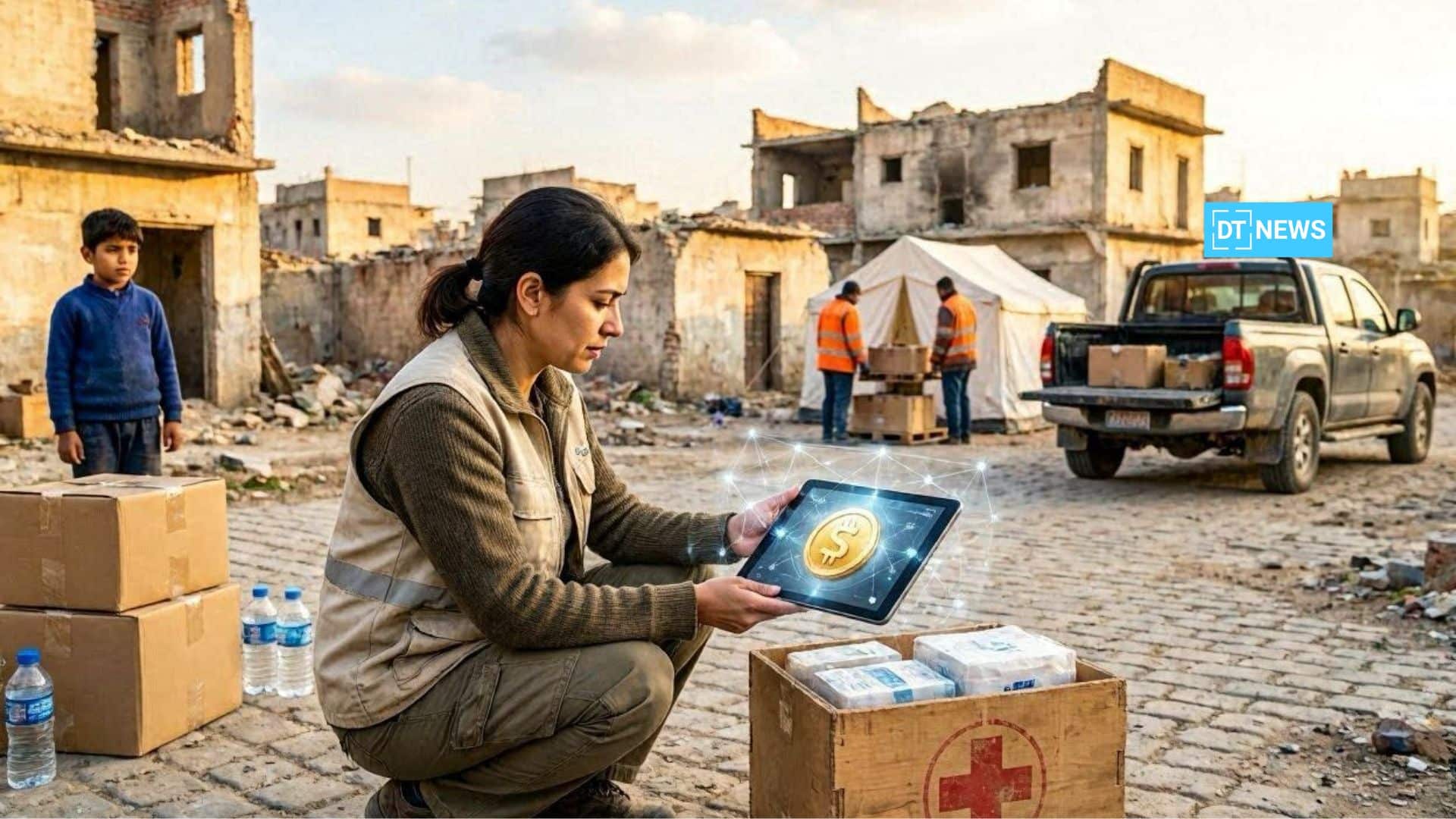
Analysis and Expert Insights of Crypto in War Zones
Experts are saying that cryptocurrencies’ impact on these regions goes beyond just a way to hide wealth. When traditional banking channels collapse, stablecoins become a lifesaver.
US-dollar stablecoins like Tether are now being used to settle different cross-border trades, even for sanctioned entities. Meanwhile, bespoke tokens like Russia’s A7A5 are effectively being designed to create a parallel economy that the West can’t touch.
Chainalysis and other analysts are pointing out that in these conflict zones, there’s a ‘split reality’. Truly, illicit actors are using crypto to get around the law, but so are everyday people and governments who badly need it. A recent report from Chainalysis states that “cryptocurrency markets aren’t liquid enough to support widespread, systematic sanctions evasion” even as niche evasion networks grow.
What that means is that crypto is still mostly just supplementing traditional finance, but its role is expanding all the same. The EU’s latest round of Russia sanctions has even acknowledged crypto’s growing importance by targeting whole categories of evasion infrastructure rather than just individual entities.
Regulators are starting to get a handle on the challenges this poses. Beyond sanctions, there are initiatives like the EU’s Markets in Crypto-Assets law to make sure the rules are followed and new guidance from the IMF.
Even some major aid organizations are getting on board with crypto. CARE International runs a “Crypto Fund for Humanitarian Aid”, and UN agencies take Bitcoin or Ethereum donations to help refugees. However, experts are warning that crypto’s volatility and potential for misuse means there’s need to be really careful and transparent when it comes to aid distribution.
Conclusion
Crypto in war zones is a reality we’re going to have to deal with. Cryptocurrencies are being pulled into war economies and sanctions evasion strategies like never before. They’re equally providing a new way for humanitarian aid to get to crisis areas.
However, because of its dual-use nature of both good and bad, there is a need to keep a close eye on it.
Crypto needs to be harnessed for its speed and transparency in aid, but also regulated to stop it getting into the wrong hands.
As always, due diligence and regulatory oversight are important to making sure cryptocurrency in those regions helps the people who need it, not just giving illicit actors a new way to bypass the system.
Glossary
Blockchain/Cryptocurrency: digital currencies (like Bitcoin or Ethereum) that are stored on a publicly recorded ledger.
Stablecoin: a type of crypto token which is linked to the value of something stable (usually the US Dollar). Examples include things like Tether (USDT) and USD Coin.
Sanctions: economic penalties that countries impose on other countries or groups to punish or isolate them.
OTC (Over-the-Counter) Broker: A person or service facilitating large crypto trades off-exchange, often used by businesses.
NGO (Non-Governmental Organization): an independent organization (e.g. like the Red Cross or UN agencies) which provides humanitarian aid in emergency situations. Many of these NGOs now accept crypto donations in desperate situations.
Wallet: a digital account for storing your crypto.
Fiat Currency: traditional government-issued cash (like USD or EUR).
Frequently Asked Questions About Crypto in War Zones
How do cryptocurrencies help sanctioned countries get around restrictions?
For sanctioned countries like Iran and Russia, crypto transactions provide an easy way out of the traditional banking system. They use digital currencies and stablecoins to move assets and pay for imports. They also use blockchain mixing and offshore exchanges to keep their tracks covered.
Are people in war zones widely using cryptocurrencies?
Yes. In countries like Ukraine and Venezuela which have been under conflict or sanctions, lots of ordinary people are turning to crypto in war zones to make payments and to save their money.
For example in Ukraine, it is believed that somewhere between 15-20% of people hold some kind of crypto. Some use it to send money to family and friends working abroad, others are shopping with it or keeping it as a safe bet against high inflation and the general bank troubles they’re facing.
Can crypto donations get to the people who need them?
They can, but with care. Blockchain grants fast, borderless transfers to vetted charities and government funds as seen in Ukraine ($56M in 2022) and Turkey/Syria relief ($5.9M in 2023). However, donors should verify addresses and avoid wallets tied to sanctioned or illicit groups.
Is crypto a “safe” bet in war zones?
Crypto can be useful but it does come with some risks. Transactions can be fast and might even get through in places where the banks aren’t working, but one has to be aware of issues like price volatility, potential scams and regulatory uncertainty. When using it in war contexts, stick with reputable platforms, double-check the address of who you’re sending to and keep an eye on sanctions lists.
References
Disclaimer: This analysis is based on data and expert reports up to mid-2026. But cryptocurrency markets and geopolitics are inherently volatile, so readers need to do due diligence before making any big decisions.