
The latest DeFi breach has landed like a hammer on an already nervous market. The KelpDAO exploit drained about 116,500 rsETH, valued near $292 million, after an attacker abused a cross-chain pathway linked to Unichain and LayerZero infrastructure. The damage did not stop at one protocol. It quickly spilled into lending markets, risk models, and confidence across roughly 20 chains, turning one breach into a wider test of how much stress modern DeFi can really absorb.
How the attack unfolded
Early reports show the attacker triggered the release of unbacked rsETH through a compromised cross-chain process, allowing the stolen assets to move into DeFi markets almost immediately. Researchers and market participants tracked the stolen rsETH as it was deposited into lending venues and used to borrow WETH at scale.
That sequence matters because it changed the event from a token breach into a collateral crisis, which is a much bigger problem in a tightly connected market. The KelpDAO exploit was not simply about missing funds. It was about trust in what was supposed to be backed value.
Why the KelpDAO exploit matters beyond one protocol
The real shock came from how fast the KelpDAO exploit spread through the system. Aave’s guardian froze rsETH and wrsETH markets across deployments after the threat became clear, and that emergency action helped contain fresh damage even though it could not erase the initial losses. At the same time, the event raised fears of bad debt, liquidity strain, and forced repositioning by large holders. In plain terms, once collateral quality is questioned, every protocol touching that asset starts looking vulnerable.
That is where the key crypto indicators become important. Traders now have to watch total value locked, or TVL, because a sharp drop can show capital leaving the ecosystem. They also have to monitor liquidity depth, because thin liquidity can worsen price swings.
Collateral backing matters just as much, especially when a wrapped or restaked asset is used across chains. Borrow utilization, liquidation pressure, and bad debt estimates also move to the front of the risk dashboard after a KelpDAO exploit of this size.
Market reaction and what traders should watch
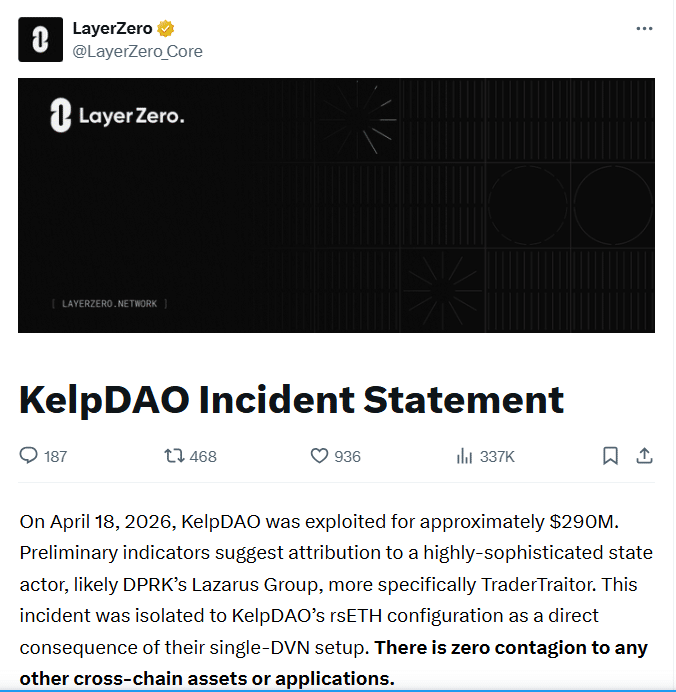
The market response was swift but telling as Aave moved to protect its markets, while analysts began focusing on whether the damage would remain isolated or trigger deeper contagion. LayerZero later said preliminary signs pointed to a sophisticated attack involving poisoned downstream RPC infrastructure used by its DVN, which adds another layer of concern because infrastructure attacks are harder to spot than a simple contract bug. That detail gives the KelpDAO exploit a broader significance for DeFi security discussions in 2026.

From here, the biggest indicators are straightforward, even if the mechanics are not. Price stability in rsETH-linked markets will matter. Borrow demand and reserve health in WETH pools will matter. The pace of withdrawals across lending protocols will matter too. A market can survive bad headlines, but when users start rushing for the exit, the mood changes quickly. The KelpDAO exploit has pushed DeFi into that uncomfortable zone where infrastructure, not only token prices, becomes the main market narrative.
Conclusion
What makes the KelpDAO exploit so serious is not only the nearly $292 million figure. It is the reminder that DeFi is now deeply interconnected, and that a failure in one cross-chain route can shake confidence across multiple protocols in a matter of hours. For builders, this is a warning about architecture. For traders, it is a lesson in risk concentration. For the wider market, the KelpDAO exploit may become one of the clearest examples this year of how fast technical weakness can turn into financial stress.
FAQs
What was stolen in the attack?
About 116,500 rsETH was released without proper backing, with losses estimated near $292 million.
Why did Aave freeze related markets?
It froze rsETH and wrsETH markets to stop fresh deposits and limit added exposure while the situation was assessed.
Why is this breach important for crypto investors?
Because it shows how collateral, bridges, and lending markets can amplify one incident into wider DeFi stress.
Glossary of Key Terms
rsETH: A liquid restaking token tied to staked ETH exposure.
TVL: Total value locked in a protocol. It tracks how much capital is sitting in DeFi apps.
Bad debt: Borrowed funds that may not be fully recoverable because the collateral lost value or backing.
Cross-chain bridge: Infrastructure that moves or mirrors assets between blockchains.
Liquidity: The ease with which an asset can be bought, sold, or redeemed without a sharp price move.
Sources
Disclaimer: This article is for informational purposes only and does not constitute financial or investment advice. Crypto assets remain highly volatile, and readers should verify all material facts and assess risk carefully before making any decision.