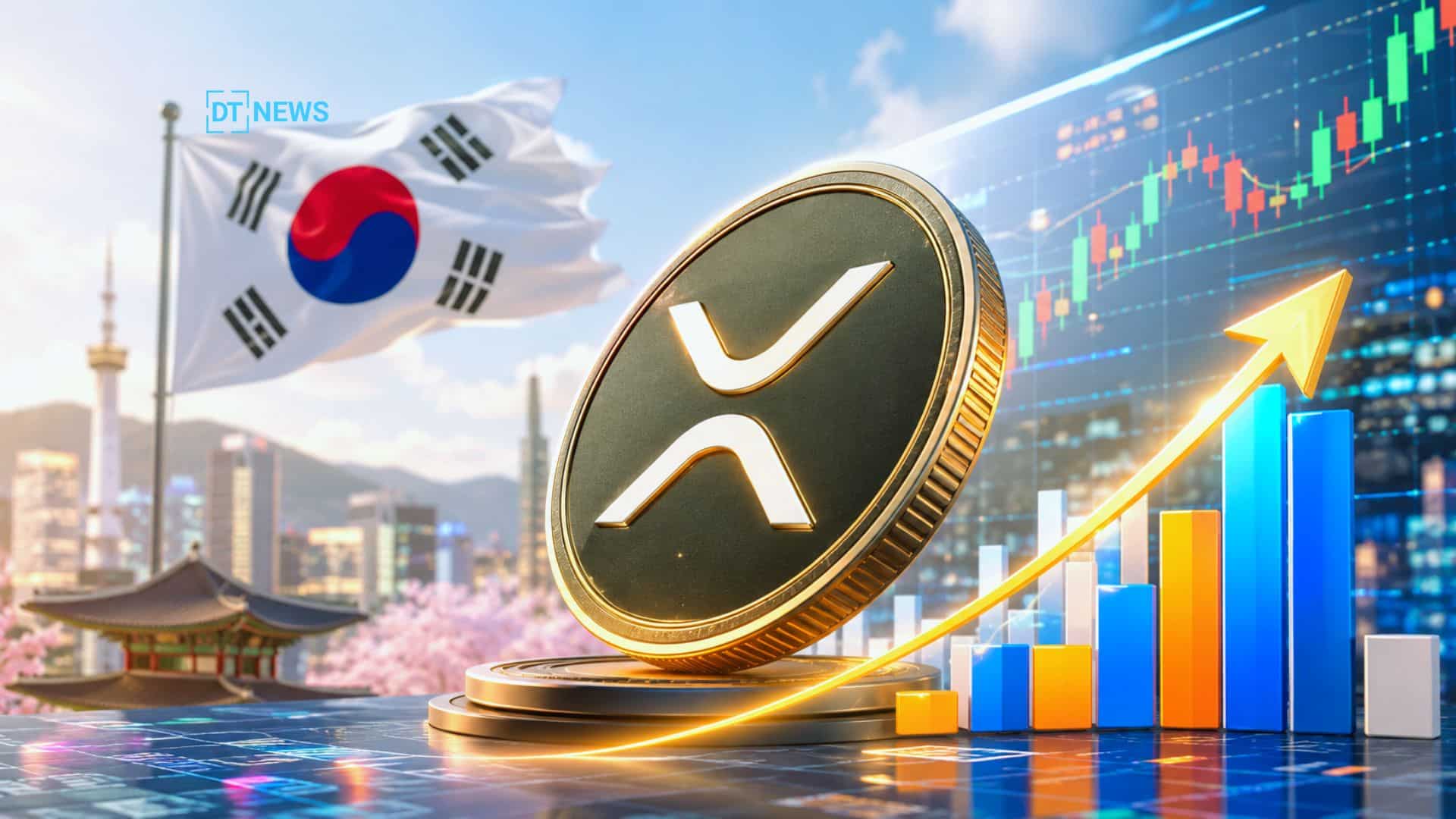

XRP price prediction discussions are heating up again after trading activity on major South Korean exchanges surged ahead of Bitcoin and Ethereum. The sudden rise in XRP volume has caught the market’s attention because traders are seeing a familiar setup that previously appeared before larger price swings.
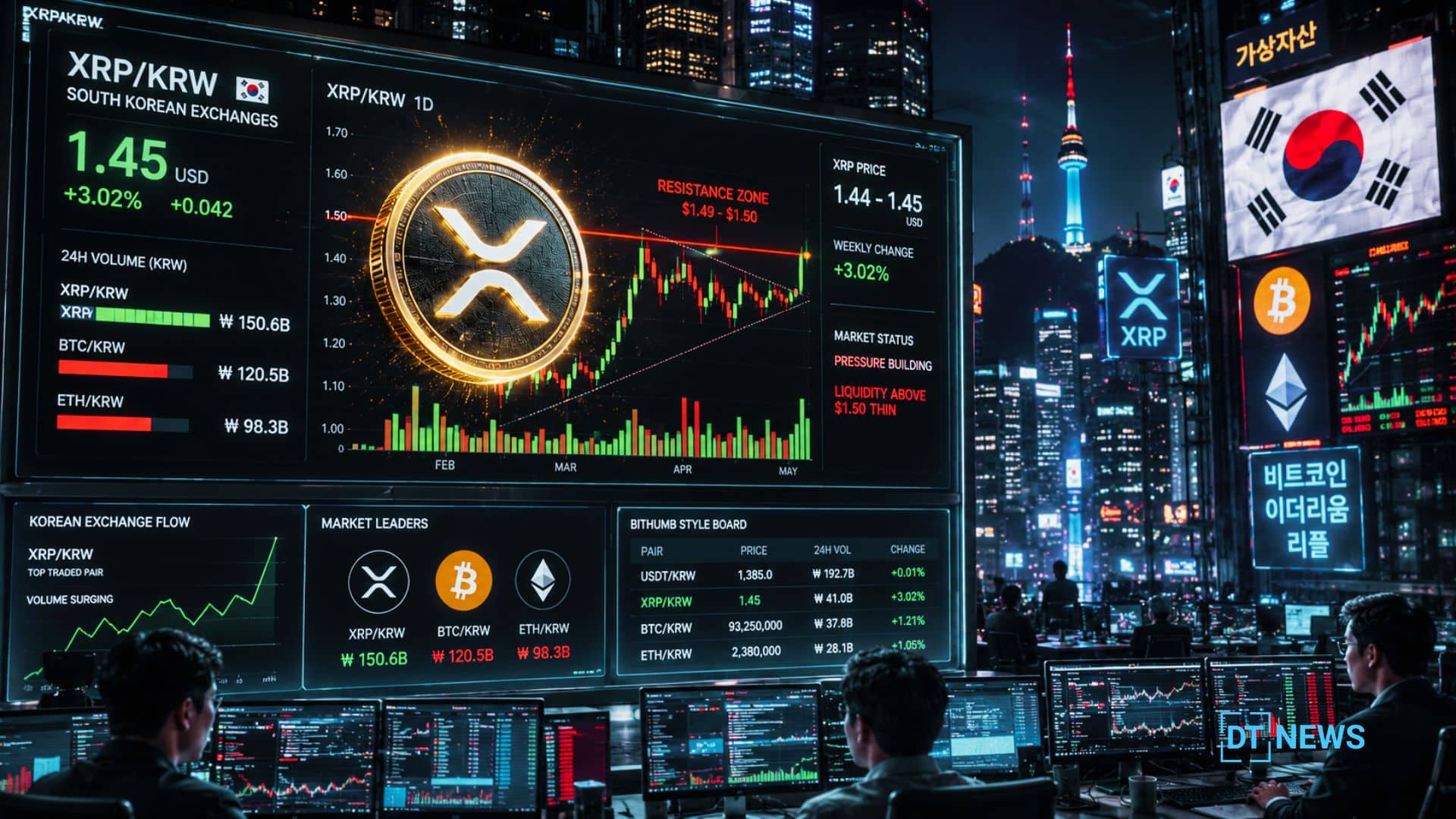
According to the source, XRP/KRW became the most traded pair on Upbit with nearly $110.9 million in daily volume. On Bithumb, XRP/KRW generated roughly $41 million in volume and ranked second behind USDT/KRW while still outperforming BTC/KRW and ETH/KRW. The sharp increase in trading activity has strengthened the latest XRP price prediction outlook, even though price action itself remains relatively muted for now.
Korean Traders Return to One of Crypto’s Favorite High-Beta Assets
The renewed activity on South Korean exchanges matters because Korea has historically been one of XRP’s strongest speculative markets. During earlier crypto cycles, Korean traders repeatedly pushed XRP to the top of exchange rankings before volatility expanded sharply.
Analysts often describe XRP as a high-beta crypto asset. In simple terms, that means the token tends to experience larger and faster price swings than broader market benchmarks during speculative periods. That reputation continues attracting retail traders searching for aggressive momentum opportunities.
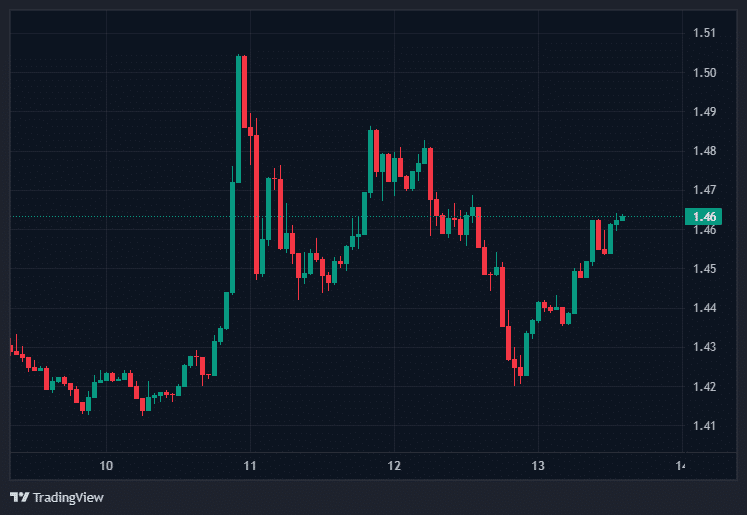
Recent figures from a verified source showed XRP trading between $1.44 and $1.46, rising roughly 3% during the week. While that performance exceeded Bitcoin, it still trailed stronger gains from BNB and Solana, which both climbed close to 8%.
That contrast is important for the current XRP price prediction narrative. Trading volume has exploded across South Korean exchanges, but the token itself has not delivered a major breakout yet. This disconnect suggests traders may be positioning early before a larger move develops.
XRP Price Prediction Centers on the Critical $1.50 Resistance Zone
The most important technical focus in the current XRP price prediction remains the stubborn $1.49 to $1.50 resistance range. XRP has repeatedly failed to break above this level since February, creating frustration for bullish traders and short-term speculators.
However, the token continues forming higher lows above the broader $1.40 support zone. Market analysts describe this pattern as compression beneath resistance. Buyers continue absorbing selling pressure while price tightens into a narrowing structure.
Repeated resistance tests often weaken seller control over time. Analysts also believe liquidity above the $1.50 level appears relatively thin. That means if XRP finally breaks resistance, price acceleration could happen quickly because fewer sell orders may remain overhead.
Several analysts noted that volume rotation into XRP usually becomes meaningful when activity rises faster than price itself. Traders often interpret that behavior as early speculative positioning before volatility expands.
South Korean Exchanges Reflect a More Selective Risk Environment
The latest XRP surge stands out because South Korea’s broader financial market recently turned more unstable. The KOSPI fell sharply after political discussions raised concerns about using AI-related corporate tax gains for public redistribution programs.
Even with the pullback, South Korea remains one of the world’s strongest stock markets this year, supported heavily by Samsung Electronics and SK Hynix. Still, the recent decline revealed growing investor caution after months of strong gains.
That backdrop makes the XRP rally on South Korean exchanges even more notable. Traders are not buying every risky asset in sight. Instead, they are concentrating activity in one of crypto’s most recognizable high-volatility assets.
For financial analysts and blockchain researchers, the trend highlights how regional sentiment, liquidity conditions, and trader psychology still shape global crypto cycles in powerful ways. That environment continues influencing the broader XRP price prediction outlook as traders monitor risk appetite across South Korean markets.
Conclusion
The latest surge in XRP trading has pushed the token back into the center of the crypto conversation. Although price action remains relatively controlled, rising activity on South Korean exchanges suggests traders expect a larger move ahead.
The broader XRP price prediction now depends heavily on whether buyers can finally overcome the long-standing $1.50 resistance barrier. If that level breaks, XRP could enter a faster and more volatile phase. If not, the market may continue moving sideways while traders wait for a stronger catalyst.
This article is for informational purposes only and does not constitute financial advice. Readers should conduct their own research before making investment decisions.
Glossary of Key Terms
XRP: A cryptocurrency linked to Ripple’s blockchain payment ecosystem.
High-Beta Asset: An asset that usually experiences larger price swings than the broader market.
Resistance Zone: A price area where selling pressure repeatedly stops upward movement.
Liquidity: The ease of buying or selling an asset without causing major price changes.
Compression Pattern: A tightening price structure that often appears before breakout moves.
FAQs About XRP Price Prediction
Why are South Korean exchanges important for XRP?
Korean retail traders historically influenced XRP trading activity and volatility during major crypto cycles.
What resistance level are traders watching?
Most analysts currently focus on the $1.49 to $1.50 resistance zone.
Why has XRP volume surged while price stayed muted?
Many traders appear to be positioning ahead of a possible breakout instead of reacting after one occurs.
Why does thin liquidity above $1.50 matter?
Lower liquidity can cause rapid price acceleration once heavy selling pressure disappears.