
Use the CLARITY Act to build deep investor trust. That phrase alone signals something important is happening in crypto and is reshaping how people search for the best altcoin to invest in today’s evolving market. Washington is slowly moving away from the era of “regulation by enforcement” and toward clearer definitions of what qualifies as a speculative token and what qualifies as a structured, transparent crypto project. This shift is not just regulatory; it is behavioral, changing how capital flows and how investors evaluate early-stage opportunities.
- APEMARS Stage 22: Best Altcoin to Invest in Q2 2026 With 350% Bonus Offer
- Token System: Controlled Supply Through Burning
- Orbital Boost System: Community Expansion Layer
- How Participation Works
- Investment Scenario: Understanding Early-Stage Positioning
- Parawin: Utility Token Preparing for Ecosystem Expansion
- Aster: A Quiet Start Before Market Recognition
- Hedera: Infrastructure That Took Time To Be Understood
- Conclusion: Why Structured Projects Are Getting Attention
- FAQs About the Best Altcoin To Invest
That shift changes how the market behaves. In earlier cycles, hype often led discovery. In this next phase, structure leads attention first. And that’s why conversations around the best altcoin to invest are changing. Investors are no longer only looking at price narratives, they are starting to evaluate transparency, token clarity, public presale design, and utility visibility. This is where newer ecosystems begin to enter the discussion. Before diving into one of them, it helps to look at how timing played out in past cycles with well-known projects like Aster and Hedera.
APEMARS Stage 22: Best Altcoin to Invest in Q2 2026 With 350% Bonus Offer
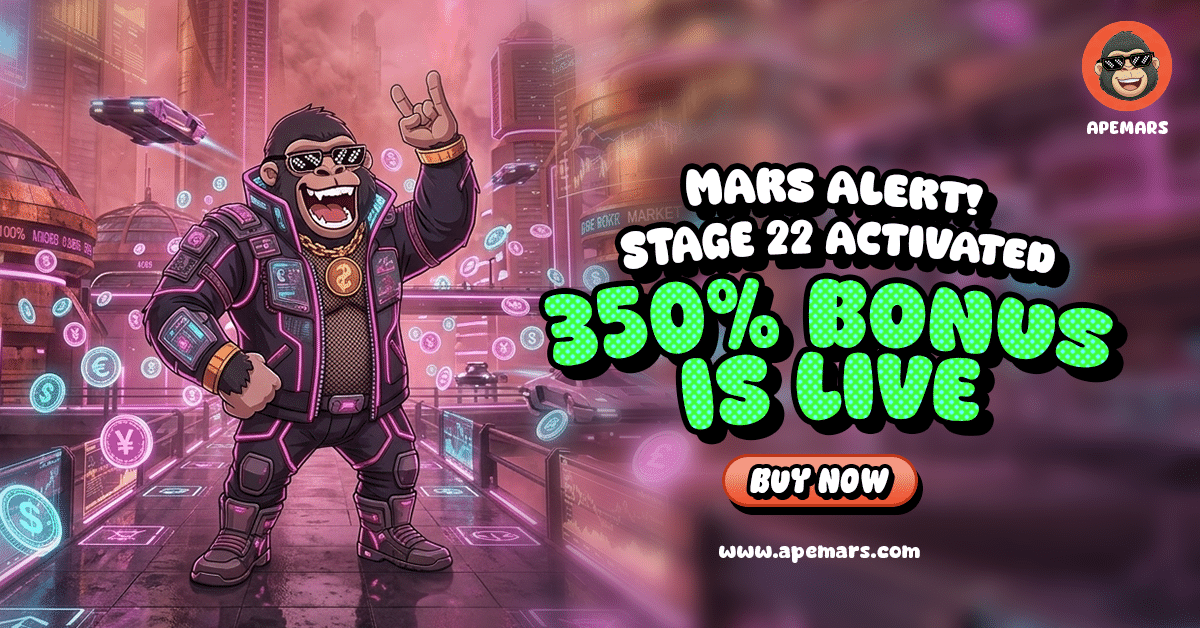
APEMARS is currently in Stage 22 (Surface Sync) of its presale system, where the project continues to progress through a structured and transparent rollout model. At this stage, the presale price is set at $0.00048248, while the listing price is defined at $0.0055. The project has already attracted over 1805+ holders, raised more than $485K+, and distributed approximately 30.56B+ tokens during its ongoing presale phases.

Instead of following a sudden launch approach, APEMARS operates through a structured stage system where pricing evolves gradually over time. Each stage represents a controlled step in the token distribution process, ensuring a clear and predictable progression. This design makes the presale easier to track and adds a layer of transparency to how the ecosystem develops across each phase.
Token System: Controlled Supply Through Burning
One of the core mechanics in APEMARS is its burn model. Rather than keeping supply static, the system gradually reduces circulating tokens over time. As ecosystem activity increases, tokens are permanently removed from circulation, creating a shifting supply structure tied to usage rather than fixed issuance alone.
Alongside this, staged presale pricing creates a layered entry structure where each phase reflects a different level of access in the ecosystem timeline. Together, these two mechanisms create a system focused on controlled distribution and long-term alignment.
Orbital Boost System: Community Expansion Layer
APEMARS also includes a referral system called the Orbital Boost System. Once a user contributes a minimum of $22, referral access becomes active. From there, both participants receive a 9.34% reward allocation, drawn from the community rewards pool.
Instead of relying on external marketing expansion alone, this system allows the community itself to become part of the growth mechanism.
How Participation Works
Joining the presale follows a simple and straightforward structure where users begin by connecting a compatible wallet and contributing through supported assets while selecting the active stage. Once the contribution is made, tokens are allocated based on the Stage 22 pricing model and securely recorded for distribution during the token generation event. At that point, the allocated tokens transition into tradable assets at the time of listing, following the project’s structured release process.
Investment Scenario: Understanding Early-Stage Positioning
At the current price of $0.00048248, a $3,000 allocation would result in:
- ~5,547,000 APEMARS tokens
With the LAUNCH350 bonus (350% extra tokens):
- ~24,961,500 APEMARS tokens
| Scenario | Without Bonus | With LAUNCH350 |
| Listing at $0.0055 | ~$30,508 | ~$137,286 |
| $1 valuation | ~$5.54M | ~$24.96M |
| $5 valuation | ~$27.73M | ~$124.8M |
These figures are purely hypothetical illustrations based on fixed price comparisons and should not be treated as guaranteed returns. Crypto markets are volatile and outcomes vary widely.
The real takeaway is how entry timing changes exposure to future valuation shifts.
Parawin: Utility Token Preparing for Ecosystem Expansion
In its current whitelist phase, Parawin is positioning itself ahead of its upcoming presale event. Early access is still open for users who join before public launch. The token is built to act as the utility backbone of Crypto Lucky, with additional features and expansion planned after launch. Rather than implementing a capped supply, distribution is based on engagement-driven participation. A burn mechanism after launch is expected to reduce supply over time, and the whitelist stage is being presented as a strategic early entry opportunity similar to APEMARS.
Aster: A Quiet Start Before Market Recognition
Aster did not begin with mainstream attention. Like many early crypto projects, it moved through a phase where only a small group of participants noticed its potential structure.
At that stage, price discovery was still forming and sentiment was uncertain. But as the ecosystem matured, visibility increased and earlier entry points became part of later discussions about timing and opportunity. Aster’s story reflects a common pattern in crypto: early phases rarely feel important while they are happening, but they often become reference points later when adoption expands.
Hedera: Infrastructure That Took Time To Be Understood
Hedera followed a different but familiar path. It introduced a unique governance and consensus model that did not immediately translate into retail excitement.
Early on, many participants overlooked its long-term positioning because the ecosystem value was more structural than speculative. Over time, however, as enterprise discussions grew, its early stages became widely referenced in hindsight. Hedera’s trajectory shows how infrastructure-focused projects often take longer to be appreciated, but once they are, early pricing levels are rarely seen again.

Conclusion: Why Structured Projects Are Getting Attention
Crypto markets are evolving into a more structured environment where transparency, staged distribution, and utility clarity matter more than ever. The CLARITY Act signals a broader movement toward defining what separates structured blockchain ecosystems from purely speculative tokens.
APEMARS fits into this shift with its staged presale system, transparent metrics, burn mechanics, and community-driven expansion model. Rather than relying on sudden visibility, it builds through structured progression, stage by stage. As the market continues to mature, projects built with visible structure and evolving utility frameworks are increasingly becoming part of the broader conversation around early-stage crypto positioning.
Readers tracking evolving market rankings and opportunities will notice similarities with insights from the best crypto to buy now, focused on crypto trends and comparisons.

For More Information:
Website: Visit the Official APEMARS Website
Telegram: Join the APEMARS Telegram Channel
Twitter: Follow APEMARS ON X (Formerly Twitter)
FAQs About the Best Altcoin To Invest
What Is The CLARITY Act And Why Does It Matter In Crypto?
The CLARITY Act represents efforts toward clearer crypto regulation, aiming to define boundaries between speculative tokens and structured digital asset projects with transparent systems.
What Stage Is APEMARS In Right Now?
APEMARS is currently in Stage 22 of its presale, where token pricing is still in an early structured phase before listing.
What Makes APEMARS Different From Typical Presales?
APEMARS uses staged pricing, burn mechanics, referral systems, and transparent participation data, making its structure more visible compared to typical early-stage tokens.
How Does The Orbital Boost System Work?
Once a user contributes $22 or more, they can activate referrals. Both referrer and referred users receive a 9.34% reward from the ecosystem pool.
What Is $APRZ Used For?
$APRZ supports ecosystem functions such as presale participation, reward distribution, and token burn alignment within the network structure.
Is ParaWin Connected To APEMARS?
ParaWin ($PWIN) is a related utility framework designed to support ecosystem mechanics through dynamic supply modeling and burn-based circulation.
Summary
APEMARS is a structured Stage 22 presale project built around transparent pricing stages, burn mechanics, and community-driven growth. In a crypto environment shifting toward regulatory clarity and structured token systems, it represents a model aligned with emerging market expectations.