

Zimbabwe has approved seven fintech companies to test new financial products under its regulatory sandbox, with more than half of the projects focused on tokenization.
- Why Tokenization Is Getting So Much Attention
- Zimbabwe Is Building on Earlier Blockchain Efforts
- Why the Zimbabwe Fintech Sandbox Matters
- What This Could Mean for Zimbabwe’s Economy
- Conclusion
- Glossary
- Frequently Asked Questions About Zimbabwe fintech sandbox
- What is Zimbabwe fintech sandbox?
- Does the Zimbabwe fintech sandbox approval mean a company is licensed?
- What is tokenization?
- Why is Zimbabwe focusing on tokenization?
- What happens after the Zimbabwe fintech sandbox testing?
- References
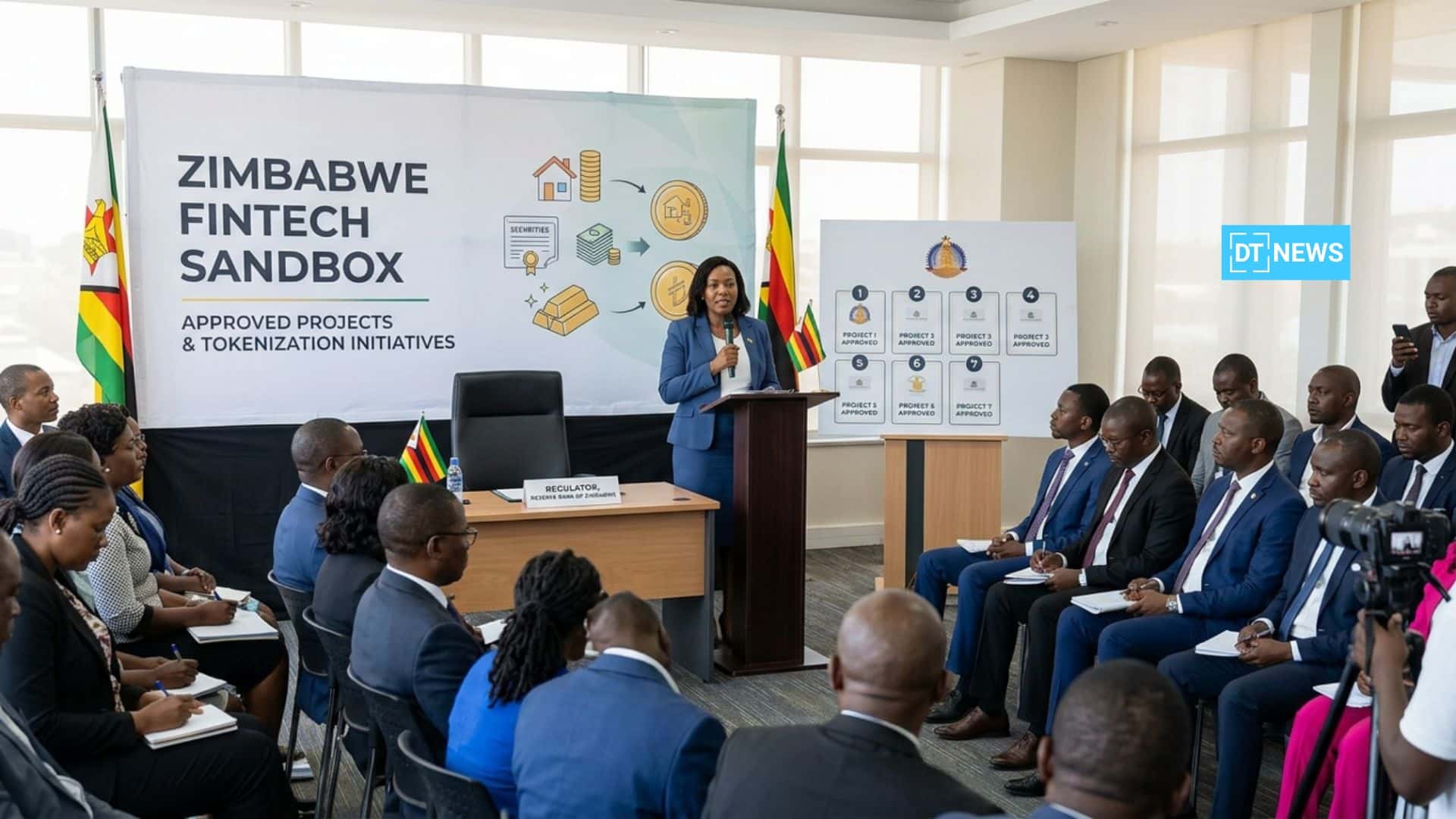
The Securities and Exchange Commission of Zimbabwe (SECZ) announced that the approved companies will be allowed to test their products in a controlled environment. The group includes Zimbabwe Entrepreneurship Exchange, Ndarama Standard, Questview Brokers, Crowdaxe Capital, Procode Platforms, Financial Securities Exchange (FINSEC), and Colmin Resources Zimbabwe.
Their projects cover blockchain fundraising, crowdfunding, synthetic trading, and the tokenization of assets, securities, and infrastructure.
The Zimbabwe Fintech Sandbox does not mean these companies can immediately launch their products to the public. They must first complete supervised testing and later meet all licensing requirements before they can operate commercially.
Why Tokenization Is Getting So Much Attention
The biggest part of this Zimbabwe Fintech Sandbox is not simply that seven companies entered the sandbox. It is that four of the seven projects are built around tokenization, making it the evident focus of Zimbabwe’s latest fintech push.
Tokenization means turning ownership of a real-world asset into a digital token on a blockchain. That asset could be land, company shares, infrastructure, commodities, or even investment funds.
Instead of one person buying an entire asset, many people can own smaller pieces of it through digital tokens. This lowers the amount of money needed to invest and could make capital markets more open to ordinary people.
Around the world, banks, asset managers, and governments are exploring tokenized assets because they can make buying, selling, and settling investments faster and more efficient.
Zimbabwe Is Building on Earlier Blockchain Efforts
Earlier this year, FINSEC became Zimbabwe’s first licensed operator of an asset tokenization market under the SECZ sandbox. That approval laid the foundation for wider testing of tokenized financial products across the country’s capital markets.
Zimbabwe also already has a fintech sandbox run by the Reserve Bank of Zimbabwe (RBZ). While the RBZ sandbox covers financial technology more broadly, the SECZ sandbox focuses on products linked to securities and capital markets. These two frameworks give innovators a legal way to test new ideas while regulators monitor the risks.
This allows regulators to learn from real-world testing instead of banning new technology or allowing it to grow without oversight.
| Approved Participant | Main Focus |
| Zimbabwe Entrepreneurship Exchange | Blockchain-based capital raising |
| Ndarama Standard | Asset tokenization |
| Questview Brokers | Synthetic trading |
| Crowdaxe Capital | Crowdfunding |
| Procode Platforms | Securities tokenization |
| FINSEC | Asset tokenization |
| Colmin Resources Zimbabwe | Infrastructure tokenization |
Source: Securities and Exchange Commission of Zimbabwe.
Why the Zimbabwe Fintech Sandbox Matters
A regulatory sandbox gives companies a chance to test new products with real users under strict supervision.
During the testing period, the regulator can set limits on the number of customers, the amount of money involved, or the length of the trial. Companies must also report their progress and show that they can manage risks.
If problems appear during testing, the regulator can stop the project or require changes before it moves forward.
This helps protect investors while giving new businesses room to develop products that might otherwise never reach the market. SECZ also notifies that finishing the sandbox does not automatically lead to a licence. Every company must still meet the country’s registration rules before offering services to the public.

What This Could Mean for Zimbabwe’s Economy
Zimbabwe’s capital market is still relatively small compared with larger African economies. Many businesses, especially smaller ones, struggle to raise money through traditional channels.
If tokenization succeeds, it could create new ways for businesses to raise capital while allowing more people to invest in projects that were previously out of reach.
For example, instead of needing enough money to buy an entire commercial property or infrastructure project, investors could own a small share through blockchain-based tokens.
This could improve access to investment opportunities, increase market participation, and make some assets easier to trade.
Success is far from guaranteed. The sandbox exists because regulators still need to see whether these business models are safe, practical, and compliant before allowing them into the wider market. That cautious approach may slow adoption, but it also helps build trust.
Conclusion
Zimbabwe’s latest approvals show that blockchain is being explored for more than cryptocurrency trading.
Across global financial markets, tokenization is becoming one of the fastest-growing areas of digital finance. Large financial institutions are testing tokenized funds, bonds, and other real-world assets to improve efficiency and lower costs.
This Zimbabwe fintech sandbox will not change the country’s financial system overnight. However, it gives regulators and businesses a chance to see how blockchain-based financial products work in practice before wider adoption.
If these seven projects perform well during testing, meet regulatory standards and show real value, they could help determine the future of Zimbabwe’s capital markets.
Glossary
Regulatory Sandbox: A controlled environment where companies test new financial products under a regulator’s supervision.
Tokenization: Turning ownership of a real-world asset into digital tokens on a blockchain.
Blockchain: A digital record system that stores information securely across many computers.
Capital Market: A market where companies and governments raise money by selling investments such as shares and bonds.
Synthetic Trading: Trading products that track the value of another asset instead of owning the asset directly.
Frequently Asked Questions About Zimbabwe fintech sandbox
What is Zimbabwe fintech sandbox?
It is a supervised testing programme run by the Securities and Exchange Commission of Zimbabwe that allows companies to test new financial products before applying for full approval.
Does the Zimbabwe fintech sandbox approval mean a company is licensed?
No. Companies can only test their products in the sandbox. They must still meet all licensing requirements before launching commercial services.
What is tokenization?
Tokenization is the process of turning ownership of a real-world asset into digital tokens on a blockchain.
Why is Zimbabwe focusing on tokenization?
Tokenization could make investing easier, help businesses raise money, and allow assets to be traded more efficiently while remaining under regulatory oversight.
What happens after the Zimbabwe fintech sandbox testing?
If a project performs well, it can apply for full registration. Passing the sandbox does not guarantee approval.