

























This article was first published on Deythere.
- What the Solana Network Upgrade Did
- Coordination Difficulties Revealed by Initial Adoption Lag
- Why Validator Responsiveness is Important for an “Always-On” Network
- Incentive Rules Tighten the Upgrade
- Validator Diversity and Future Resilience
- Conclusion
- Glossary
- Frequently Asked Questions About Recent Solana Network Upgrade
- Why was the Solana network upgrade so urgent?
- What was the proportion of the network that had moved to V 3.0.14 soon after release?
- If a validator does not upgrade then what?
- Does this change impact Solana’s level of decentralization?
- References
A recent Solana network upgrade has revealed how decentralized blockchains manage code fixes in critical security situations.
Earlier in the month, Solana status account had posted that Validators are expected to upgrade to the Agave v3.0.14 software update because it included “critical” patches for Mainnet-Beta nodes.
However, even after days, data showed that only a small share of the network’s economic weight had truly embraced the update, prompting questions about how a high-speed proof-of-stake blockchain enables urgent fixes to be rolled out through a globally distributed fleet of independent operators.
What the Solana Network Upgrade Did
The urgency on the Solana network upgrade came from two vulnerabilities patched in December 2025 and January 2026. Anza, the team behind Solana’s mainnet primary validator client Agave, detailed the issues in a security advisory.
One vulnerability was in the network’s gossip system, the tool that validators use to share messages in the event blockchain production breaks down, which could crash validators if it received certain types of messages improperly.
The second involved vote processing which helped validators to participate in consensus. A lack of a verification step could have allowed an attacker to overwhelm the network by sending forged vote signals, under some circumstances, causing consensus to slow or stop.
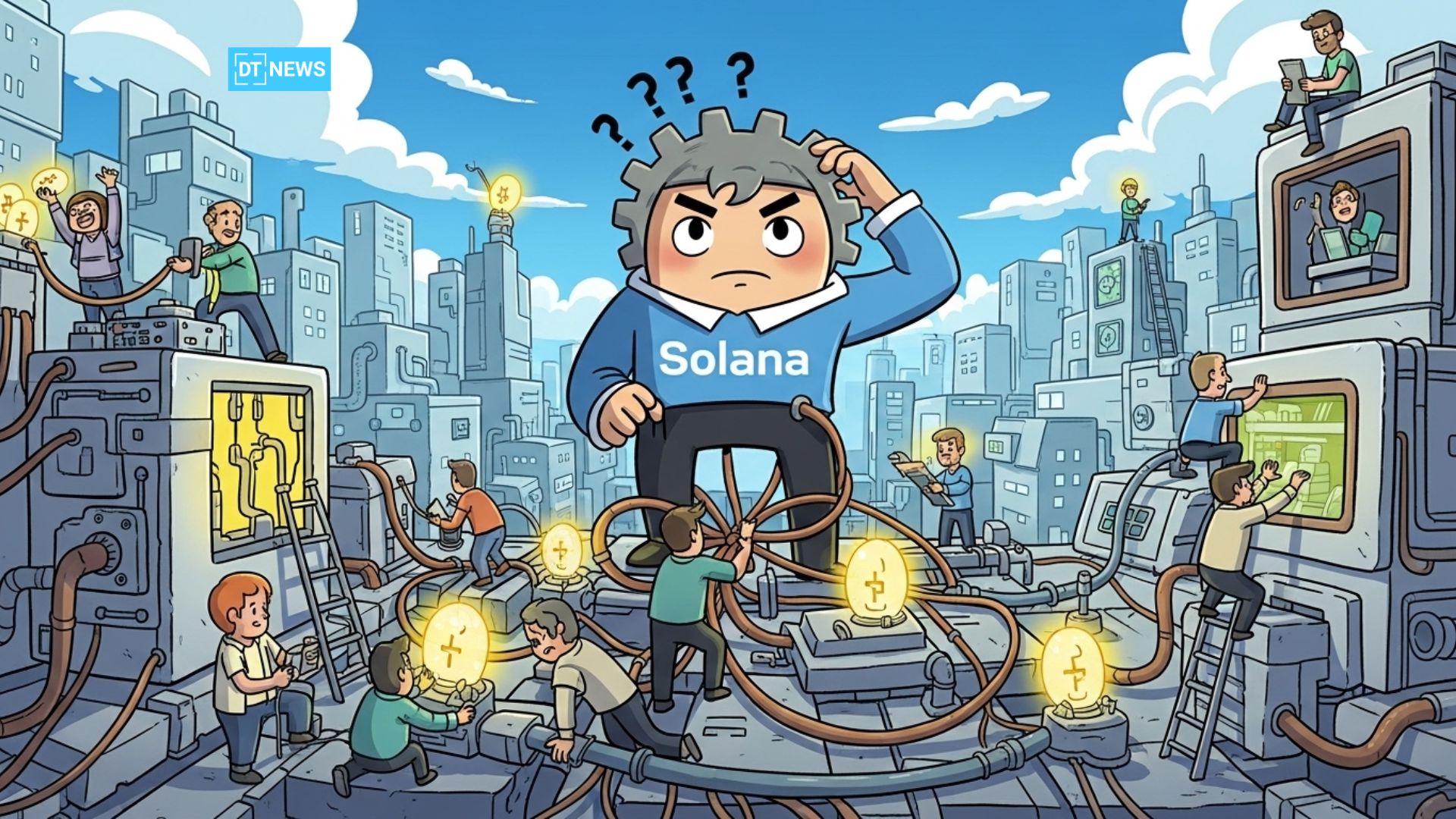
Anza said the patch includes the verification that was needed before a vote message will be entered into the block-production process. The Solana Status account called the release “urgent,” advising that all mainnet validators upgrade to v3.0.14, whether staked or unstaked, immediately.
Coordination Difficulties Revealed by Initial Adoption Lag
Despite the urgency, the rollout of Solana’s network upgrade failed to gain participants. According to data from Solana Beach, only around 18% of staked SOL on the network had made their way over to secure the v3.0.14 client.
A subsequent report by the firm raised that figure, but even two weeks after the patch’s release, some analyses found that more than half of all stake in the network continued to run outdated software.
Validators that do not adopt critical patches early risk leaving cluster availability and consensus continuity exposed to exploits, even if no attacks have been reported.
Now, this delay reveals an issue; where centralized systems updates can be pushed instantaneously, decentralized proof-of-stake networks depend on thousands of validators spread across a wide range of hosting environments, risk profiles, and administrative processes.
Why Validator Responsiveness is Important for an “Always-On” Network
Solana describes itself as an “always-on” blockchain engineered for high capacity and minimal downtime. But that expectation banks heavily on the behavior of its validator fleet, that is, thousands of independent servers that must run compatible software to secure the network in proportion to the delegated stake.
When a critical update is released, slow adoption is mostly the problem. Many of the validators running old software also have a lot of staked SOL, representing the economic weight behind securing the network.
If the majority of validators cannot update rapidly, the cluster might be at risk from coordinated attacks or disruption before vulnerabilities are patched.
Incentive Rules Tighten the Upgrade
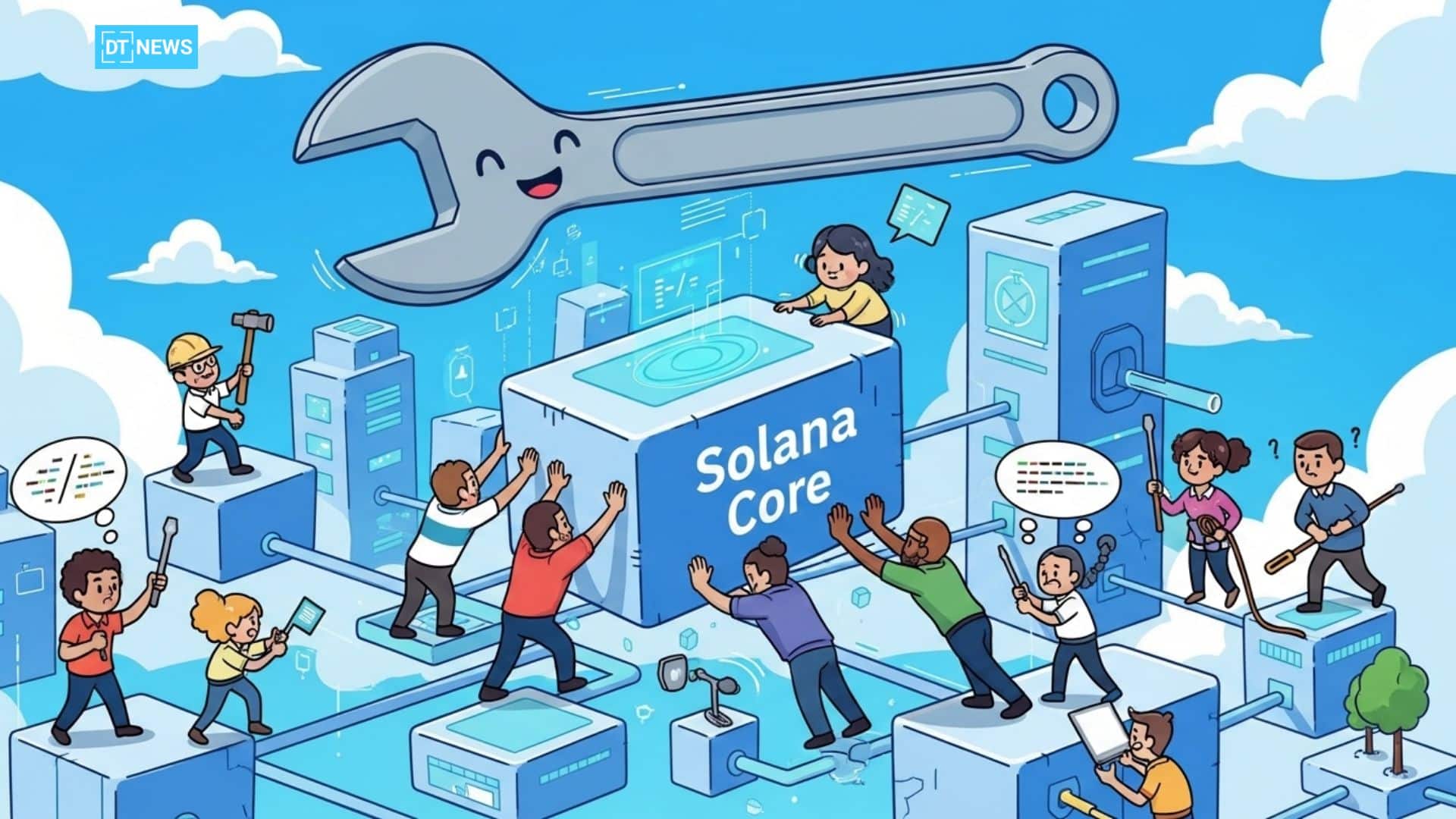
To respond to the adoption lag, Solana’s ecosphere went above and beyond. The Foundation updated its delegation mechanism to mandate that validators run certain software versions; namely Agave 3.0.14 and Frankendancer 0.808.30014, if they still wanted to be delegated to at all.
Validators that do not meet version requirements may lose stakes delegated until they comply. Instead of leaving upgrades to simply happen through voluntary maintenance windows, having the right client running becomes a measurable condition to collect rewards and delegated stake.
Hence, experts say the v3.0.14 episode, did more than mend code. It became a real-world test in how market incentives can align operator behavior with security aims on a decentralized network.
Validator Diversity and Future Resilience
Solana intends to expand the use of different types of validator software in the long term. Other than Agave, clients including Firedancer (and a previous one called Frankendancer) work to reduce reliance on a single codebase.
Client diversity can help reduce the chance that a single vulnerability hits a large fraction of the network at once, so long as there are multiple clients with meaningful deployment levels.
A successful Solana network upgrade process must account for both speed and diversity: updates need adoption quickly, but alternatives reduce correlated failure risk.
Conclusion
The recent Solana network upgrade and its slow rollout exposed an important reality for high-speed, decentralized blockchains. This is that coordinating urgent fixes across a widely distributed validator fleet is just as much of a human and governance challenge as it is a technical one.
The adoption lag exposed a discrepancy in response times, where, despite having the critical patches available, validators are slow to adopt and leave the network vulnerable for periods of time.
As a result, by tying validator delegation to software version compliance and incentivizing economic components around upgrade readiness, the Solana ecosystem is introducing structural mechanisms to strengthen future rapid responses
Glossary
Solana network upgrade: the planned update of Validator software aimed at patching vulnerabilities and improving network performance. In this case, Agave v3.0.14 as an urgent security update.
Validator: A server or node that contributes to block creation and transaction validation on a proof-of-stake network.
Delegation criteria: rules established by governance bodies (such as the one run by Solana Foundation) which set out what validators need to do to receive or retain delegated stake.
Stake migration: the process of moving staked tokens from an old software to a new client in order to secure the network and reach consensus.
Frequently Asked Questions About Recent Solana Network Upgrade
Why was the Solana network upgrade so urgent?
The Agave v3.0.14 release touched on two potential vulnerabilities in the gossip system and vote processing that could have interfered with validators’ operations, potentially halting consensus, should they have been exploited.
What was the proportion of the network that had moved to V 3.0.14 soon after release?
By early reports after the patch went live, just 18% of staked SOL had been moved to a secure version and many validators hadn’t upgraded to new clients.
If a validator does not upgrade then what?
Validators not running the necessary software versions may have their delegated stake forfeited as part of the revised Solana Foundation criteria until they comply with version conditions.
Does this change impact Solana’s level of decentralization?
Slow adoption shows coordination challenges. Increased participation among validators and a more diverse client set, such as Firedancer, could help reinforce decentralization and limit the risk of correlated failure.