






















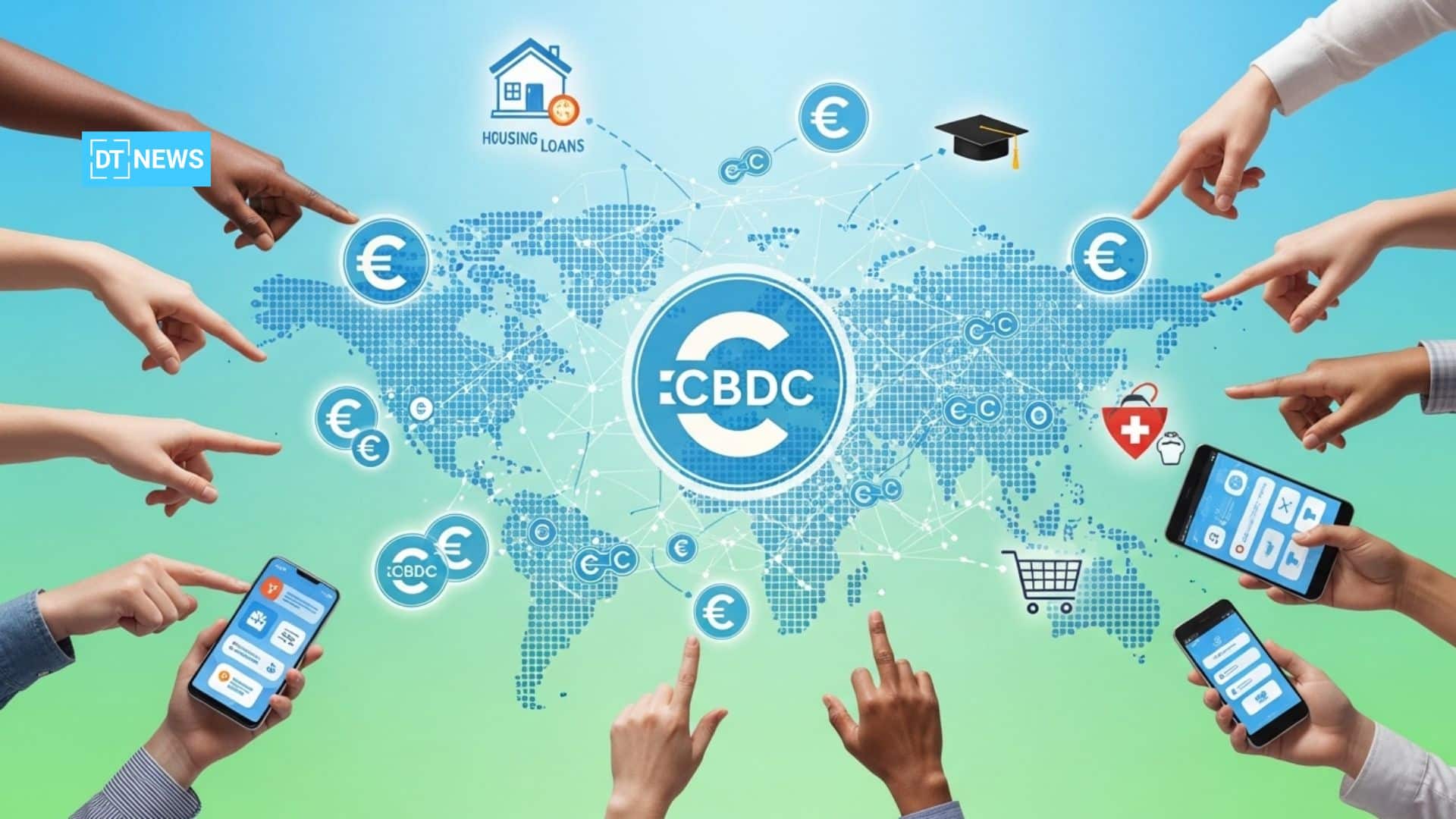

There are still about 1.4 billion adults globally who have no bank account. Affordable access to payments, savings, credit and insurance, which constitute financial inclusion, drives growth and resilience in economies.
In the search for solutions, governments have jumped on central bank digital currencies (CBDCs), imagining them as the answer to reaching unbanked populations.
Early evidence indicates that CBDCs in developing countries have the potential to bank large unbanked populations and increase financial inclusion.
What is a CBDC?
A CBDC (Central Bank Digital Currency) refers to a digital version of a nation’s fiat currency; issued directly by the central bank. Unlike private cryptocurrencies or stablecoins; a CBDC is backed by the state and is legal tender.
A CBDC could be implemented in different ways, but generally act like digital cash stored in digital wallets controlled by individuals or businesses. They could be either retail CBDCs (available to the public) or wholesale CBDCs (limited to banks).
Some characteristics of a retail CBDC include:
Digital Wallets or Accounts: Users receive digital currency in a secure wallet, typically via smartphone or a card.
Two-tier: CBDC is often not issued directly to citizens, but via commercial banks or telecom partners.
Offline Capability (optional): Consequently; some designs allow transactions when there is no internet connection; this is essential in areas with poor connectivity.
Programmability: CBDCs could support smart contracts for payments automation (e.g.; time-locked transfers).
A CBDC is important and complements cash; not replaces it. A CBDC that accepts modest deposits for a fair price should complement, not replace, with an eye toward inclusion to ensure unbanked people have at least two ways to transact.
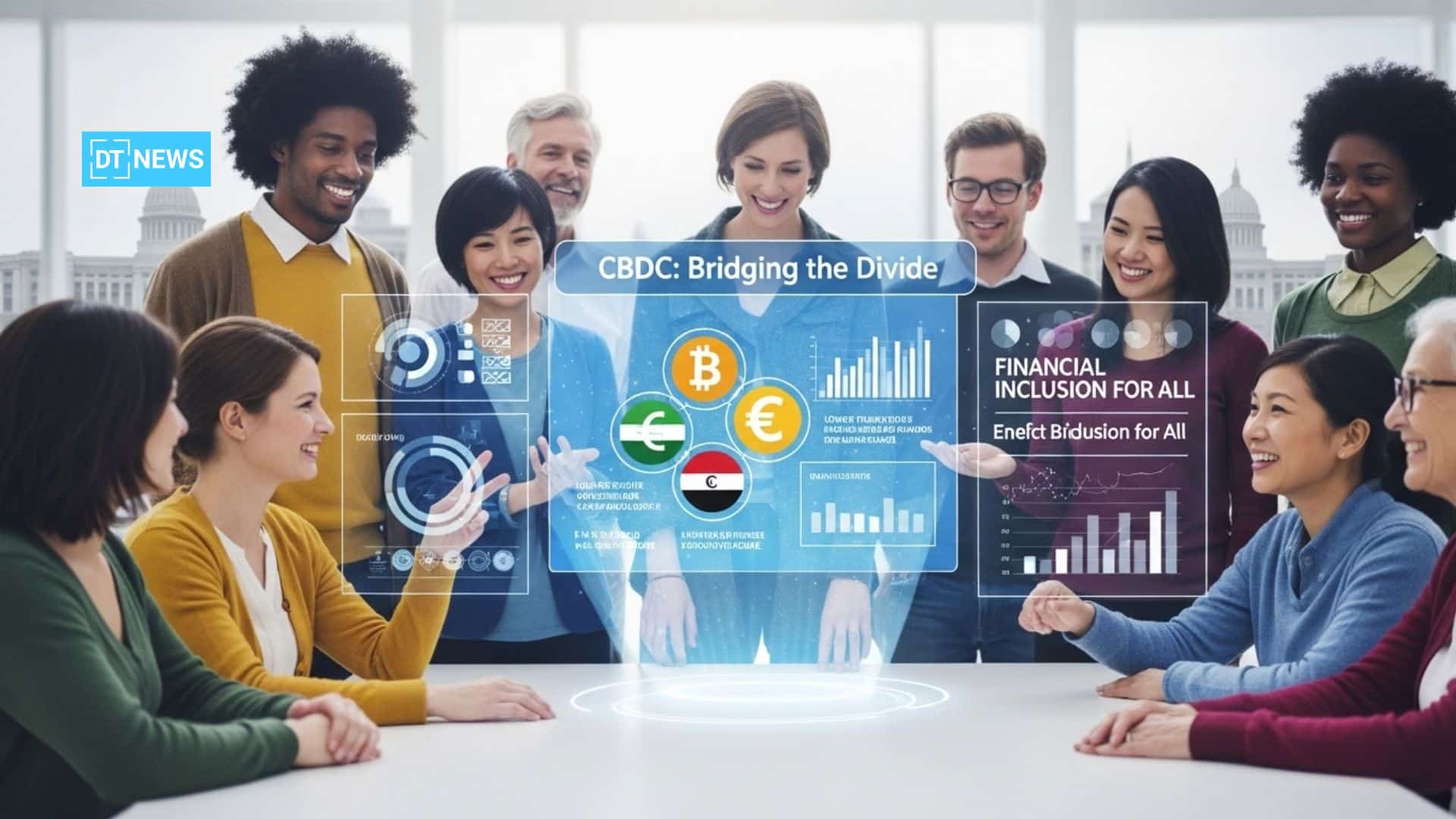
Why Financial Inclusion Matters
As the World Bank states, inclusive finance fuels growth and resilience, yet 1.4 billion men and women still live without a bank account anywhere in the world. Such adults have limited access to savings, borrowing or receiving electronic payments, which keeps many trapped in poverty and informal economies.
Digital financial services like mobile money, fintech apps, have started to bring down the costs and widen access but gaps are persistent, particularly in rural areas, among women and in the poorest countries.
Many of the UN’s Sustainable Development Goals aim to improve inclusion, and in some countries, it’s actually a mandate for central banks. A CBDC in a developing economy, for example could increase lending and welfare if it brings the unbanked into the system, IMF research says. The gain comes in two ways:
Incentivize Accounts. A retail CBDC is usually issued on the condition of users holding a basic account or digital wallet. That can encourage unbanked citizens to establish accounts they otherwise could not access, enlarging the customer base at financial services.
Build Credit Histories. As more people use digital payments, through a CBDC, their transaction data can, with appropriate privacy protections, be used to create credit profiles. According to the IMF, data from CBDC usage allows for the building of credit and reduces information asymmetry in lending.
That means low-income households could access loans and other services.
In brief, designating a safe, official digital currency can make governments’ need for cash and informal channels less challenging. Underbanked citizens get a route to modern payment tools, government disbursements and formal savings.
How CBDCs Can Boost Financial Inclusion
Supporters say CBDCs can help bypass many inclusion barriers.
Lower Fees and Improved Payments: Traditional banking costs can be high (account fees, ATM fees). A CBDC can enable free or low-cost digital payments. A rural villager, for instance, could receive government aid or wages on their digital wallet without having to go out to find a bank. Programmable CBDCs could also automate the timely distribution of social benefits or subsidies.
Banking the Unbanked: In lots of Countries, people lack ID or trust in banks. CBDCs can also tie in with lower friction digital ID or KYC. Governments can then extend formal finance to more citizens by simplifying sign-up (e.g., enabling basic wallets with minimal documentation).
Even if CBDCs are distributed via mobile money networks, those who use mobile payments can easily access digital currency without going to a traditional bank.
Access to Financial Safety Net: CBDCs can facilitate peer-to-peer transfers directly, which allows for a greater amount of social safety net. A 2025 IMF paper concludes that Welfare Payments via CBDCs Could Transform SSN Delivery by allowing agencies to automate transfers and directly monitor transactions. Although faster payment rails already exist, CBDCs provide programmability and transparency. For inclusion, this means that poorer recipients receive payments immediately and visible, minimizing leakage.
Facilitating Remittances and Cross-Border Flows: A huge share of the unbanked population depends on remittances. CBDCs if interoperable; could potentially reduce remittance fees and time taken for money to transfer; indirectly aiding inclusion by increasing the income of low-income households.
Experts warn that success for CBDCs will depend on a proportionate, risk-based approach and supportive complementary policies.
In other words, CBDCs aren’t magic by themselves; they need to be designed and put in place with attention to user needs, consumer protection and existing infrastructure.
Case Studies and Results
Here are some projects and their inclusion efforts:
Bahamas – Sand Dollar: The Sand dollar was the first retail CBDC, launched in 2020. One goal was to enhance service to remote islands and tourism locations. The early data showed that the number of digital wallets shot up; including among older and rural residents.
However, a study from 2026 found that the Sand Dollar coincided with the decline of traditional bank deposits and accounts, too.
Caribbean and Latin America: Several central banks, from Jamaica to the Eastern Caribbean, cite inclusion as a goal. For example, Jamaica’s planned CBDC scheduled for late 2026 is explicitly designed to target rural access, by enabling transactions outside of banking branches.
In Latin America, smaller nations consider CBDCs to bring informal workers into the taxation and social welfare systems.
China – Digital Yuan: The e-CNY (digital yuan) of the People’s Bank of China is the world’s largest CBDC project. Inclusion isn’t its only motivation, but it’s been used in rural places and cash-scarce cities alike to ensure that everybody has access to digital payments. Trials in Shenzhen have been targeted to elderly citizens and cash-like offline methods to target even those without smartphones.
Overall, the results have been uneven, a reminder that execution is everything.
Challenges and Criticisms
Using CBDCs for inclusion is not without controversy.
Digital Divide: As mentioned, if citizens don’t have smartphones or Internet, they can’t use a typical digital wallet. Solutions like smart cards or community access points are needed. Without these types of measures, a CBDC may reach only the “banked poor” and leave the hardest cases stranded.
Privacy Concern: Lack of privacy might discourage users from accepting a fully traceable CBDC wallet. Designing for inclusion is about balancing anonymity (as with cash) and combating crime. Many experts call for a compromise like allowing low-value anonymous transactions to facilitate trust.
Banking Sector Impact: A universal CBDC would draw deposits away from banks especially if it pays interest or is perceived as safer. To avoid posing a threat to financial stability, many countries are considering two-tier systems or limits on how much CBDC an individual can hold.
Cost/Complexity: Infrastructure (Security, offline tech, customer support etc) needs to be built. Critics wonder whether simpler measures like encouraging mobile banking or e-wallets linked to telecom accounts, could achieve similar inclusion goals more economically.
In spite of these issues, financial inclusion remains one of the potential benefits of CBDCs, as generally agreed upon by central banks and other international bodies.
The IMF and World Bank continues to research and provide guidance on best practices.
Conclusion
CBDC financial inclusion is a promising but also challenging goal for governments in 2026.
IMF studies conclude that well-designed retail CBDCs can indeed “bank large unbanked populations” and enhance lending and welfare.
Policymakers are also interested in CBDCs for their potential to deliver payment services and credit directly to citizens; including those without traditional bank accounts.
For success; there’s a need for inclusive design: offline access, cash complementarity, privacy protection and integration with local needs.
In short, CBDCs can help widen access to financial services if undertaken thoughtfully.
Glossary
Central Bank Digital Currency (CBDC): A digital version of a country’s currency issued by the central bank. It behaves like electronic cash and can be held by the public in digital wallets.
Financial Inclusion: Individuals and businesses having access to useful and affordable financial products (payments; savings, loans; insurance) that meet their needs.
Unbanked/Underbanked: People without (unbanked) or very limited (underbanked) access to traditional banking services.
Two-tier System: A model through which the central bank distributes the CBDC to commercial banks or other institutions; and those entities issue it to the general public.
Frequently Asked Questions About CBDC Financial Inclusion
What’s a CBDC and how does it differ from crypto?
Central Bank Digital Currency (CBDC) is a digital currency issued and regulated by the central bank which serves as a legal tender for any transaction that operates within the jurisdiction of that country. A CBDC; unlike cryptocurrencies (such as Bitcoin) or private stablecoins, is government-backed legal tender. It is in essence; as good as electronic money or digital cash.
What does a CBDC do for unbanked people, and how?
A central bank digital currency (CBDC) can assist unbanked citizens to hold money in a digital format without the need for traditional banks. For instance, it could allow someone to hold digital cash in a phone application or on a prepaid card funded by government aid or cash conversion.
Will the general public need the internet or smartphones to utilize CBDCs?
Not necessarily. Most designs rely on smartphone apps but some CBDC projects offer offline solutions. For example, CBDC can be hosted on smart cards or devices which sync later once connected.
Will CBDCs make cash and banks obsolete?
No, as a means for inclusion, CBDCs should supplement cash and banks not replace them. Cash is still essential for many, especially the poorest.
Is there a risk to CBDCs?
Yes. If people transfer huge amounts from bank accounts to CBDCs (because it’s supposedly safer) banks would lose deposits and lending would shrink, endangering financial stability. Privacy is another issue: if every transaction can be tracked, users might not trust the system.
References
Disclaimer: The content provided in this article is for informational purposes only and should not be considered financial advice. That said, there will be variations in the outcomes of CBDC initiatives based on policy details and country context.