
This article was first published on Deythere.
Phantom wallet scam fears are rising again after a confirmed loss exposed deeper weaknesses inside one of crypto’s most widely used self-custodial wallets. The incident has sparked urgent debate about whether new social features should launch before core safety flaws are fixed.
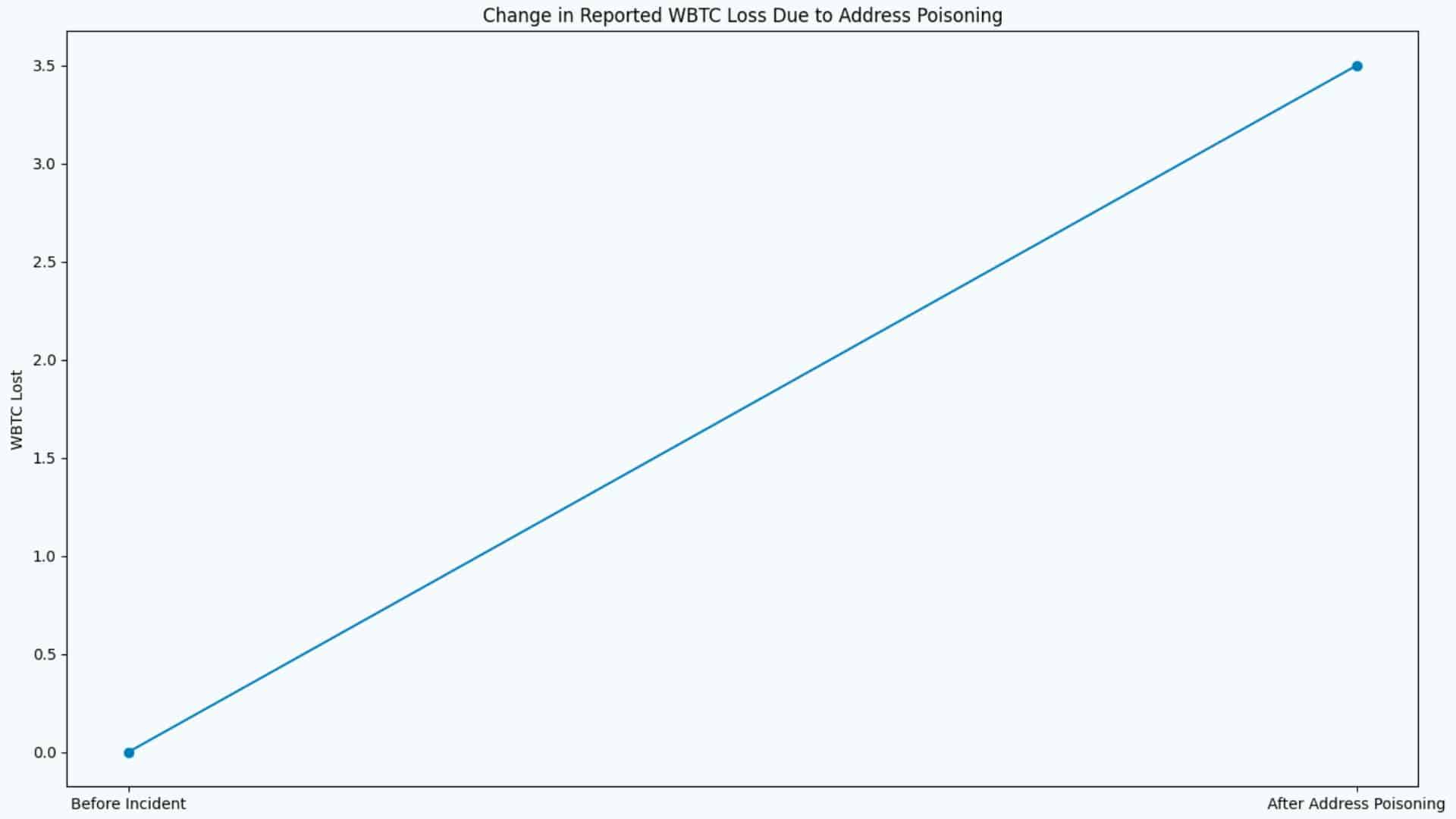
According to the source, a user recently lost 3.5 WBTC after copying a poisoned address from the wallet’s recent transaction list. The case triggered a sharp ZachXBT warning, arriving just as Phantom prepares to roll out its Phantom Chat feature in 2026 amid growing regulatory scrutiny and a broader surge in wallet-related scams.
A Verifiable Loss That Changed the Conversation
The latest Phantom wallet scam is not theoretical. Public blockchain records show the stolen funds moved to the address
0x85cBe4af7167887839f27A759EED03E7Af11D8f6,
with transaction hash
0x9f0fc3cd380fcde7cd7f0b1d8a646021841b211b784ac00c8ed9d4e267a647a4.
These details confirm the loss and reinforce the seriousness of the ZachXBT warning.
The investigator stated, “So a new method for people to get drained. Please consider fixing address poisoning first.”
The comment highlights how unresolved interface design can directly translate into financial damage.
Address poisoning works through deception, not hacking. Attackers send tiny spam transfers from look-alike addresses. When users later copy an address from recent history, they may unknowingly select the attacker’s destination. Without strong spam filtering, the Phantom wallet scam risk remains embedded in normal wallet behavior.
UI Weakness, Not Code Failure, Drives the Threat
Security researchers stress that the core issue lies in spam transaction filtering failure inside the wallet interface. Recent transaction lists mix malicious and legitimate activity, making visual confusion easy.
The ZachXBT warning also emphasizes user psychology. Copy-and-paste habits feel safe, yet blockchain transfers are irreversible. One small mistake can erase significant value in seconds. This usability flaw explains why the Phantom wallet scam continues to surface even without technical exploits.
Industry monitoring repeatedly shows that clearer wallet labeling and verification prompts sharply reduce fraud losses. That evidence strengthens calls for Phantom to resolve interface risks before expanding functionality.
Phantom Chat Expands the Attack Surface
Phantom’s planned messaging layer introduces another dimension of concern. Wallet-based communication tools can enable coordination, yet history shows they also invite phishing, impersonation, and scam coordination when identity verification is weak.
The renewed ZachXBT warning argues that adding social interaction before fixing spam filtering could multiply exposure. Each new feature creates another point where manipulation may occur. In this context, the Phantom wallet scam becomes a preview of larger risks rather than an isolated mistake.
Security analysts note that social engineering attacks often rise when platforms introduce communication layers. Without stronger safeguards, Phantom Chat could unintentionally simplify fraud pathways.
Systemic Risk for Millions of Users
Phantom serves millions of multi-chain users, turning any unresolved flaw into a systemic concern rather than a niche bug. Investigators and regulators increasingly link poor wallet design to avoidable retail investor losses, placing user experience at the center of financial protection.
Despite the seriousness of the ZachXBT warning, Phantom had not issued a public response at the time of publication or confirmed whether address-poisoning protections would arrive before Phantom Chat. Silence in moments like this often deepens market anxiety and prolongs the Phantom wallet scam narrative.
A Turning Point for Wallet Security
This Phantom wallet scam episode signals a broader shift across crypto infrastructure. Security now depends as much on design clarity as on cryptographic strength. If usability flaws remain unresolved, innovation alone cannot protect users.
The repeated ZachXBT warning offers a clear lesson. Social expansion must follow foundational safety, not outrun it. Should Phantom strengthen spam filtering and verification, trust could recover. If not, similar losses may continue.
For an industry built on irreversible transactions, prevention remains the only true safeguard. The future credibility of wallet platforms may hinge on how seriously this Phantom wallet scam is taken.
Conclusion
The growing Phantom wallet scam concerns highlight a simple truth in crypto security: strong design matters as much as strong code. The latest ZachXBT warning shows that unresolved usability flaws can quickly become real financial losses, especially as new social features approach.
Whether Phantom strengthens protections before Phantom Chat arrives may ultimately shape user trust across the wider wallet ecosystem.
Glossary
Address Poisoning: A deception method using similar wallet addresses to mislead fund transfers.
Spam Transaction: A tiny transfer sent to appear in transaction history and confuse users.
Self-Custodial Wallet: A wallet where users fully control private keys and assets.
Social Engineering: Manipulation tactics exploiting human behavior instead of software flaws.
FAQs About Phantom Wallet Scam
What triggered the Phantom wallet scam alert?
A verified 3.5 WBTC loss caused by copying a poisoned address from transaction history.
Why is the ZachXBT warning important?
It highlights unresolved safety flaws before Phantom introduces social messaging.
Does Phantom serve many users?
Yes, millions across multiple blockchain networks, increasing systemic risk.
Has Phantom responded publicly?
No public clarification had appeared at the time of reporting.