

This article was first published on Deythere.
The UK crypto ban debate is entering a sharper phase, raising concerns about political influence and digital money. The issue has gained traction after new warnings about risks tied to anonymous funding routes. According to the source, seven parliamentary committee chairs have urged Prime Minister Keir Starmer to take immediate action.
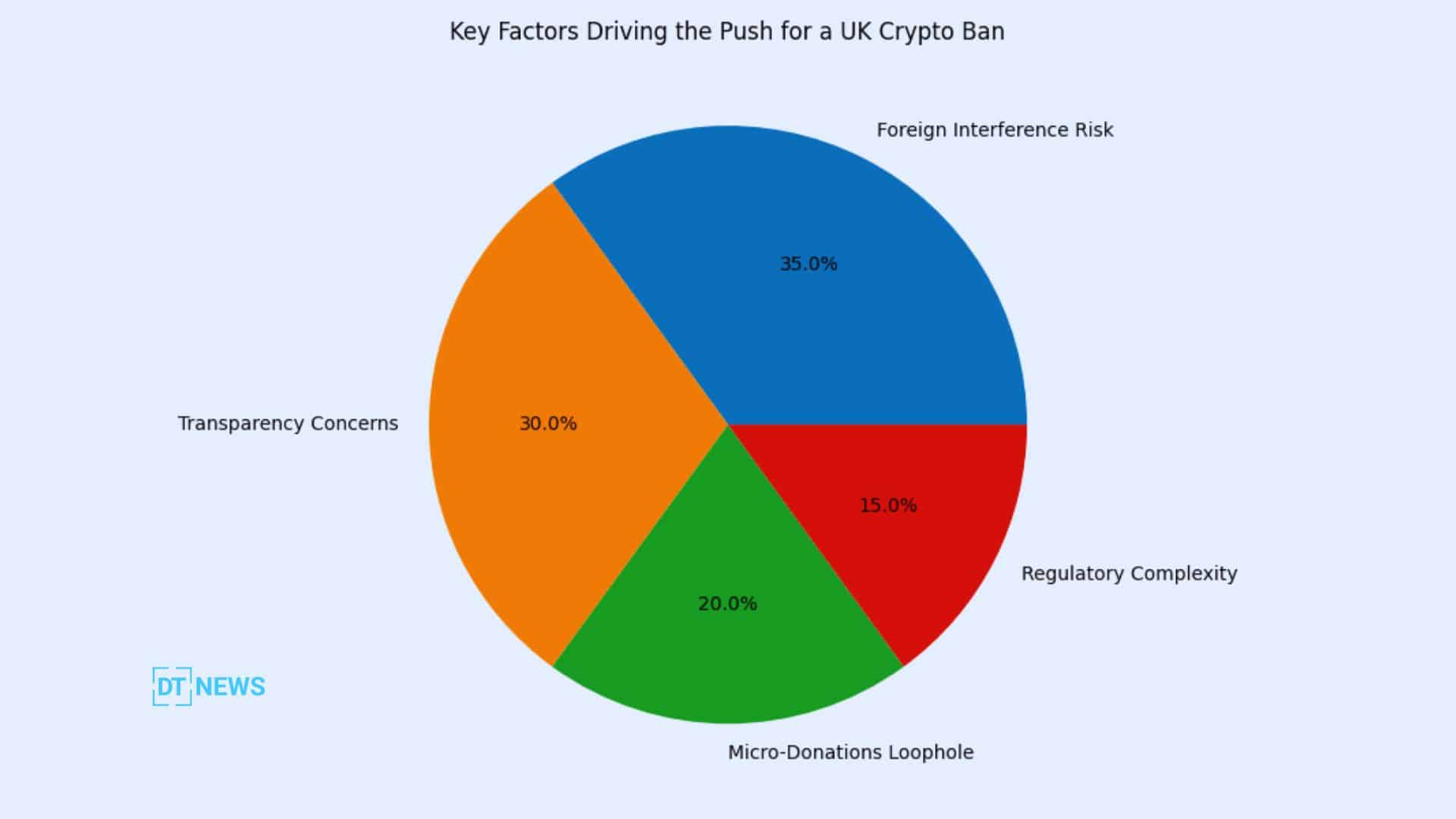
Their message arrived in a formal letter calling for digital asset donations to be blocked. The move reflects rising worries among UK Labour lawmakers about foreign interference, microtransactions, and unclear donor identities. Election regulators have also warned that crypto transfers often carry tracking challenges that traditional systems do not face.
Rising Fears Over Transparency Push Lawmakers to Seek Immediate Action
UK Labour lawmakers are increasing pressure to protect the transparency of political funding. Committee chair Liam Byrne warned that thousands of small crypto donations can slip under disclosure limits, with digital wallets often obscuring the real donors. This concern has led lawmakers to ask Prime Minister Keir Starmer to include the UK crypto ban in an elections bill expected later this month, a bill already set to introduce major voting reforms.
Reports show that while crypto transactions are public, they become far harder to trace once funds move through multiple wallets, mixing legitimate and unknown sources. These concerns come as digital assets gain a stronger foothold in UK politics. Reform UK was the first party to accept crypto donations, and its leader Nigel Farage has even pushed ideas like creating a national Bitcoin reserve.
A recent £9 million cash donation from an early crypto investor further highlighted how fast digital wealth can move across borders, often faster than regulators can respond. Analysts say the debate now goes beyond regulation, reflecting a broader effort to shield democratic systems from hidden influence. Labour’s push mirrors steps taken in other countries facing similar risks.
Election Bill Pressure Intensifies as May Vote Nears
With May’s local elections approaching, pressure is mounting over whether the UK crypto ban should be added to the upcoming elections bill, which also proposes lowering the voting age to 16. However, government officials told that including the ban at this stage may not be workable, citing the technical complexity of drafting enforceable crypto rules on a tight deadline.
Even so, Labour lawmakers warn that delaying action leaves political funding exposed. They note that bad actors often use small digital donations to avoid reporting thresholds, a pattern seen in global campaigns, according to international analysts.
Labour MP Pat McFadden raised similar concerns last July, emphasizing that political donations must be clearly identifiable, something crypto often complicates. Supporters argue the goal is not to restrict innovation but to close loopholes, especially as digital assets gain popularity among younger voters.
Advocacy groups agree. The UK Anti-Corruption Coalition recently backed the ban, saying it aligns with government warnings about foreign interference and illicit finance.
Conclusion
The UK crypto ban discussion marks a turning point for the nation’s political transparency. With UK Labour lawmakers intensifying their push, the debate now reaches beyond party interests. It raises a central question for modern democracies: how can political systems stay open and secure while digital finance evolves?
The outcome of this debate may guide future rules across Europe, shaping how countries balance innovation with democratic protection.
Glossary of Key Terms
Crypto Donations: Digital asset contributions made to political parties.
Digital Wallet: Software used to send, receive, and store crypto.
Interference Risk: Chance of foreign or hidden influence affecting elections.
Election Bill: A legislative proposal that updates voting and funding rules.
FAQs About UK Crypto Ban
Why are lawmakers pushing for a crypto donation ban?
They fear hidden donations and foreign influence entering political funding.
Can crypto donations be tracked?
Yes, but the trail becomes harder to read once funds move across many wallets.
Which party began accepting crypto first?
Reform UK announced it would accept digital assets with verification in place.
Will a ban affect political innovation?
It may limit certain donations, but supporters argue it protects transparency.