

























Sidechains in blockchain are becoming an important innovation for improving speed, connecting different networks, and testing new ideas in the cryptocurrency world.
- What Are Sidechains in Blockchain?
- How Do Sidechains Work?
- What Are the Benefits of Sidechains?
- What Are the Drawbacks of Sidechains?
- How do sidechains and two-way pegs work in practice?
- What are the main types of sidechains in blockchain?
- How do Drivechain, SmartBCH, and Polygon illustrate different sidechain models?
- How are sidechains being used in real applications today?
- Conclusion
- Glossary
- Frequently Asked Questions About Sidechains In Blockchain
These linked networks work alongside main blockchains, making it easier to move assets, complete transactions faster, and try out new features safely without affecting the main chain.
As more people look for quicker and more flexible blockchain solutions, sidechains are gaining attention from developers, investors, and experts.
What Are Sidechains in Blockchain?
Sidechains are separate blockchains that connect to a main blockchain, called the mainnet. They exist to give the main network more tools and capabilities, making it faster and more flexible. They also make transactions smoother, so moving assets takes less time and costs less.
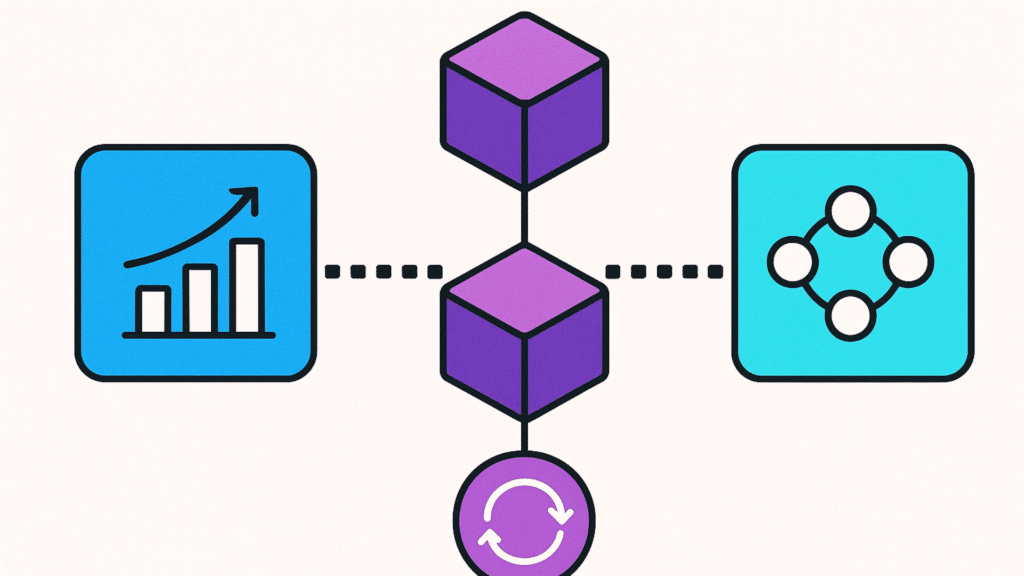
At the same time, sidechains give developers a space to try out new ideas and features safely. This lets them test changes or improvements without risking the main blockchain’s security or daily operations. There are generally two kinds of sidechains.
Independent sidechains run alongside the main blockchain on equal terms. They often have their own tokens and operate on their own rules. Parent-child sidechains work differently. They rely on the main blockchain for their assets and don’t create their own tokens.
Instead, they get their assets through transfers from the parent chain. These two types of sidechains are connected using systems like two-way pegs, which let assets move safely back and forth between the main blockchain and the sidechain.
Think of a two-way peg as a kind of bridge for digital coins. When you move tokens from the main blockchain to a sidechain, they get locked on the main network while the same amount becomes available on the sidechain.
If you want to move them back, the process just reverses. This lets assets travel between chains safely, without the risk of duplicates or losing anything along the way.
How Do Sidechains Work?
Sidechains work by using smart contracts along with secure bridges between blockchains. The smart contracts check that transactions are done correctly and make sure the people validating them are honest, which helps prevent fraud or stalled transfers.
For example, if you want to move one BTC from the Bitcoin network to a sidechain, you send it to a special lockbox on the main blockchain. The sidechain then releases the same amount so you can use it there. When you want to move it back, the process is simply reversed.
Bridges that connect sidechains in blockchain to main blockchains can work in different ways, like Powpegs, SPV, federated, or collateralized systems. These bridges don’t just move assets; they also help different blockchains work together.
This means users can send funds or tokens from one blockchain to another without going through centralized exchanges, avoiding extra fees and the risks of relying on a third party.
What Are the Benefits of Sidechains?
Sidechains take some of the pressure off the main blockchain, letting it run more smoothly. They handle certain transactions on their own, which means things happen faster and cost less. On busy networks like Bitcoin and Ethereum, this can stop backups and make using the system less frustrating for everyone.
Sidechains in blockchain give developers a safe space to test new ideas. Changing things on a big blockchain with lots of users can take forever because everyone needs to agree. With sidechains, developers can experiment with things like smart contracts or new ways to run the network without touching the main blockchain.
This freedom helps blockchain technology grow and try out new features faster. Sidechains help spread out activity across different blockchains. They connect separate networks, making it easier for more people to access various assets. In DeFi, these connected assets allow users to lend, borrow, and trade across networks, leading to a more linked and flexible crypto system.
What Are the Drawbacks of Sidechains?
Even with all their benefits, sidechains have some downsides. One big issue is security. Since sidechains handle their own security separately from the main blockchain, problems on the sidechain don’t usually affect the main network.
But that also means smaller or less active sidechains can be easier targets for attacks. A tricky part with sidechains is getting people to actually secure them. Miners usually earn rewards in the blockchain’s own tokens, but if the sidechain doesn’t have its own, there’s not much for them. That can make the smaller chains weaker and more prone to problems.
Trust is another important issue. Just because an asset is on a sidechain doesn’t mean it’s as secure as it would be on the main blockchain. For instance, Bitcoin moved to a sidechain doesn’t get the same level of protection that it has on the main Bitcoin network.
Validators are key to keeping sidechains running smoothly. If they don’t do their job properly or act dishonestly, transactions can get stuck or assets could be moved fraudulently. Anyone using a sidechain needs to be aware of these risks before getting involved.
How do sidechains and two-way pegs work in practice?
At the heart of sidechains in blockchain is the two-way peg. It is the technical and economic glue between the mainnet and the sidechain. In a typical set up, a user sends tokens to a specific address on the main chain. Those tokens are locked there and cannot be spent.
Once the lock is confirmed, a matching amount of tokens is either minted or released on the sidechain. When the user wants to go back, they burn or lock the sidechain version and unlock the original on the mainnet. Smart contracts make sure everything runs fairly on sidechains.
Before coins move over, the system checks they’re really locked on the main blockchain. They also keep an eye on the people managing the process, so no one can cheat or take shortcuts. Centralized systems can offer a very simple version of this process, but they introduce custodian risk and extra trust assumptions.
The more advanced designs aim to keep the link as trust-minimized as possible, with the two-way peg behaving like a controlled tunnel that lets value travel in both directions without relying on a single gatekeeper.
What are the main types of sidechains in blockchain?
The first can be seen where both chains are largely independent. Each chain has its own native token, its own security model, and its own validators or miners. They are effectively peers. Each can be described as the sidechain of the other because their relationship is symmetric.
Assets can move between them via a bridge, but neither chain is structurally below or above the other. The second family is based on a parent-child relationship. In this pattern, the parent chain is the primary source of value. The child sidechain usually does not create its own base asset.
Instead, all value on the child chain comes from tokens locked on the parent. Users lock coins on the mainnet and receive a representation on the child. When they move back, the child version is destroyed or locked, and the original is released.
This parent-child model is often used where the primary goal is to extend the capabilities of the main chain. For example, a sidechain can add smart contracts to a network that did not have them, or enable faster and cheaper payments, while still pegging all value back to the original coin.
How do Drivechain, SmartBCH, and Polygon illustrate different sidechain models?
Concrete projects show how diverse sidechains can be, even when they follow similar principles. Drivechain is a clear example of the parent-child model attached to Bitcoin. Bitcoin is the parent chain. Drivechain does not issue a new coin.
Instead, it depends entirely on BTC that has been locked on the main chain and mirrored on the sidechain. Its two-way peg is based on SPV proofs and relies heavily on miners to validate and approve transfers.
Because the same miners who secure Bitcoin play a key role, there is an ongoing debate about how much protection this provides versus the risk of coordinated attacks. A distinct innovation here is blind merged mining, which lets Bitcoin miners secure Drivechain without running a full node for it, and earn BTC for doing so.
SmartBCH sits closer to the independent model. It runs as an Ethereum Virtual Machine-compatible environment linked to Bitcoin Cash. It does not mint its own separate base coin, but it offers smart contract support and faster blocks than the BCH mainnet. Transfers between BCH and SmartBCH are handled by a scheme called SHA-Gate.
Moving assets from BCH to SmartBCH depends on full node logic. Going back from SmartBCH to BCH involves a federation and miners who supervise the process. SmartBCH is built to deliver short confirmation times and a high gas limit, aiming to rival or exceed other EVM networks in throughput while staying anchored to the BCH ecosystem.
Polygon combines elements of both worlds. It grew around Ethereum and uses the Plasma framework to create child chains that periodically commit their state to the Ethereum main chain. At the same time, Polygon is secured by its own Proof-of-Stake validators and issues MATIC as a native token.
It runs multiple chains and bridges and positions itself as a hub for Ethereum scaling and interoperability. In this sense, it is both a family of sidechains in blockchain style and a broader infrastructure layer connecting many EVM-based networks.
Together, these three systems show that the term sidechain in blockchain covers a wide range of designs. Each project chooses its own balance between independence, reliance on the parent chain, security assumptions, and user experience.
How are sidechains being used in real applications today?
In day-to-day usage, sidechains in blockchain support several core use cases. Many payment and settlement platforms rely on sidechains to tame fees and confirmation times. By moving smaller, high-frequency payments off the main chain, they can offer a smoother user experience for both merchants and customers, while still settling periodically on a secure base layer.
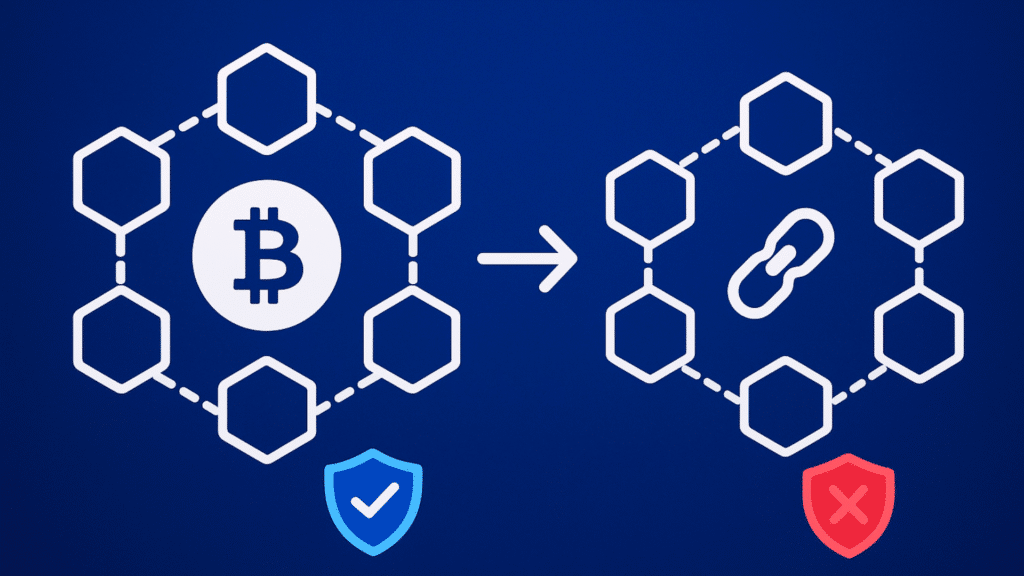
DeFi platforms use sidechains to test new lending models, leverage structures, and asset types. Launching on a sidechain lets teams iterate quickly, ship more frequent updates, and avoid clogging expensive mainnets with every transaction.
If a product reaches maturity, it can then expand to the main chain or other networks. Gaming and NFT ecosystems often choose sidechains to handle large volumes of transfers linked to in-game items and collectibles. The ability to move assets cheaply and quickly is vital when users are trading or upgrading items many times per day.
Sidechains in blockchain can deliver that flexibility, while still providing ways to prove ownership or value on a dominant chain when needed. Enterprises and institutions are also experimenting with sector focused sidechains.
These can be permissioned or semi-permissioned networks that connect to public chains only when it is necessary to prove data integrity, show reserves, or interact with public liquidity pools.
Conclusion
Sidechains in blockchain have evolved from a theoretical fix for Bitcoin’s limits into a broad design pattern that now spans multiple ecosystems. They help relieve congestion, allow targeted experimentation, and enable assets to cross boundaries between chains, all while keeping a link back to major networks that provide deep liquidity and strong brand trust.
Yet the model is not without costs. Security is fragmented, bridges remain complex, and users must learn that moving value off a main chain always changes the risk profile. Leading analysts tend to view sidechains as part of a wider toolkit that also includes rollups, state channels, and other scaling methods.
For builders, the main question is not whether sidechains in blockchain are “good” or “bad,” but which design, security model, and peg mechanism best matches their use case. For users, the task is to look past the low fees and high speed and to understand who or what stands behind the sidechain they are trusting with their assets.
Glossary
Sidechain: A smaller blockchain connected to the main one. It helps speed up transactions and lets developers safely test new features.
Mainnet: This is the main blockchain where real transactions happen and digital assets live. It’s the heart of the network.
Two-Way Peg: A special bridge that lets you safely move tokens back and forth between the mainnet and a sidechain without losing them.
Independent Sidechain: A sidechain that runs on its own rules and has its own tokens. It works separately but stays linked to the mainnet.
Parent-Child Sidechain: A sidechain that depends on the mainnet for assets. It does not have its own token; instead, it uses tokens moved over from the mainnet
Frequently Asked Questions About Sidechains In Blockchain
Why are sidechains important?
Sidechains matter as they make blockchains faster. Also help developers try new features safely. And makes different blockchains connect and work together smoothly.
How do sidechains work?
Sidechains use smart contracts and secure bridges. These tools let people move assets between the main blockchain and the sidechain.
What types of sidechains exist?
There are two main kinds. Independent sidechains run by themselves and have their own tokens. Parent-child sidechains rely on main blockchain for assets and don’t have their own tokens.
What are the benefits of sidechains?
Sidechains reduce traffic on main blockchain. This cuts fees and speeds up transactions. They also give developers a safe place to test new ideas.
What are the risks of sidechains?
Some sidechains small ones, might be less secure. Validators can act badly sometimes. Also, assets on sidechains might not be as safe as on main blockchain.