
This article was first published on Deythere.
- What Are Crypto Sanctions?
- Why Are Crypto Sanctions Enforced?
- Major Crypto Sanction Actions
- Effect on Exchanges and Wallet Providers
- Impact on Cross-Border Payments
- How Crypto Sanctions Enforcement Works
- Sanctioning Crypto: Risks and Contentions in Action
- Conclusion
- Glossary
- Frequently Asked Questions About Crypto Sanctions
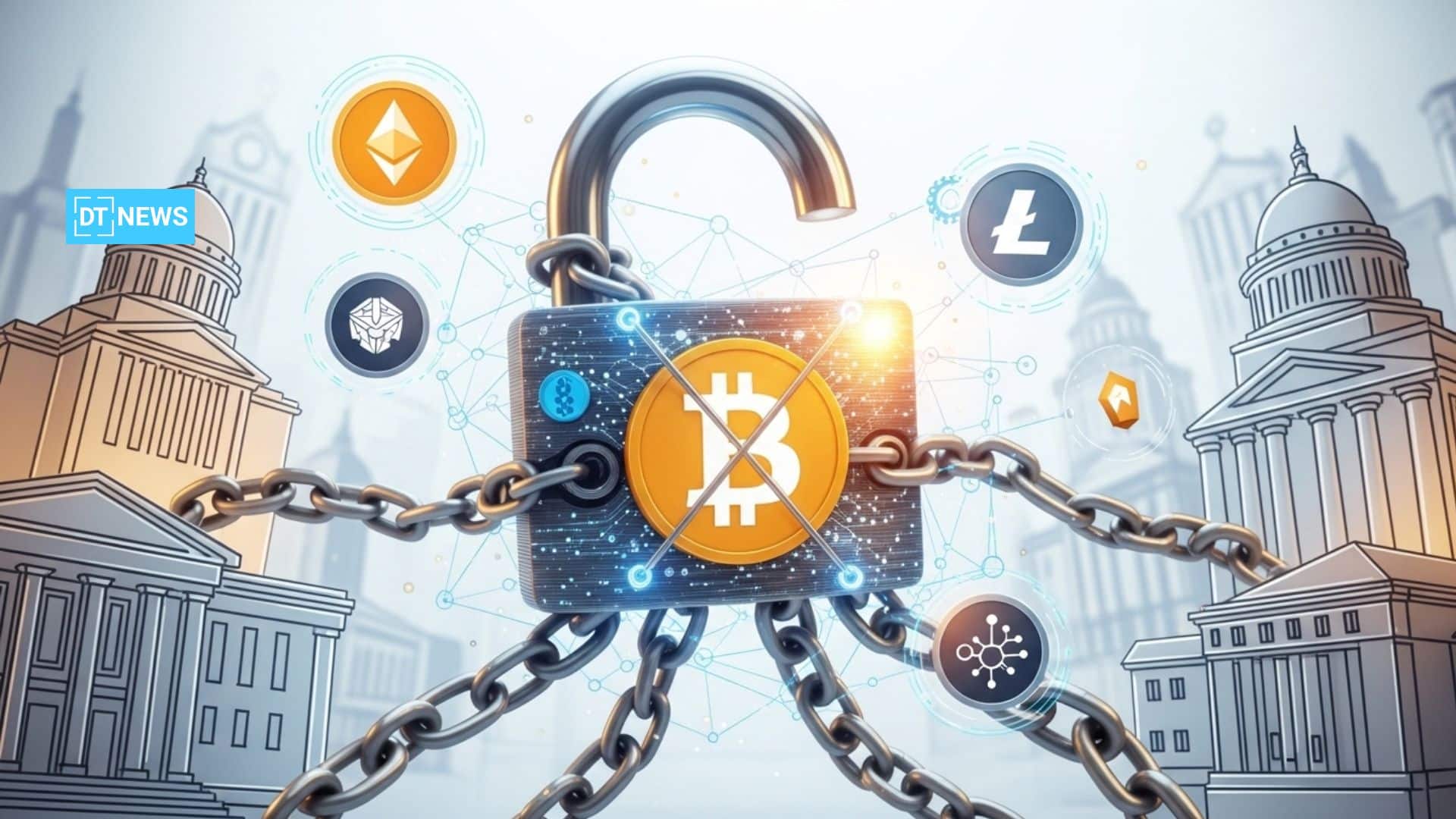
Governments around the world are targeting digital currencies more and more with economic sanctions. Crypto sanctions refer to restriction of blockchain addresses, wallets and services that are used to enforce anti-money laundering (AML) and foreign policy regulations.
They function like regular sanctions where authorities identify banned addresses by putting them on blacklists, and businesses would have to block or freeze any crypto assets associated with those accounts.
U.S. and U.K. agencies have formed specialized crypto teams in recent years to intercept illicit flows. For example, the U.S. Treasury has sanctioned North Korean cyber groups and even crypto mixers in this manner by including their wallet addresses in the sanctions list.
Likewise, the UK’s OFSI states that the use of crypto assets to circumvent sanctions is treated no differently to a misuse of traditional currencies.
What Are Crypto Sanctions?
Crypto sanctions refer to regulatory actions taken towards digital assets and blockchain actors to uphold larger economic sanctions.
To explain this; when a government or other sanctioning entity (the U.S. Treasury’s OFAC, the EU and the UK’s HM Treasury) places a person, company or cryptocurrency address onto its sanctions lists; that designation applies to any cryptoassets they control.
So, if an exchange or wallet provider identifies funds from a sanctioned address; they are mandated by federal law to freeze those funds and refuse transactions.
In short, crypto sanctions means that dealing in prohibited crypto wallets/services can break international rules. Individuals are subject to these rules as well as crypto businesses like exchanges, custodians etc.
It is important to note that most sanctions regimes have extraterritorial reach. A non-U.S. person can still violate a U.S. crypto sanction by transacting with a U.S. dollar or U.S.-based entity.
In essence, crypto sanctions seek to plug loopholes where cryptocurrency might be used to undermine fiat sanctions.
They are enforced as rigorously as traditional financial sanctions on a “strict liability” basis, meaning ignorance is no defense if a business was up facilitating sanctioned crypto transactions.
Why Are Crypto Sanctions Enforced?
The main reason behind crypto sanctions is the need to stop illicit finance like money laundering, terrorism financing and evasion of existing sanctions.
Cryptocurrencies are global, rapid and pseudonymous, which may appeal to sanctioned actors. United States and worldwide authorities have tracked state-sponsored cybercriminals such as North Korea’s Lazarus Group and criminal groups using crypto to disperse huge amounts of money illegally.
For example, a FATF report indicates that stablecoins which are frequently used in crypto transactions, represented 84% of illicit virtual asset transaction volume in 2025, and state-related cybercriminal organizations abused them to wash crime proceeds.
As one expert points out, crypto’s “speed, global reach and use of anonymity-enhancing technologies” create opportunities for money laundering and sanctions evasion.
Crypto sanctions help shut down one avenue for bad actors; forcing transactions involving those assets to be monitored or stopped.
In 2022; the U.S. Treasury sanctioned Tornado Cash (a crypto mixing service) after it was connected to laundering funds stolen by North Korean hackers. Regulators have also targeted cryptocurrency exchanges used by sanctioned nations.
The logic is simple: by treating crypto the same as cash, governments want to mitigate the use of decentralized assets for illicit purposes.
Major Crypto Sanction Actions
| Year | Target | Sanctioning Authority | Reason / Impact |
| 2018 | Iranian cyber actors (SamSam hackers) | US OFAC | First inclusion of crypto addresses (Iranian Bitcoin wallets). |
| 2019 | North Korea’s Lazarus Group | US OFAC | Hacking & crypto theft; billions siphoned into crypto (e.g. Ronin bridge hack). |
| 2021 | SUEX (Crypto Exchange) | US OFAC | Facilitating ransomware payments (40% of transactions illicit). |
| 2022 | Tornado Cash (Mixer) | US OFAC | Laundering for criminals (incl. North Korea); added 50+ Ethereum addresses. |
| 2025 | Garantex (Russian Exchange) | (Russia/West context) | Russian OTC exchange used for sanctions evasion; infrastructure seized. |
| 2025 | Global sanctions enforcement (private sector) | UK OFSI & partners | Multiagency operation to identify crypto funds linked to sanctions evasion. |
(OFAC = U.S. Office of Foreign Assets Control; UK OFSI = UK’s Office of Financial Sanctions Implementation.)
These cases represent the range of crypto sanctions. They can be levied against individuals, state-linked groups, decentralized services such as mixers and even entire platforms.
Sanctioned crypto addresses are typically published on official lists (e.g. OFAC’s SDN list) and in blacklists maintained by analytics firms.
Effect on Exchanges and Wallet Providers
Crypto sanctions have the most direct impact on cryptocurrency exchanges and wallet services. Firms offering custodial wallets or trading services must implement screening to avoid sanctioned addresses.
For example, every U.S.-regulated exchange must vet all deposits and withdrawals against live sanctions lists. According to sources, when a business encounters crypto assets subject to OFAC sanctions, they must immediately block access to those funds and report it.
If blockchain analytics show that a user is trying to withdraw from or deposit funds into an address on this list, the transaction is aborted and funds frozen.
This compliance extends beyond exchanges. Even self-custody wallets and payment apps are likely to increasingly employ some measure of sanctions compliance. The U.S. Treasury guidance indicates all US persons must comply, which would include crypto custodians and DeFi platforms.
The UK OFSI has similarly made it clear that crypto tools cannot be a backdoor around sanctions.
In January 2026, OFSI announced a new “Crypto Cash Fusion Cell” initiative, where law enforcement and analytics firms work together to trace rogue crypto flows. OFSI maintained that the use of crypto assets to evade sanctions is considered no different from the exploitation of traditional currencies.
Thus, exchanges and wallets should be actively enforcing crypto sanctions. They require continuous screening (often with specialized software) and quick reporting immediately blocked funds are found.
Strict liability rules can mean that even unintentional violations of crypto sanctions result in significant fines or criminal charges. This has forced major exchanges to now spend millions on compliance teams and blockchain monitoring tools.
Impact on Cross-Border Payments
Crypto sanctions impact international payments as well. In response to traditional sanctions (e.g. once banks decline transactions), some businesses and individuals used cryptocurrencies to transfer value across borders.
But the gaps are now being closed by sanctioning authorities. For instance, FATF has flagged concerns with “peer-to-peer transactions via unhosted wallets”, in instances where users send stablecoins or crypto without intermediaries.
In response, regulators are calling for stricter “travel rule” observance and risk-based controls on stablecoin issuers (e.g., allow/deny-lists in smart contracts).
Despite that, enforcement is challenging. According to a recent analysis by Binance’s research arm, crypto OTC (over-the-counter) desks and mixers were used by Russian entities as a way of bypassing limitations on fiat transactions.
Their on-chain tracking found crypto routes that avoided traditional barriers. In other words, “billions of dollars can still move because enforcement is slow and fragmented, often not matched to the speed of the crypto system itself,” a compliance expert pointed out.
This means that even when crypto transactions are sanctioned “on paper,” practical enforcement can be bypassed if exchanges or jurisdictions dilly-dally.
For legitimate cross-border use, crypto sanctions mean that international payments involving digital assets must be carefully vetted by businesses. Issuers and operators of stablecoins may be required to disable features such as freezing funds, in order to remain compliant.
International remittance companies using crypto rails need to screen their clients for sanctions, just as banks do. Not doing so risks cutting them off from banking lanes or payment networks.

How Crypto Sanctions Enforcement Works
Crypto sanctions rely on blockchain analysis and cooperation between regulators and industry:
Sanction Listings: Agencies like OFAC publish lists of sanctioned addresses and entities. Many crypto wallets associated with criminals appear on OFAC’s Specially Designated Nationals list, for example, as of 2026.
Screening Requirements: Firms need to screen blockchain transactions against these lists. The automated screening process should go beyond the SDN list, in order to identify wallets associated with sanctioned actors.
Freezing and Reporting: Any sighting of a prohibited crypto asset needs to be frozen (i.e., disabling the private key or transfer refusal) and reported.
Cooperation: Governments collaborate globally. Another example of law enforcement sharing crypto intelligence with regulators and firms is the UK’s CCFC (Crypto Cash Fusion Cell)
Tech Tools: Chainalysis, Elliptic, TRM Labs and others provide blockchain analytics. These workflows track fund flows, tracing the path of illicit crypto transfers.
When OFAC sanctioned Tornado Cash in 2022, all U.S. firms were required to block transactions involving its contract addresses.
When U.S. sanctions blacklisted an Iranian-linked exchange, firms froze its accounts. Similarly, Elliptic partnered with UK authorities to identify real-time sanctioned crypto transactions.
Sanctioning Crypto: Risks and Contentions in Action
Although crypto sanctions have great power, there are some disputes and limitations on them:
Decentralized Services: The Tornado Cash trial case showed tension. A U.S. appeals court ruled in 2024 that immutable smart contracts like Tornado’s are not “property” that can be sanctioned according to existing law. This may constrain how far authorities can go against tools that are purely based on code. The ruling did leave some other measures in place (such as sanctioning individuals who fund those contracts).
Knowing the Holders: Sanctions lists of crypto addresses are never exhaustive. Some sanctioned users could be having dozens of wallets. Compliance experts thus advise businesses to screen not just for exact matches, but for any wallet “associated” with sanctioned networks.
Cross-Border Enforcement: As sanctions often hinge on dollar clearing or U.S. courts, they have less influence over some foreign crypto actors. The Binance report noted that sanctions can lag behind fast-moving crypto, allowing some state actors to exploit loopholes.
Innovation vs Regulation: Some DeFi activists say crypto should remain open, but regulators have decided this is just another financial tool that has to abide by sanctions. As OFSI said, sanctions treat crypto and fiat alike. Even DeFi protocols or stablecoins will have to care about compliance.
Nevertheless, crypto sanctions and related regulations are strengthening.
Conclusion
Governments are treating crypto the same as cash for sanction purposes. Exchanges, issuers of wallets and other payment platforms need to have strong screening and compliance programs for blocking funds associated with sanctioned parties. High-profile cases; from OFAC’s postings of sanctioned crypto addresses to UK multi-agency crackdowns, show that avoiding crypto sanctions remains impossible.
At the same time; sanctions evasion techniques (such as mixers and offshore exchanges) reveal that enforcement needs to catch up with technology.
For users and businesses; this translates to increased due diligence, revised policies and continual monitoring, as authorities continue to fine-tune their approaches.
Glossary
OFAC: Office of Foreign Assets Control, a U.S. Treasury office that enforces economic sanctions. Has crypto addresses on its Specially Designated Nationals (SDN) list
Sanctioned Entity: An individual, company or crypto address specifically identified by authorities as prohibited. These have been blocked, or transactions are frozen.
Mixers/Tornado Cash: Services that pool and mix crypto in order to blur its origin.
Unhosted Wallet: A cryptocurrency wallet not held at an exchange (self-custodial).
AML (Anti-Money Laundering): Laws and regulations intended to stop money laundering and sanctions evasion.
Frequently Asked Questions About Crypto Sanctions
What are crypto sanctions?
Crypto sanctions are economic restrictions that target digital currencies and blockchain services.
Who enforces crypto sanctions?
In the U.S., OFAC (Office of Foreign Assets Control) is responsible; it has been listing crypto addresses from 2018 onward. They are also enforced by other countries; the UK’s OFSI actively collaborates with the police on crypto sanctions, while the EU has similar powers. International organizations such as the FATF create frameworks, but it is up to individual countries to implement them.
What impact do crypto sanctions have on exchanges?
Exchanges must implement sanctions screening. This means they require software to match every deposition/withdrawal with revised sanction lists. When a deposit from an ineligible address is made, the exchange must block or freeze it and make a report. Non-compliance with these rules may incur penalties.
Are anonymous wallets an effective means to avoid sanctions?
Although the crypto world allows anonymous transactions, regulators actually monitor and analyze blockchain transactions to trace even supposedly anonymous flows. Tools can trace the transactions through mixers and unhosted wallets. As the OFSI itself says: “every transaction leaves a trace.”
What should I do if I accidentally receive sanctioned crypto?
Once a platform or wallet learns that the funds they control originate from a sanctioned address, they’re generally obligated to immediately freeze those assets and report them (e.g. to OFAC) as well. You may not legally transfer, trade, or use those crypto assets until the sanction is removed.
References
Disclaimer: Do not take this article as legal or financial advice; it was written for informational purposes only. Comply with official regulatory guidance.