

Crypto airdrops are a popular way for projects to attract new users. They also help keep existing users engaged. By giving free tokens or NFTs, projects reward loyal users and encourage more people to use their platforms. Successful projects like VERSE, LOOKS, and UNI show that airdrops can boost community participation and platform activity.
- What Does a Crypto Airdrop Mean?
- Why Do Projects Use Crypto Airdrops?
- What Are Some Famous Examples of Airdrops?
- How Do Crypto Airdrops Work in Practice?
- How Different Types of Airdrops Work?
- Are Crypto Airdrops Safe and Worth It?
- How Airdrops Can Influence Market Trends?
- Conclusion
- Glossary
- Frequently Asked Questions About Crypto Airdrops
What Does a Crypto Airdrop Mean?
A crypto airdrop happens when a blockchain project sends free tokens or NFTs to the wallets of users who meet certain conditions. The main goal is usually to reward early supporters or to encourage new users to try the platform.
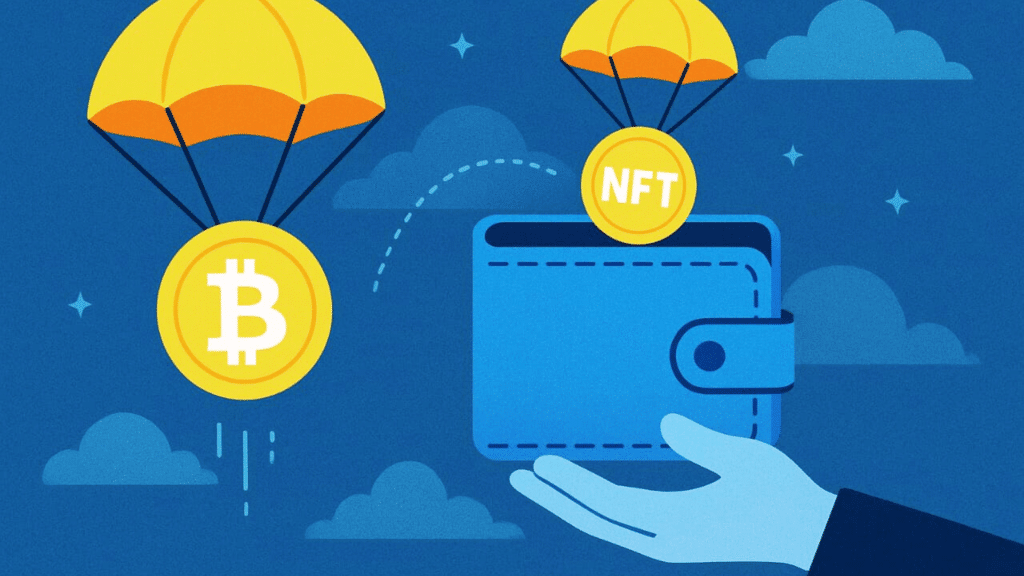
For token airdrops, the number of tokens you receive can depend on how much you use the platform, such as your trading volume or how long you have been active. For NFT airdrops, holders of a specific NFT might receive another NFT in a future drop to keep them interested and excited about upcoming releases.
Airdrops often use a snapshot, which records eligible wallets at a specific moment. Only the users who meet the criteria at the time of the snapshot can claim the airdrop. This system makes sure that rewards go to active and committed users rather than casual or short-term participants.
Why Do Projects Use Crypto Airdrops?
Experts say that airdrops serve many purposes. They attract new users by giving free tokens, which encourages people to try the platform. They also help build stronger communities because users who receive tokens feel more involved and loyal.
Airdrops are also an effective marketing tool, as news about them spreads quickly on social media and in crypto communities, increasing awareness about the project. Analysts note that the combination of rewards and exposure makes airdrops especially valuable for new projects trying to grow in a competitive market.
What Are Some Famous Examples of Airdrops?
Several projects show just how powerful crypto airdrops can be. VERSE, which launched in December 2022, distributed tokens to active Ethereum users within the Bitcoin.com ecosystem. This included users of the Bitcoin.com Wallet app, which has over 50 million wallets.
The first airdrop was aimed at rewarding active users and encouraging them to stay engaged over the long term, with additional airdrops planned in the future. LooksRare took a similar approach with its LOOKS token.
To get users to trade on its platform rather than the more popular OpenSea, it airdropped 12% of its total supply to anyone who had traded at least 3 ETH on OpenSea between June and December 2021. This helped LooksRare grow quickly and establish a loyal community. Uniswap’s UNI token provides another strong example.
When a competing DEX began drawing liquidity away, Uniswap responded by distributing 400 UNI tokens to users who had previously used its exchange. This move helped the platform regain community support and secure its position in the market.
The Mutant Apes Yacht Club also used an NFT airdrop to reward its community. BAYC holders received Serum NFTs, which could be combined to create new NFTs called MAYC. This strategy not only boosted engagement among existing users but also attracted attention to the original NFTs.
How Do Crypto Airdrops Work in Practice?
A crypto airdrop usually starts when a project shares the details and explains who can take part. Participants may need to hold certain tokens, use the platform regularly, or complete small tasks, like posting on social media or joining a community group.
Once the project checks that these conditions are met, the tokens or NFTs are sent to the eligible wallets. Some airdrops are straightforward, only asking for a wallet address, while others reward specific actions or handpick participants based on activity.
By doing this, projects make sure the tokens go to users who are likely to stay involved and help grow the community.
How Different Types of Airdrops Work?
Airdrops can take several forms, and each type has its own rules and goals. Standard airdrops are the simplest, allowing anyone who signs up with a wallet to receive tokens. Bounty airdrops reward users for completing certain tasks, such as sharing posts, joining online communities, or participating in project campaigns.
Holder airdrops are aimed at people who already own a certain amount of a project’s coins, giving them extra tokens as a reward for their existing investment. There are also exclusive airdrops or raffle-style drops, where only selected participants receive tokens, often based on their engagement or chosen at random.
These different approaches allow projects to reach the most suitable users, motivate them to take part in the platform’s activities, and gradually build a loyal and engaged community over time.
Are Crypto Airdrops Safe and Worth It?
While crypto airdrops provide users with free tokens, they are not without risks. Some tokens may have very low liquidity, making it hard to sell them when needed, while others come from projects that might not succeed or fail to gain traction in the market.
In certain cases, tokens have even been used in pump-and-dump schemes, where prices spike temporarily before crashing, leaving participants with sudden losses. Even with the risks, many investors see airdrops as a chance to earn extra tokens or grow their holdings in promising projects.
People can sell the tokens right away for a quick gain or keep them hoping their value goes up over time. Experts say it’s important to check the project carefully, make sure it’s real, and understand the rules before taking part.
Being careful can help users enjoy the rewards while avoiding scams or tokens that don’t perform well.
How Airdrops Can Influence Market Trends?
Crypto airdrops can shake up the market. When a large number of tokens are handed out at once, people have to decide whether to sell or keep them. This can make trading go up and down for a short while. Sometimes it even brings more attention to the project or the wider crypto space.

Experts say that airdrops done right attract users who stick around, but if too many are given or the timing is off, prices can drop temporarily. Overall, airdrops reward users and also influence how the market reacts.
Conclusion
Crypto airdrops aren’t just about giving out tokens. They are a way for projects to get people involved, reward early supporters, and spread the word about what they’re building. When someone receives tokens, they feel part of the project, which makes them more likely to stick around and take an interest in what comes next.
Successful examples like VERSE, LOOKS, and UNI show that well-executed airdrops can drive platform activity, increase adoption, and create long-term loyalty. At the same time, airdrops are not completely risk-free. Some tokens have low liquidity, meaning it can be hard to sell them when you want, while other projects may not succeed or gain traction.
In some cases, tokens have even been part of schemes that caused sudden losses for participants. Experts advise anyone taking part in airdrops to research the project carefully, understand the requirements, and make sure it is legitimate before getting involved. When done carefully, airdrops can benefit both users and projects.
They give rewards to participants, keep people involved, and can even affect market activity. As blockchain platforms keep expanding, airdrops are expected to stay an important way to bring in new users and create strong, active, and loyal communities over time.
Glossary
Airdrop: Free tokens or NFTs handed out by blockchain projects to users.
DEX (Decentralized Exchange): Platform for direct crypto trading. No central boss in charge.
Bounty Airdrop: Earn tokens by doing quick tasks for the project.
Gas Fee: Small payment to process your blockchain transactions.
Snapshot: A moment-in-time record of wallet balances to pick airdrop winners.
Frequently Asked Questions About Crypto Airdrops
Why do projects launch crypto airdrops?
Projects use airdrops to draw in new users and give a well-deserved boost to their loyal community members.
How do users qualify for a crypto airdrop?
You qualify by hitting the project’s rules. Like holding specific tokens or staying active on their platform.
Are crypto airdrops free to claim?
Yes, they’re typically free to grab, as long as you meet the project’s requirements.
Can airdrops boost token value?
Absolutely, they often drive up token prices by pulling in more users and ramping up activity.
What are some famous crypto airdrops?
Standouts include Uniswap’s UNI drop, LooksRare’s LOOKS giveaway, and VERSE from Bitcoin.com.
Sources