
























This article was first published on Deythere.
- What role was Ethereum Layer 2s originally designed to play?
- Why does Vitalik Buterin say the old roadmap no longer fits?
- How is Ethereum’s own scaling changing expectations for L2s?
- What kind of value should Ethereum Layer 2 networks offer now?
- Why is interoperability becoming a central requirement?
- Conclusion
- Glossary
- Frequently Asked Questions About Ethereum Layer 2s
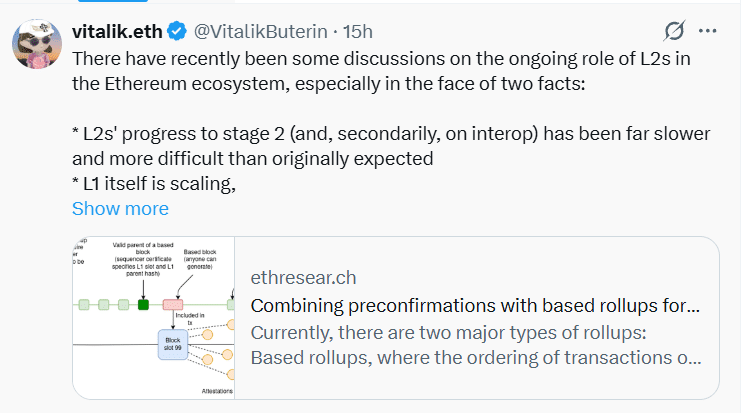
Ethereum Layer 2 networks are entering a phase of renewed evaluation as Ethereum co-founder Vitalik Buterin urges the ecosystem to reconsider how these networks define their role in scaling Ethereum. He shared his views on X, pointing to steady technical progress on Ethereum’s base layer.
These improvements mean that scaling is no longer dependent only on Layer 2 networks, as Ethereum Layer 1 itself is expanding capacity. As a result, earlier assumptions about what Layer 2 networks should deliver for scaling are now being openly questioned.
What role was Ethereum Layer 2s originally designed to play?
Ethereum Layer 2 solutions were originally designed to reduce pressure on Ethereum’s main network by moving transaction processing offchain while still depending on Ethereum for security. Under this approach, these networks were seen as closely linked extensions of Ethereum itself.
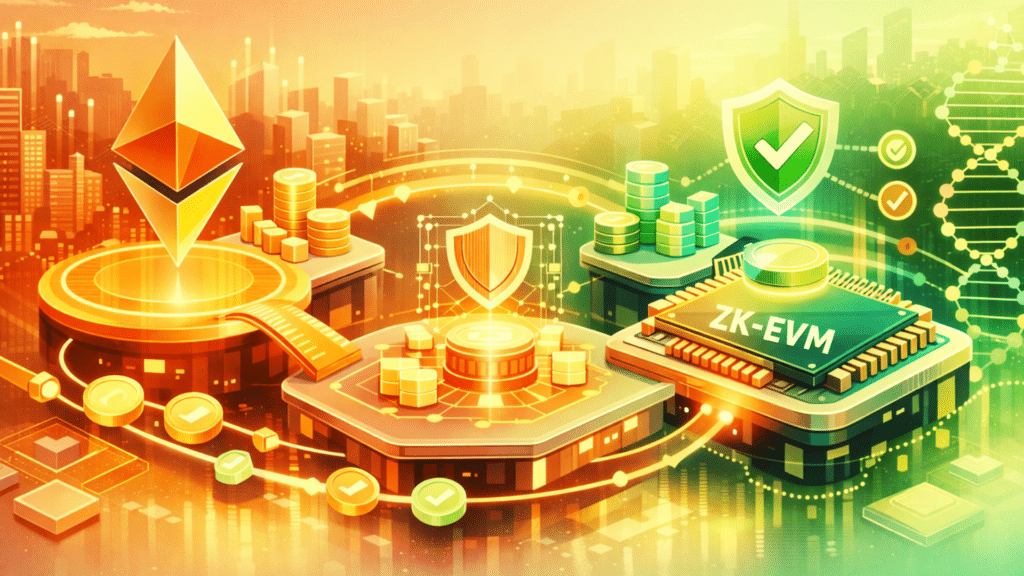
They were often referred to as “branded shards,” with the expectation that they would carry Ethereum’s security guarantees while handling a large share of network activity. Buterin noted that this framework emerged at a time when Ethereum’s base layer struggled to scale efficiently, leaving Layer 2 networks as the primary route for growth.
Why does Vitalik Buterin say the old roadmap no longer fits?
Buterin wrote that the original rollup-centric roadmap “no longer makes sense” because the conditions that shaped it have shifted. He pointed out that progress among many Layer 2 projects toward deeper levels of decentralization has been slower and more challenging than originally anticipated.
At the same time, Ethereum is now scaling directly on Layer 1, with transaction fees staying low and gas limits expected to increase significantly in 2026. He stressed that true Ethereum scaling should focus on expanding block space secured by Ethereum itself, rather than relying on high-throughput systems connected through multisig-controlled bridges.
How is Ethereum’s own scaling changing expectations for L2s?
With upgrades like Proto-Danksharding already implemented and additional improvements on the way, Ethereum’s base layer is now able to process significantly more activity at lower cost. This shift lessens the reliance on Layer 2 networks as tools meant only to reduce congestion.
Buterin observed that some networks may choose to keep centralized control, often due to regulatory requirements. While such an approach can meet the needs of certain users, he made clear that these systems should not be described as scaling Ethereum under the original roadmap vision.
What kind of value should Ethereum Layer 2 networks offer now?
Rather than trying to match Layer 1 on raw transaction throughput, Ethereum Layer 2 networks are being urged to set themselves apart in other ways. Buterin highlighted several possible paths, such as privacy-oriented virtual machines, efficiency tailored to specific applications, and environments designed for ultra-low latency.
He also pointed to alternative designs focused on non-financial uses, including identity, social platforms, and AI-related systems. Alongside these ideas, he emphasized the need for clear guarantees, encouraging developers to be open about the level of security and control users can expect.
Why is interoperability becoming a central requirement?
Interoperability was a central theme in Vitalik Buterin’s comments. He stressed that secure and reliable connections between Ethereum and its Ethereum Layer 2 ecosystem, as well as among different Layer 2 networks, are necessary for long-term cohesion.
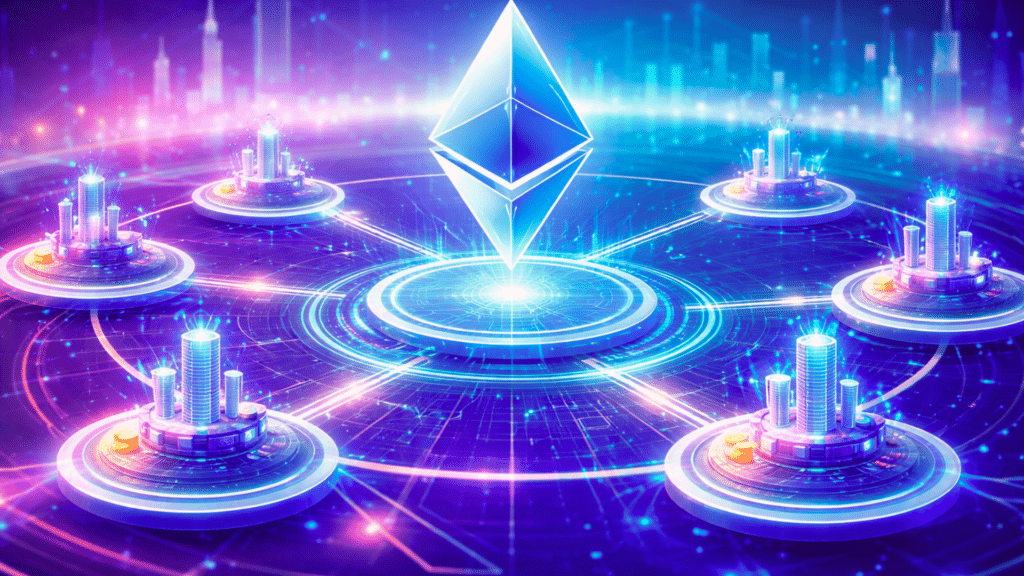
He pointed to shared standards, smooth data and token transfers, and strong bridging systems as key priorities that must be built without weakening security. From Ethereum’s perspective, Vitalik Buterin also expressed increasing confidence in a native rollup precompile that would allow ZK-EVM proofs to be verified directly on Ethereum, supporting safer and more seamless interaction across networks.
Conclusion
Ethereum Layer 2s are no longer seen as a supporting tool limited to expanding Layer 1 capacity. Instead, these networks are increasingly understood as a range of systems with varying degrees of connection to Ethereum, each choosing specific trade-offs.
Ethereum Layer 2 projects that adopt this wider role by introducing clear, differentiated functionality and communicating openly about security and control are better positioned for long-term relevance. In doing so, they can strengthen Ethereum’s modular ecosystem while complementing a base layer that is now capable of scaling on its own.
Glossary
Ethereum Layer 1 (L1): The main blockchain where transactions are finalized.
Ethereum Layer 2s (L2): These are networks built on Ethereum to improve speed and lower fees.
Branded Shards: Describe early Layer 2s that closely followed Ethereum’s design.
Proto-Danksharding (EIP-4844): An upgrade that helps lower costs by improving data handling.
Modular Blockchain: A blockchain splits work across layers to improve performance.
Frequently Asked Questions About Ethereum Layer 2s
Why were Layer 2 networks created?
Layer 2 networks were created to reduce congestion and high fees on Ethereum Layer 1.
Why does Vitalik say this model no longer works?
Vitalik says this model no longer works because Ethereum Layer 1 can now scale better on its own.
How is Ethereum Layer 1 scaling now?
Ethereum Layer 1 is scaling through upgrades like Proto-Danksharding that increase capacity and lower costs.
What should Layer 2 networks focus on now?
Layer 2 networks should focus on unique value such as better user experience, privacy, or special use cases.
Why is interoperability important for Layer 2s?
Interoperability is important so users and assets can move safely between Ethereum and different Layer 2 networks.