

























Ethereum’s long-awaited upgrade to introduce account abstraction, popularly called Ethereum smart accounts, within the ecosystem, could finally see the light of day by next year with the network’s Hegota update, according to Ethereum co-founder Vitalik Buterin.
After years of conversations and small-scale research, the rollout does seem to have moved past conceptual design toward the engineering phase that developers are now readying for deployment on the main network.
This is even more important since smart accounts change the way wallets function and how users come in contact with the chain, bringing easy transaction methods, better wallet functionality and supporting non-ETH token fees.
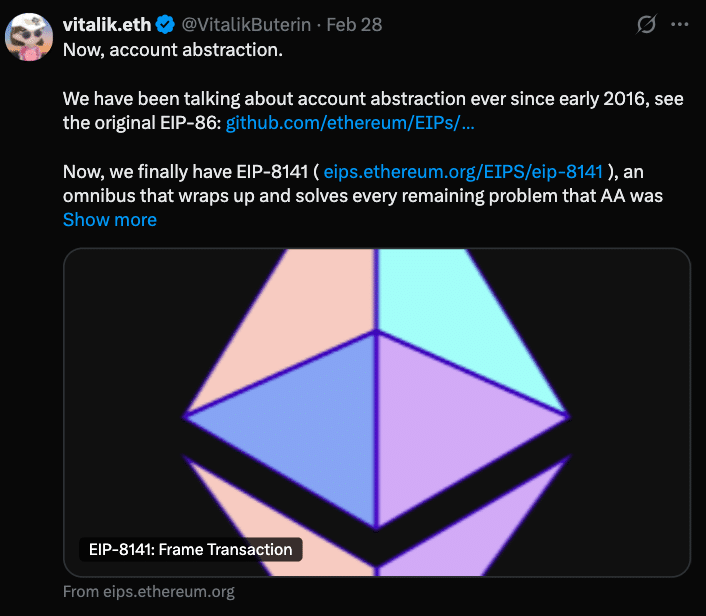
Account abstraction, which was first raised in the community as early as 2016, is now packaged into one Ethereum Improvement Proposal (EIP-8141) that neatly contains the necessary ingredients to make smart accounts a feature of the protocol level.
Buterin has said, “After over a decade of research and refinement, this looks possible to deploy within a year”.
How Ethereum Smart Accounts Change Wallets
Ethereum smart accounts means wallets will no longer be simple wallets. Instead of serving as just storage for private keys and a signatory to one-off transactions, wallets become more like programmable applications. This allows for add-ons like recoverable keys, batch transactions and even paying gas fees for tokens other than Ether, without the need for third-party middlemen.
Developers call the mechanism “frame transactions,” in which a transaction is organized as a composite of units that can reference each other’s data and specify who pays for what.
Practically speaking, this allows users to approve multi-signature actions, and schedule automated actions or sponsor fees via contracts instead of directly from their ETH balance, a functionality that has only previously been available with custom smart contract ecosystems.
In conversations with developers and on social media, Buterin noted that Ethereum smart accounts are not just a matter of convenience. They build on the general principles of minimizing reliance on outside systems like relayers and public transaction publishers, which have been friction points for users of privacy tools such as Railgun or Tornado Cash-like setups.
By offering a “general-purpose public mempool” that can replace these intermediaries, the network makes privacy tools seamless and offers better user experience across wallets and applications.
What the Hegota Upgrade Brings
The Hegota upgrade is becoming one of Ethereum’s most consequential protocol changes in years. It is expected that along with Ethereum smart accounts, it will also have improvements addressing aspects of the long-term roadmap for utilization and performance on Ethereum.
Buterin has linked smart accounts directly to changes in Ethereum’s core transaction model, citing how features like batch operations and sponsorship could become built-in elements of the chain.
EIP-8141 wraps up a decade of iterative thinking on how to make accounts at the protocol level programmable, encapsulating the logic for native account abstraction. This moves a lot of the logic-over-return that was previously handled by external contract layers into the internal transaction execution structure itself.
Part of the Hegota upgrade is the support for features such as quantum-resistant wallet signatures and new privacy-friendly transaction formats in preparation for future scaling efforts.
Ethereum’s Cypherpunk Ethos and Wallet Evolution
In comments on social media, Buterin stressed that the push toward Ethereum smart accounts echoes the philosophy upon which the network is founded, minimizing reliance on external infrastructure. He called it a “core principle of non ugly cypherpunk Ethereum” that the protocol itself made possible; allowing users to do what they need without middlemen or auxiliary systems.
This resonates with privacy-focused communities and builders alike, who have long seen account abstraction as an advancement toward a sovereign blockchain user experience. Through allowing wallets to natively support complex transaction logic, Ethereum can actually reduce the cognitive and operational load for both developers and end users, resulting in simpler interactions with dapps.
The move towards smart accounts has also attracted interest from teams building next-generation wallets and interface layers. So many different ecosystem developers are seeing programmable wallets as a bridge to more advanced decentralized applications that will deliver capabilities once only afforded by service providers or middleware.
Timing and What Comes Next
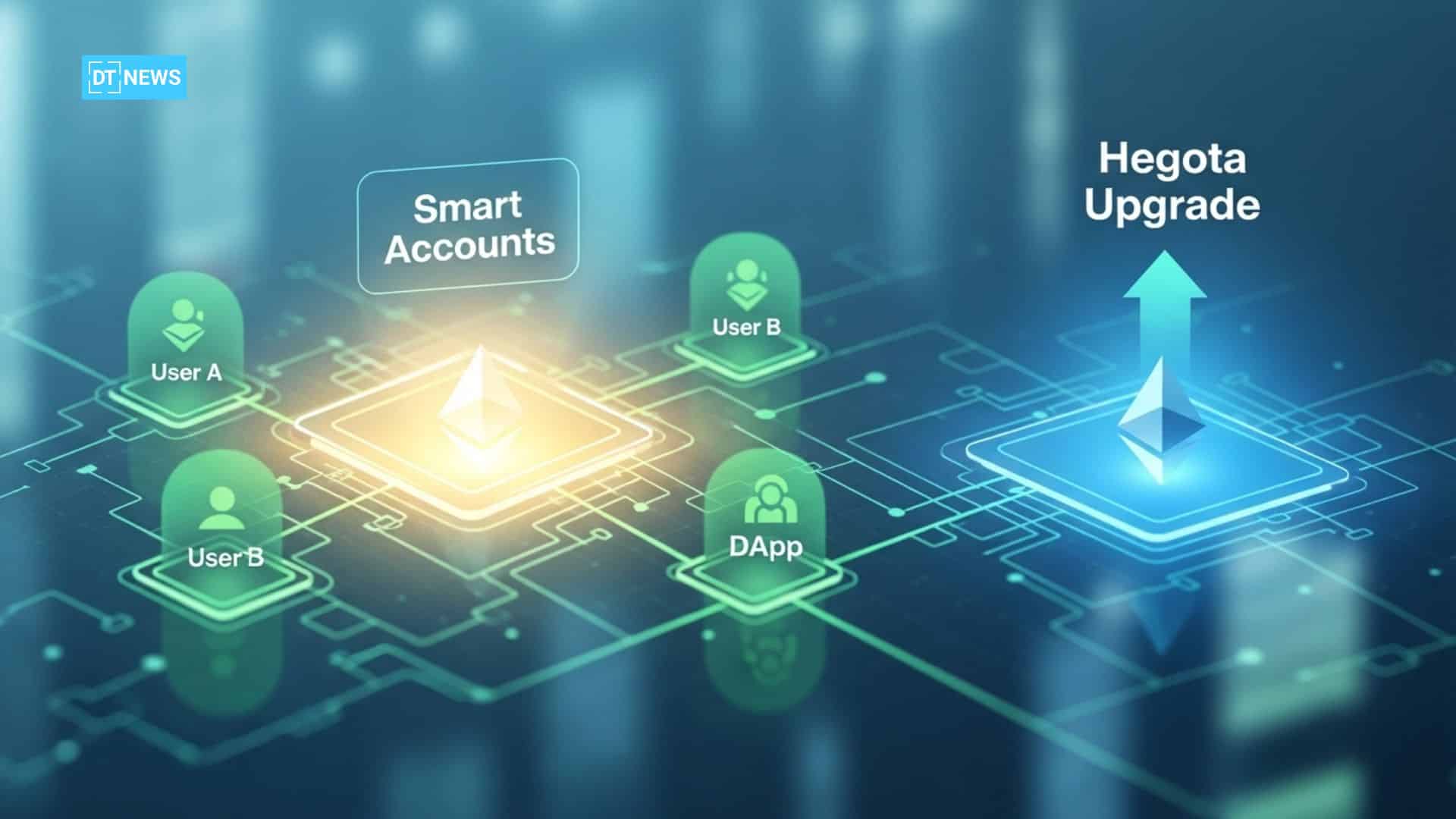
Various reports show possibility for Ethereum smart accounts to launch on mainnet by the second half of 2026, and closely related to the Hegota fork. The Ethereum Foundation’s public roadmap commonly called the “Strawmap” places native account abstraction in this timeframe, expressing agreement between client teams and researchers on when such a feature could be reasonably deployed.
Public statements by Buterin and developer discussions show that the community is no longer just brainstorming account abstraction. The remaining technical pieces have been unified with EIP-8141, and everyone in the Ethereum ecosystem is now testing implementations and cautiously preparing wallets, tools, and client software in order to work as expected once this new feature comes live.
The exact block number, or calendar date, for the deployment is still in active development.
Conclusion
Ethereum is closer than it has ever been to its long-anticipated leap toward Ethereum smart accounts. Co-founder Vitalik Buterin and other core developers have been working on this transformative upgrade for over a decade, and it’s time to implement it in the network with the Hegota fork.
Forcing wallets to be programmatically designed and work in batch mode, allowing gas payments not only in ETH but also via other tokens, removing the wiring of trust that amounts based on intermediaries; all of this is expected to redefine how users and apps interact with Ethereum forever.
Glossary
Ethereum smart accounts: A protocol level upgrade that enables your wallet account to behave like a programmable application including batch transactions and flexible fee payments.
Account abstraction: An idea of moving transaction logic to a structured protocol level instead of depending on externally owned accounts and relayers.
Hegota upgrade: An Ethereum network update scheduled for late 2026, featuring account abstraction and other updates.
EIP-8141: The Ethereum Improvement Proposal that defines the technical components required to implement account abstraction natively in Ethereum.
Frequently Asked Questions About Ethereum Smart Accounts
What are Ethereum smart accounts?
They are an upgrade to wallets which support programmability like multi-signature, batch transaction and pay gas fees on tokens (not only ETH).
Why does account abstraction matter?
This makes user interactions much simpler and allows wallets to natively manage more complex transaction logic thus reducing the need for external tools and increasing usability.
When will Ethereum smart accounts launch?
Projections are that the feature could go live within a year.
Will this feature be supported by all existing wallets?
Yes, developers are anticipating that existing accounts will migrate to the new system with all of its benefits and without losing compatibility.