



























This article was first published on Deythere.
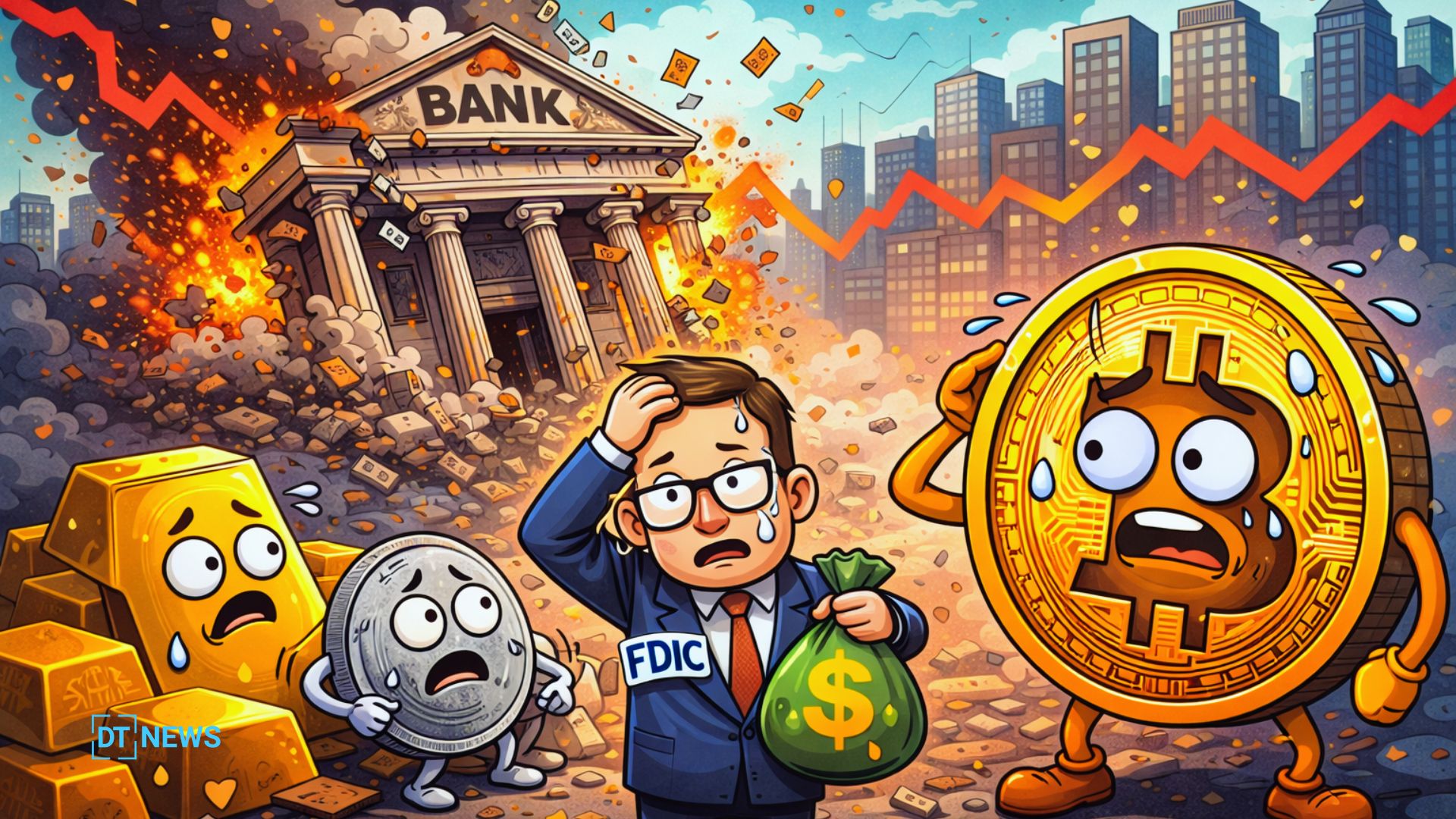
The US bank collapse that marked the first failure of 2026 appeared routine at first glance. It involved a small lender, a quiet regulatory handoff, and insured deposits kept safe. Yet its timing transformed a local banking issue into a broader market signal that traders could not ignore.
According to the source, Illinois regulators shut down Metropolitan Capital Bank and Trust after determining the institution was operating in an unsafe condition. The FDIC assumed control and transferred deposits to a healthier buyer, keeping access intact. On any other day, the story may have faded quickly. Instead, it landed as global markets were unraveling.
A Routine FDIC Resolution Meets a Violent Market Unwind
Metropolitan Capital Bank held just $261 million in assets and posed no systemic threat. The FDIC confirmed it as the first U.S. bank failure of 2026 and estimated a $19.7 million cost to the insurance fund. There was no viral bank run and no panic among depositors.
Still, the US bank collapse coincided with one of the most aggressive one-day sell-offs in precious metals in decades. Gold and silver plunged as leveraged positions unraveled. Bitcoin followed, sliding sharply during thin weekend liquidity when forced liquidations tend to accelerate.
Why the Timing Made the US Bank Collapse Feel Larger
Context explains why this event mattered. Banking data shows U.S. institutions still carry roughly $337 billion in unrealized losses on securities portfolios as of late 2025. These losses do not disappear. They sit quietly until higher rates make funding more expensive and flexibility disappears.
Commercial real estate adds another layer of stress. Bank exposure to CRE loans remains near the $3 trillion level. As loans mature, refinancing becomes harder, vacancy rates bite, and cash flows weaken. Smaller banks with concentrated exposure face the most pressure. The US bank collapse fits this pattern of stress emerging at the edges.
Metals, the Dollar, And Why Bitcoin Moved With Risk
The metals crash told a story that bank failures cannot. Markets reacted to reports that President Donald Trump nominated Kevin Warsh as Federal Reserve chair. Traders interpreted the move as hawkish, fueling expectations of tighter policy and a stronger dollar.
A rising dollar punishes crowded safe-haven trades first. Gold and silver fell in a mechanical unwind driven by leverage and margin calls. Bitcoin moved within the same liquidity machinery. During macro stress, BTC often trades as a global liquidity barometer rather than a hedge.
Academic research has linked U.S. monetary tightening to crypto market behavior, showing that stablecoin supply often contracts during restrictive phases. That contraction removes dry powder and amplifies volatility, especially on weekends when crypto trades alone.
Canary or Noise? Two Interpretations Take Shape
One interpretation sees this US bank collapse as mostly noise. A weak bank failed. The FDIC handled it cleanly. Metals were overleveraged. Crypto sold off in a routine risk-off wave.
The other interpretation treats the coincidence as meaningful. A stronger dollar, collapsing metals, and a bank failure on the same day suggest tight financial conditions are pressuring multiple corners at once. The difference between the two views depends on what happens next.
What Markets Are Watching Now
Analysts are watching for patterns rather than headlines. More quiet failures resolved by the FDIC, rising reliance on wholesale funding, or weakening deposits would shift the narrative. Weekly banking data will likely show stress before markets do.
For Bitcoin, the path forward depends on liquidity. If hawkish expectations persist, volatility may continue. If forced selling fades, relief rallies may follow. If banking stress spreads, Bitcoin’s counterparty-free design could regain attention after initial sell-offs.
Conclusion
This US bank collapse did not signal a crisis. It delivered a reminder. Financial systems often appear stable until pressure exposes weak points. Metals revealed leverage stress. Crypto revealed liquidity dependence.
Banking revealed reliance on backstops. Together, they posed a simple question markets must answer again: is this contained, or just beginning?
Glossary of Key Terms
Liquidity: The ease of converting assets into cash without large price moves.
Unrealized losses: Paper losses on assets not yet sold.
Commercial real estate (CRE): Income-producing property such as offices and retail.
Receivership: Regulatory control of a failed financial institution.
FAQs About US Bank Collapse
Why did the US bank collapse matter to markets?
Its timing aligned with tightening liquidity and forced selling across assets.
Were depositors protected?
Yes. The FDIC ensured insured deposits remained accessible.
Why did Bitcoin fall with gold and silver?
All three were hit by leverage unwinds and dollar strength.
Does this mean more banks will fail?
Not necessarily, but data trends will matter more than headlines.