


U.S. stablecoin regulation is rapidly transforming the role of digital dollars in the global financial system. Stablecoins once symbolized crypto’s rebellious spirit against traditional finance. Now Washington appears determined to bring them inside the official dollar system.
According to the source, the Senate passed the GENIUS Act with a 68–30 vote, marking a turning point in U.S. stablecoin regulation. Lawmakers increasingly see stablecoins not as fringe crypto tools but as extensions of the U.S. dollar’s global reach.
The shift reflects a broader geopolitical calculation. Regulators believe stablecoins can help maintain dollar dominance in the digital economy while reducing risks tied to unregulated offshore tokens.
GENIUS Act Creates the First National Framework for Stablecoins
The passage of the GENIUS Act represents the most significant milestone yet in U.S. stablecoin regulation. The legislation creates the first federal framework governing payment stablecoins issued in the United States. Under the GENIUS Act, issuers must fully back their tokens with liquid assets such as U.S. dollars or short-term Treasury securities. Companies must also publish monthly disclosures showing the reserves supporting their tokens.
The law follows the blueprint of the earlier Lummis–Gillibrand Payment Stablecoin proposal, which helped shape the direction of U.S. stablecoin regulation. That earlier framework introduced the idea of balancing federal oversight with state supervision.
This structure divides oversight between national banking regulators and state authorities. Smaller issuers may operate under state supervision, while larger firms fall under stricter federal oversight. Supporters argue that the GENIUS Act finally brings clarity to a fast-growing sector. Analysts note that stablecoins already support billions of dollars in daily crypto trading and decentralized finance activity.
U.S. Stablecoin Regulation Aims to Reinforce Dollar Dominance
Behind the legislation lies a strategic objective. Policymakers see U.S. stablecoin regulation as a tool to strengthen the global role of the dollar. Senator Kirsten Gillibrand explained that stablecoin regulation is “critical to maintaining the U.S. dollar’s dominance while promoting responsible innovation.” The statement appears in remarks cited through this report.
Stablecoins allow money to move across blockchain networks within seconds. These digital tokens can settle payments faster and often cheaper than traditional international wires or remittance systems. Regulators believe widespread adoption of dollar-backed tokens could expand demand for U.S. Treasury securities. Stablecoin issuers often hold Treasuries as reserve assets.
Some Treasury officials have suggested that regulated stablecoins could generate trillions of dollars in additional demand for government debt by 2030. In effect, U.S. stablecoin regulation may transform blockchain networks into global distribution channels for dollar liquidity.
Political Tensions and the Fear of a Two-Tier Stablecoin Market
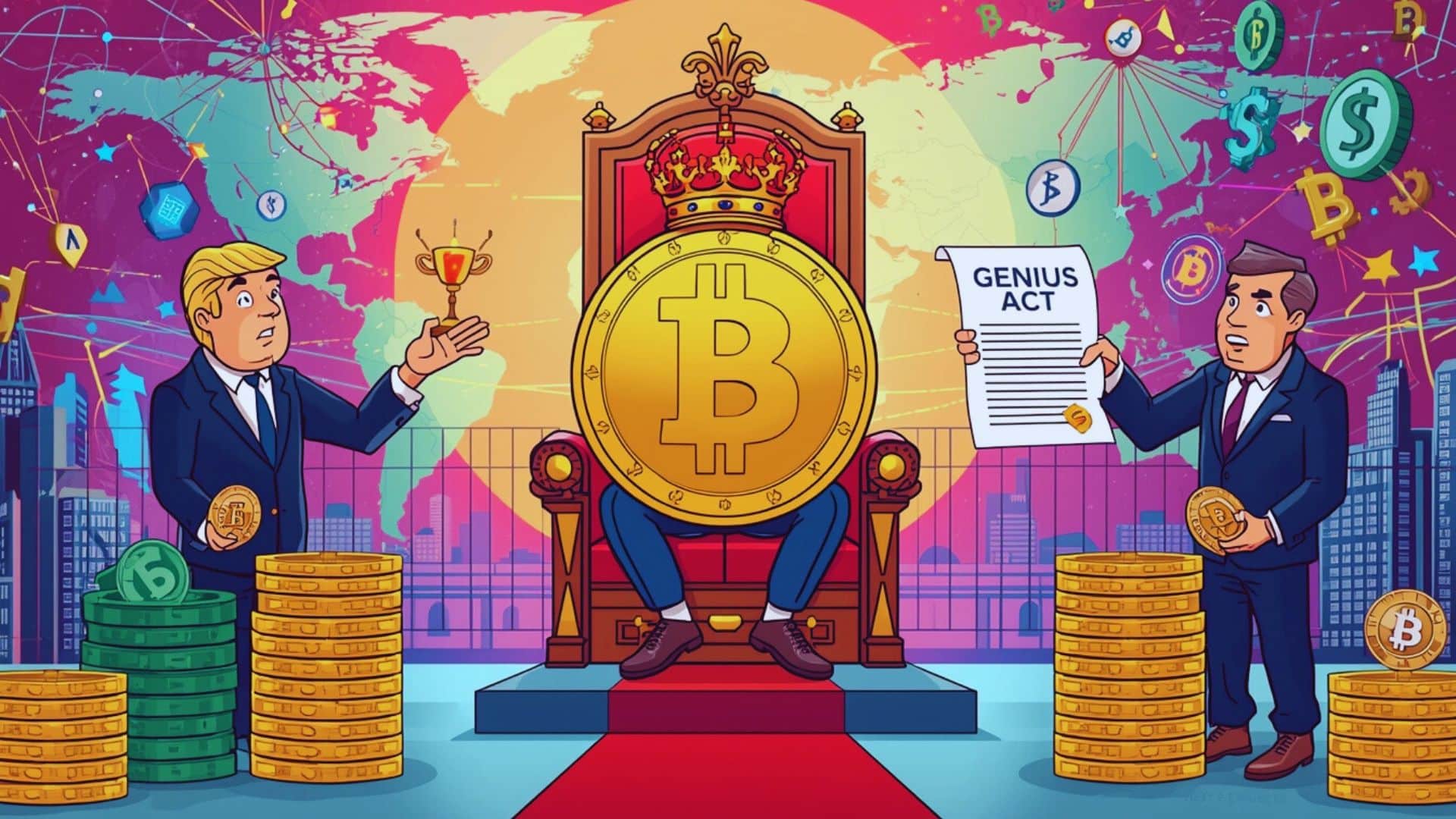
Despite bipartisan support, the GENIUS Act sparked heated political debate in Washington. Concerns intensified after reports linked President Donald Trump’s crypto venture, World Liberty Financial, to a $2 billion Abu Dhabi-backed investment involving Binance, detailed in this analysis.
Critics argue that the GENIUS Act could create a two-tier stablecoin system. Regulated U.S. stablecoins would operate under strict federal rules. Meanwhile, offshore “grey-market” stablecoins might face increasing restrictions. Senator Elizabeth Warren warned that the bill could become a “super highway for corruption.” She also cautioned that technology giants such as Amazon or Meta might eventually issue their own stablecoins.
Lawmakers supporting U.S. stablecoin regulation argue the framework will curb illicit financial activity. Global estimates suggest unregulated stablecoins enabled roughly $17 billion in illicit transactions between 2022 and 2023, including sanctions evasion and drug trafficking.
Conclusion
The rise of U.S. stablecoin regulation reflects a deeper shift in how governments view digital finance. Stablecoins are no longer treated as experimental crypto assets. Instead, they are increasingly seen as strategic extensions of the dollar system.
Through the GENIUS Act, policymakers aim to regulate the sector while reinforcing American monetary influence. The framework promises clearer rules and stronger consumer protections.
Yet the outcome remains uncertain. Tighter oversight could encourage mainstream adoption across banks, payment networks, and blockchain platforms such as BNB Chain. At the same time, stricter controls may reshape the open global ecosystem that allowed stablecoins to flourish in the first place.
Glossary of Key Terms
Payment Stablecoin: A digital token primarily used for transactions and transfers while maintaining stable value.
Treasury Securities: Short-term government debt instruments often used as safe reserves for stablecoins.
On-Chain Finance: Financial services operating directly on blockchain networks without traditional intermediaries.
Remittance Payments: International money transfers often used by workers sending funds across borders.
FAQs About U.S. Stablecoin Regulation
What is the GENIUS Act?
The GENIUS Act is a U.S. Senate bill creating a national framework for regulating dollar-backed stablecoins.
Why is U.S. stablecoin regulation important?
It aims to protect consumers, strengthen the U.S. dollar’s global role, and reduce illicit financial activity.
How will the GENIUS Act affect stablecoin issuers?
Issuers must hold liquid reserves, publish disclosures, and follow federal or state regulatory oversight.
Could stablecoins increase demand for U.S. Treasuries?
Yes. Because stablecoins hold Treasury assets as reserves, widespread adoption could increase demand for U.S. government debt.