
Trump Iran war dominated financial markets on Wednesday as US President Donald Trump delivered a national address on the ongoing conflict in the Middle East. In his speech, he indicated that the US military is “very close” to completing its key objectives in Iran, a statement that immediately influenced both oil and cryptocurrency prices.
- What is the Trump Iran war and why does it matter?
- How did markets react to Trump’s address?
- What are the core issues in the Trump Iran war?
- What is the impact on oil and energy security?
- How could the Trump Iran war affect global markets?
- Conclusion
- Glossary
- Frequently Asked Questions About Trump Iran War
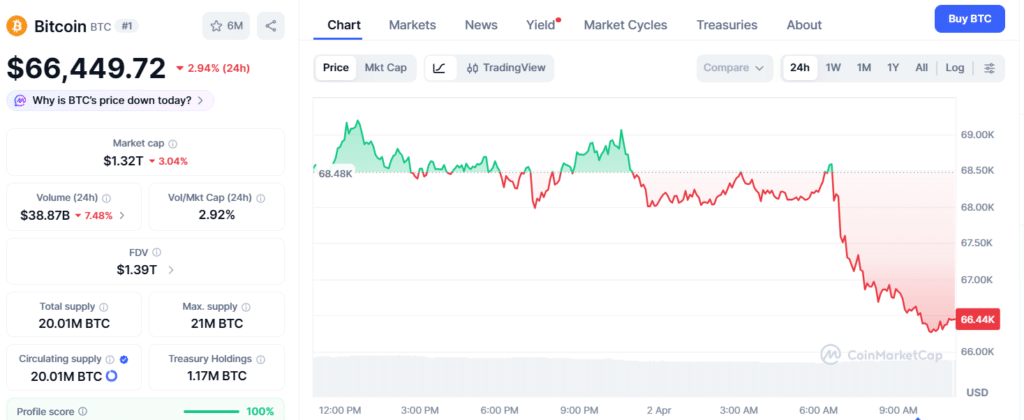
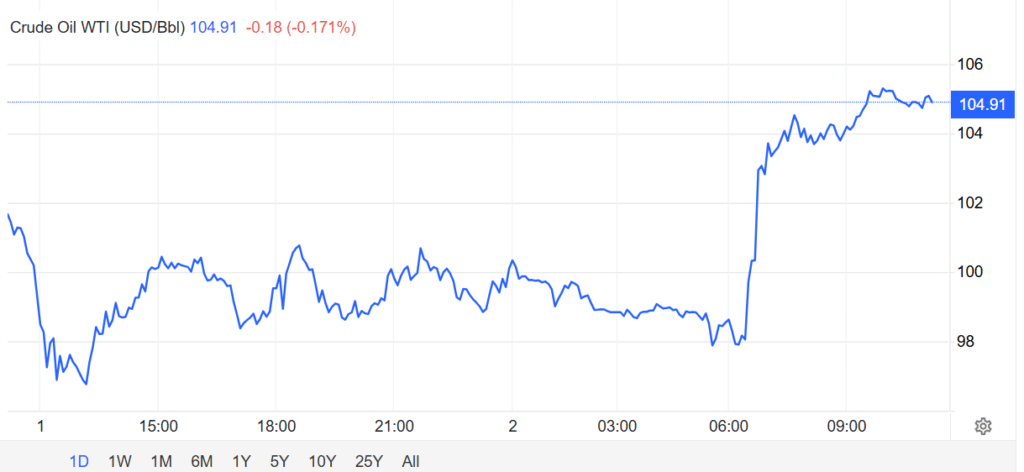
Following his remarks, crude oil surged above $100 per barrel, while Bitcoin dropped by 2%, reflecting heightened caution among investors amid rising geopolitical tensions. However, Trump did not provide a firm end date for the conflict, leaving markets and analysts to weigh the possibility that the situation could continue for an extended period, adding uncertainty to global financial and energy markets.
What is the Trump Iran war and why does it matter?
The Trump Iran war refers to the ongoing US military operation against Iran, which President Trump has called “Operation Epic Fury.” In his address, he said the US has largely destroyed Iran’s nuclear and naval capabilities and dealt significant damage to its drones, missiles, and weapons production facilities. These statements reflect the US administration’s account, and independent verification of the full impact on Iran’s military remains limited.
Trump added, “We are on track to complete all of America’s military objectives shortly. Very shortly, we are going to hit them extremely hard over the next 2 to 3 weeks.” While he described Iran as “less radical and much more reasonable,” experts caution that this is a political view and not an independently confirmed change in Iran’s behavior. His remarks underline that the conflict is still ongoing but may be approaching a critical phase, creating both potential opportunities and uncertainties for global energy markets and investors.
How did markets react to Trump’s address?
Oil prices surged sharply after Trump’s address, with West Texas Intermediate (WTI) crude climbing to $103.59 per barrel, recovering from a small drop earlier in the week. Experts say the market reaction reflects not only the ongoing conflict but also the uncertainty over timing, since no clear end date for the war has been given.
At the same time, Bitcoin showed notable volatility. The cryptocurrency dropped about 1% during the speech and continued falling to $66,552.91, a 2% decline from earlier levels. Traders view Bitcoin as a politically sensitive and highly volatile asset, where tensions can trigger short-term sell-offs even as some investors continue to use it as a hedge against inflation.
What are the core issues in the Trump Iran war?
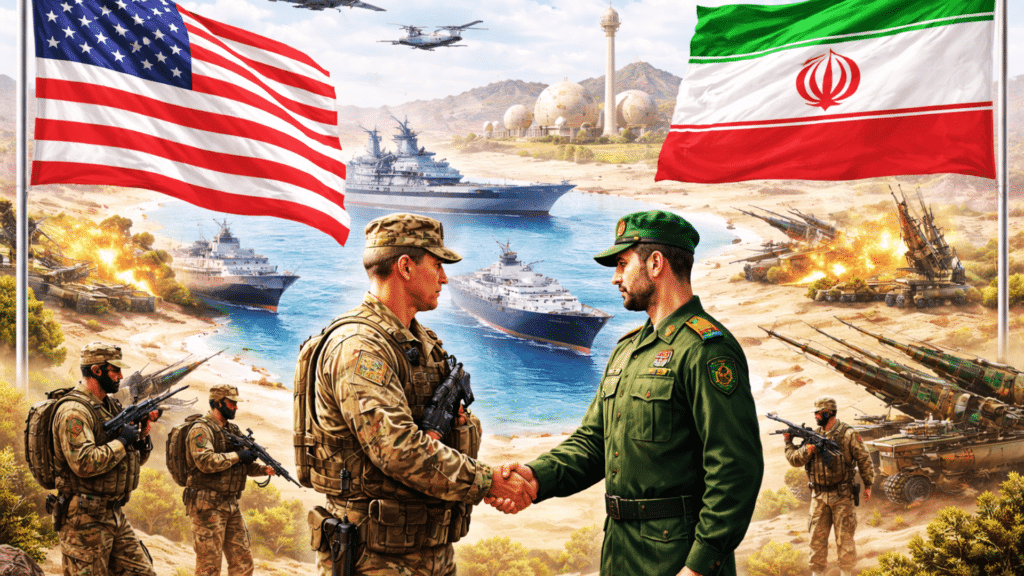
Trump outlined ongoing negotiations alongside military actions. The US demands that Iran dismantle its nuclear programs, reopen commercial shipping routes, and cease support for regional proxy groups. Iran, on the other hand, seeks a permanent end to hostilities, compensation for damages, and the removal of US military presence in the region.
From Iran’s perspective, the conflict is framed as a response to US and Israeli actions, highlighting national sovereignty, self-defense, and an anti-imperialist stance, while also showing willingness to negotiate under its stated conditions. Trump added, “The new group is less radical and much more reasonable. Yet, if during this period of time no deal is made, we have our eyes on key targets.” Analysts warn that such statements represent a political judgment rather than independently verified outcomes.
What is the impact on oil and energy security?
The conflict intensified in February when the US and Israel launched strikes against Iran, prompting Iran to blockade the Strait of Hormuz, one of the world’s busiest oil shipping channels. Trump indicated that the blockade will end once the conflict concludes.
“And in any event, when this conflict is over, the strait will open up naturally. It’ll just open up naturally. They’re going to want to be able to sell oil because that’s all they have to try and rebuild. It will resume flowing and the gas prices will rapidly come back down,” he said.
Analysts warn that prolonged prices above $100 per barrel could revive fears of stagflation-style shocks, putting pressure on central banks to maintain or even tighten monetary policy. Energy experts note that while oil above $100 is a boon for exporters, it also adds risk to global inflation and economic growth.
How could the Trump Iran war affect global markets?
Equity markets responded cautiously. Futures on the S&P 500 fell roughly 0.2%, the Dow Jones lost 0.3%, and Nasdaq 100 contracts dropped around 0.4%. Investors are factoring in both the risks of escalation and the potential stabilization if US objectives are achieved soon.
Some market participants argue that Trump’s optimistic timeline may be overly rosy, and that even a limited war can keep oil and financial markets volatile well into the coming months. Traders emphasize that the war’s resolution will influence inflation expectations, economic growth forecasts, and central bank interest rate decisions in the months ahead.
Conclusion
Trump Iran war appears to be nearing its tactical conclusion, but diplomatic and economic implications remain. The president’s remarks suggest an escalation over the next two to three weeks, followed by a possible easing of oil blockades and market disruptions.
As the Trump Iran war progresses, both energy prices and investor confidence will continue to react to each new development. Analysts advise close monitoring, as the next phase could shape not only regional stability but also broader global financial trends.
Glossary
Trump Iran War: US military actions in Iran, part of Operation Epic Fury.
Operation Epic Fury: US plan targeting Iran’s nuclear and naval forces.
West Texas Intermediate (WTI): Main US benchmark for crude oil prices.
Strait of Hormuz: Key waterway blocked by Iran affecting global oil trade.
Hedge Against Inflation: Investment to protect money when prices rise.
Frequently Asked Questions About Trump Iran War
What did Donald Trump say in his speech?
He said the US is close to completing its goals and may take stronger action against Iran soon.
Why did oil prices rise above $100?
Oil prices rose because the war increased fears of supply disruptions.
Why did Bitcoin fall by 2%?
Bitcoin fell because investors became more cautious during rising tensions.
Are the US and Iran still in talks?
Yes, both sides are still in talks to try to end the conflict.
How are stock markets reacting to the war?
Stock markets are slightly down because investors are worried about uncertainty.
What could happen next in the Trump Iran war?
The conflict may continue for a few weeks or move toward a possible deal.