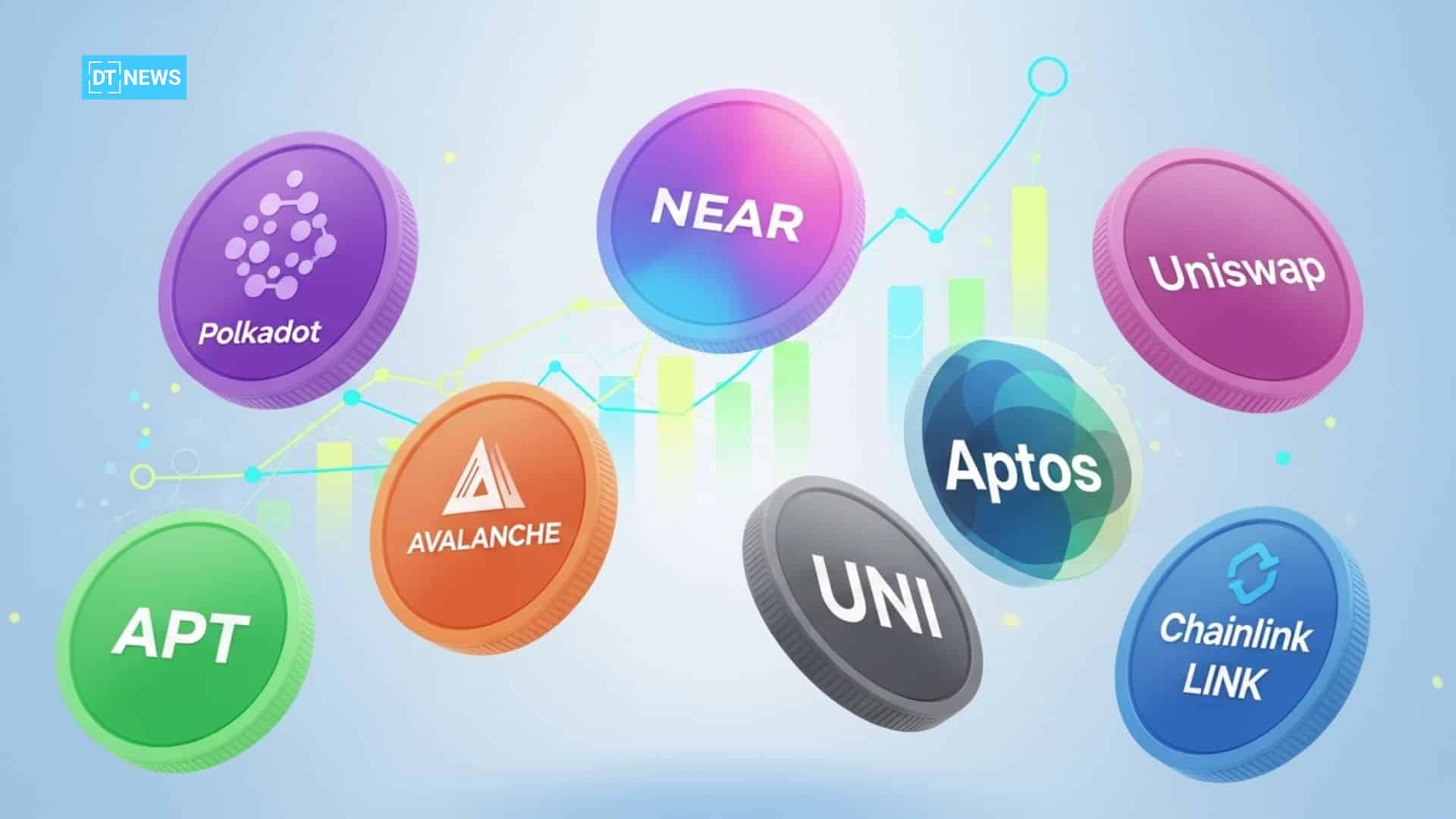

Crypto markets are increasingly seeing the return of capital rotation into high-activity assets, and finding a top altcoin now needs more than price watching. The best performers of the week are only just posting gains; they’re also supported by increasing trading volume, deeper liquidity and quantifiable on-chain engagement.
- The Criteria Behind These Top Altcoin Picks
- Volume and Liquidity: Avoiding Thin Markets
- On-Chain Metrics: Fees, Users and Retention
- Catalysts This Week: Upgrades and Listings, Governance
- Risks and Invalidation Levels
- Top Altcoin Picks Based on Volume and On-chain Activity
- Practical Signals to Watch Over Hype
- Conclusion
- Frequently Asked Questions About Top Altcoin
Tokens such as Polkadot (DOT), NEAR Protocol (NEAR), Uniswap (UNI), Aptos (APT), Avalanche (AVAX) and Chainlink (LINK) are shining because their momentum is fueled by real participation on exchanges, decentralized exchanges, and blockchain networks.
Instead of hype chasing, the concern here is with measurable signals: volume expansion, network utilization and structural catalysts.
The Criteria Behind These Top Altcoin Picks
Selecting the top altcoin picks is not based solely on price movements, but based in real market behavior:
Volume and Liquidity: The token should demonstrate substantial trading volume relative to its marketcap. A high volume means that a large number of participants are involved in the market and that there is enough depth to accommodate entry and exit orders without slippage.
On-Chain Traction: Active wallets, transaction frequency and protocol fees paid are direct indications of usage. An increasing amount of addresses transacting with the network suggests natural interest from both users and builders
Catalysts: Event catalysts such as upgrades, governance votes or new listings can bring in new participation and capital. This is even more the case with governance tokens such as Uniswap’s UNI, or infrastructure assets like Polkadot’s DOT.
Continued Momentum: The strongest altcoins often have multiple consecutive days of rising volume or price with backing from on-chain metrics (i.e. real participation) that extend beyond one-off spikes
Combined; these factors help differentiate between fleeting hype and repeatable growth patterns.
Volume and Liquidity: Avoiding Thin Markets
Fundamental factors such as high trading volume and deep order books are a must-have for any coin to be a top pick. Coins with little daily volume or “thin markets” can shoot and then drop on even the smallest trades and therefore should be avoided.
Speculative tokens with volumes of just $10-20M are too illiquid for big buyers.
Strong volume is an obvious indicator of strong market interest. At press time, Polkadot (DOT) sitting around $1.55 with a 730M trading volume and amarket cap approaching above $2.6 B, was one of the most traded coins in CoinMarketCap’s top listing. It currently ranks.
Aptos (APT) also shows good trading volume, almost $250M as traders rotate in oversold Layer-1 coins.
High volume is especially meaningful because it shows true participation by buyers and sellers. One of the most important factors is that a token’s expansion in volume without price divergence means deeper conviction and minimizes the risk of volatile flash crashes.
Tokens with weak markets can be manipulated quite easily and often when liquidity dries up insiders as well as retail are trapped. In contrast, coins such as DOT and APT currently display liquidity profiles conducive to wider interest across exchanges.
On-Chain Metrics: Fees, Users and Retention
Volume indicates interest in the market but on-chain metrics reflect actual usage of the network:
Polkadot (DOT) was recently propelled as capital rotated into Layer-1 infrastructure assets and its rally was price-fueled, with a strong increase in trading volume, pointing to technical interest supported by market participation rather than just pure sentiment.
NEAR Protocol (NEAR) and Uniswap (UNI) also saw volume logged gains, with deep user adoption across ecosystems; NEAR for its consumer-friendly sharded architecture, and Uniswap from user-controlled exchange volume.
Onchain data from Chain Analysis at a larger scale shows that active addresses and transaction fees are good indicators of adoption e.g. Ethereum’s daily active addresses have risen sharply in the past weeks as networks like Aptos see higher stablecoin transfers indicating movement of capital and usage beyond pure trading. These signs follow with increasing interest across the ecosystem, and especially among Layer-1 protocols.
For this reason, to avoid hype cycles that lack substance, it is important to prioritize coins where growth in active participation and fee generation is seen alongside price and volume. These represent demand for the utility of the network, not only speculation on price.
Catalysts This Week: Upgrades and Listings, Governance
Scheduled vs Unscheduled events typically act as catalysts that take tokens into weeks of increased activity and volume:
Polkadot (DOT): An upcoming inflation reduction (“halving-style” issuance cut) slated for March 2026 that is creating momentum and attention among large holders is currently making rounds in the market. Expectations of renewed scarcity are a frequent push for successive accumulation.
Uniswap (UNI): DeFi governance remains a seasonal catalyst; discussions around protocol fees and liquidity incentives often draw attention and can trigger on-chain activity spikes as holders vote or reposition.
NEAR Protocol (NEAR): Recent technical breakouts and positioning, including privacy, AI-oriented app builds and ease-of-usage, help attract capital flows that match volume spikes.
These catalysts can have direct effects on liquidity, participant behavior and on-chain usage, as they are often accelerants to the base trends represented in the criteria.
In all cases, a catalyst is only as powerful as market conditions. In a bear market, for example, a token launch or upgrade may have little effect on price; while in a risk-on, low-entropy scenario, it can drive outsized moves. News should always be corroborated with volume and sentiment checks.
Risks and Invalidation Levels
All the top altcoins come with their risks. Setting invalidation levels which refer to price points at which the thesis no longer holds, is crucial.
Polkadot: A strong break below short-term supports (i.e. recent levels near $1.25-$1.30) may invalidate the current bullish volume trend, and sentiment will shift toward consolidation or correction.
Aptos: The volume remains high against peers, but a fall below the last key support level or a sudden slowdown in stablecoin transfers would flag waning participation even as it made recent gains in terms of volume.
NEAR and Uniswap: Any drop-off in volume or active addresses on the network could indicate that momentum is waning.
The same macro risks apply. A macro shock, regulatory news, or sudden liquidity drawdown can populate order books with sell pressure, especially in less liquid markets. Traders will need to follow price action against the volume sustainability and on-chain engagement in order not to be left behind or caught early in an exhausted rally.
Top Altcoin Picks Based on Volume and On-chain Activity
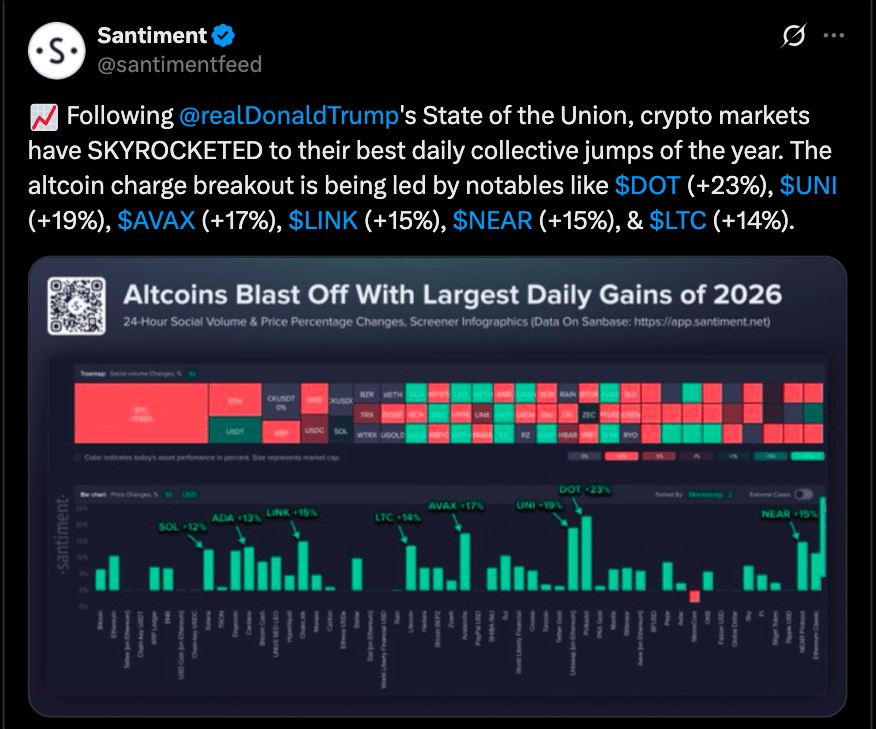
Here’s a look at the top altcoins attracting attention this week based on volume, liquidity and on-chain signals:
Polkadot (DOT) has long staked its claim as the top interoperability layer; with a strong governance model and active parachain deployments. The growing ecosystem with new projects using its framework demonstrates both liquidity strength and real on-chain activity. Increased transaction activity across parachains and ongoing participation in governance point to continued usage.
NEAR Protocol (NEAR) has also been capturing developer interest due to its sharded architecture and simple onboarding experience for consumer-facing applications. Where speculative spikes have occurred in the past, current on-chain metrics show usage as increasing numbers of apps and users are interacting with chain based applications giving weight to volume expansion.
Uniswap (UNI) is at the helm of decentralized exchange activity. UNI’s on-chain activity frequently shows wider DeFi engagement since it directly captures trading fees and DEX volume. This directly contributes to the value proposition of rising decentralized trading flows and liquidity pools.
Aptos (APT) has shown surges in on-chain activity, especially in stablecoin and DeFi transfer operations. Community data shows that many apps on Aptos are driving real user transactions, which support sustaining network fees and developer interest.
Avalanche (AVAX) is unique with its custom subnet architecture now catching the attention of institutional interest through regulated asset deployments and faster finality proof systems. Such advancement enhances the network’s use cases, helping to justify volume growth and sustained on-chain activity volumes that outpace price action.
Chainlink (LINK) is entirely different in nature, providing a utility layer for data feeds and cross-chain interoperability. Its further mainstream integrations across DeFi protocols and enterprise systems means its demand is often interconnected with wider ecosystem usage rather than speculative flows.
As a collective, these top altcoin picks show a range of functional demand, from infrastructure and interoperability to decentralized exchange activity and real world data services.
| Coin | Key Volume/Activity Note | Volume (At Press time) |
| Polkadot (DOT) | Leading weekly mover with volume > $700M and double-digit gains. | $522 Million |
| Uniswap (UNI) | Gains backed by DeFi rotation and governance interest. | $253 Million |
| NEAR Protocol (NEAR) | Solid volume and narrative momentum. | $211 Million |
| Aptos (APT) | Layer-1 adoption shows deeper usage trends. | $119 Million |
| AVAX | Subnet ecosystem; .High L1 liquidity and Validator & DeFi activity | $430 Million |
| LINK | Oracle dominance; Strong institutional interest; Cross-chain integrations | $419 Million |
Practical Signals to Watch Over Hype
In volatile markets, it’s easy to confuse social noise for actual activity. Traders and investors need to focus on:
Volume With Depth: A true breakout will usually have both price and volume rising. Rallies on thin volume quickly reverse.
Consistent On-Chain Usage: Increasing address counts and fee revenue signal authentic adoption and stickiness.
Network Participation Beyond Price: The stablecoin flow, how much is interacting with DeFi, and even protocol utilization are stronger signals than mere price spikes.
Catalysts Confirmed by Data: Only count events that move on-chain behavior, not just social narratives.
These signals help sift through temporary hype and help align analysis with actual market commitment more closely.
Conclusion
The top altcoin picks this week which are Polkadot (DOT), NEAR Protocol (NEAR), Uniswap (UNI) and Aptos have seen visible growth volume and on-chain activity. In some cases they are backed up by multi-day price increases, depth of liquidity and factors like protocol upgrades and structural changes in tokenomics.
In essence, these tokens perform among competitors with solid overall performance on exchanges and blockchain usage data. That said, the risk and invalidation levels need to be watched along with volume sustainability. Not price only, but liquidity, network activity and fees combined with users cohesion, make altcoin momentum real.
Glossary
Top Altcoin: A leading non-Bitcoin crypto asset showing notable market activity.
Volume: How much the token has been traded in value over time.
On-Chain Activity: Usage metrics directly from the blockchain level (addresses, transactions).
Liquidity: the ease to sell a token without making the price move.
Catalyst: Events that could trigger trading interest (upgrades, listings).
Invalidation level: a price level where the thesis would be considered invalidated
Frequently Asked Questions About Top Altcoin
What makes a top altcoin selection trustworthy?
A combination of volume, liquidity, on-chain usage (including active addresses and fees), and events. These metrics reflect real activity, not just price movements.
Why does on-chain activity matter?
On-chain activity (transactions, active users) represents actual usage of the network, as opposed to speculation.
Is volume growth possible without price increases?
Yes. Increased volume alone does not mean prices will necessarily move up. But when combined with growing active usage and positive catalysts, it strengthens the case for a bull case.
What are invalidation levels?
Predefined price points that indicate when the bullish thesis no longer holds. They mitigate risk and preserve capital.
References
Disclaimer: This article is for informational purposes only and should not be construed as financial advice. Cryptocurrency investments carry risk. Always do your own research.