
This article was first published on Deythere.
- What Are Zero Knowledge Proofs?
- Zero Knowledge Proofs in Crypto: The Privacy Imperative
- ZKP Innovations in 2025
- Zero Knowledge Proofs in the Real-World
- How are Institutions and Regulatory Bodies Adjusting?
- How Does Crypto Privacy Look in 2026?
- Conclusion
- Glossary
- Frequently Asked Questions About Zero-Knowledge Proofs
- What is a zero-knowledge proof (ZKP)?
- How do ZK proofs help with crypto privacy?
- What are some projects that utilize zero-knowledge proofs for privacy?
- Are zero-knowledge proofs legal and regulated?
- What is the difference between zk-SNARKs and zk-STARKs?
- References
As of 2026, Zero Knowledge Proofs (ZKPs) are widely recognized as one of the fundamental privacy technologies of blockchains. Leading projects (Ethereum, Zcash, Aztec, Aleo, Starknet etc) are all adding privacy features based on Zero Knowledge Proofs and regulators have had to accept that privacy doesn’t mean darkness
Privacy is now considered infrastructure. Zero Knowledge Proofs are rapidly coming out of research labs and into real-world crypto systems.
In 2025 and early 2026, there have been many rallying points: Ethereum developers are spreading the word about using ZK proofs for layer-1 scaling; privacy coins like Zcash (zk-SNARKs) hit an all-time high in adoption; and even large institutions like Circle and JPMorgan are testing ZK-enabled privacy features.
What Are Zero Knowledge Proofs?
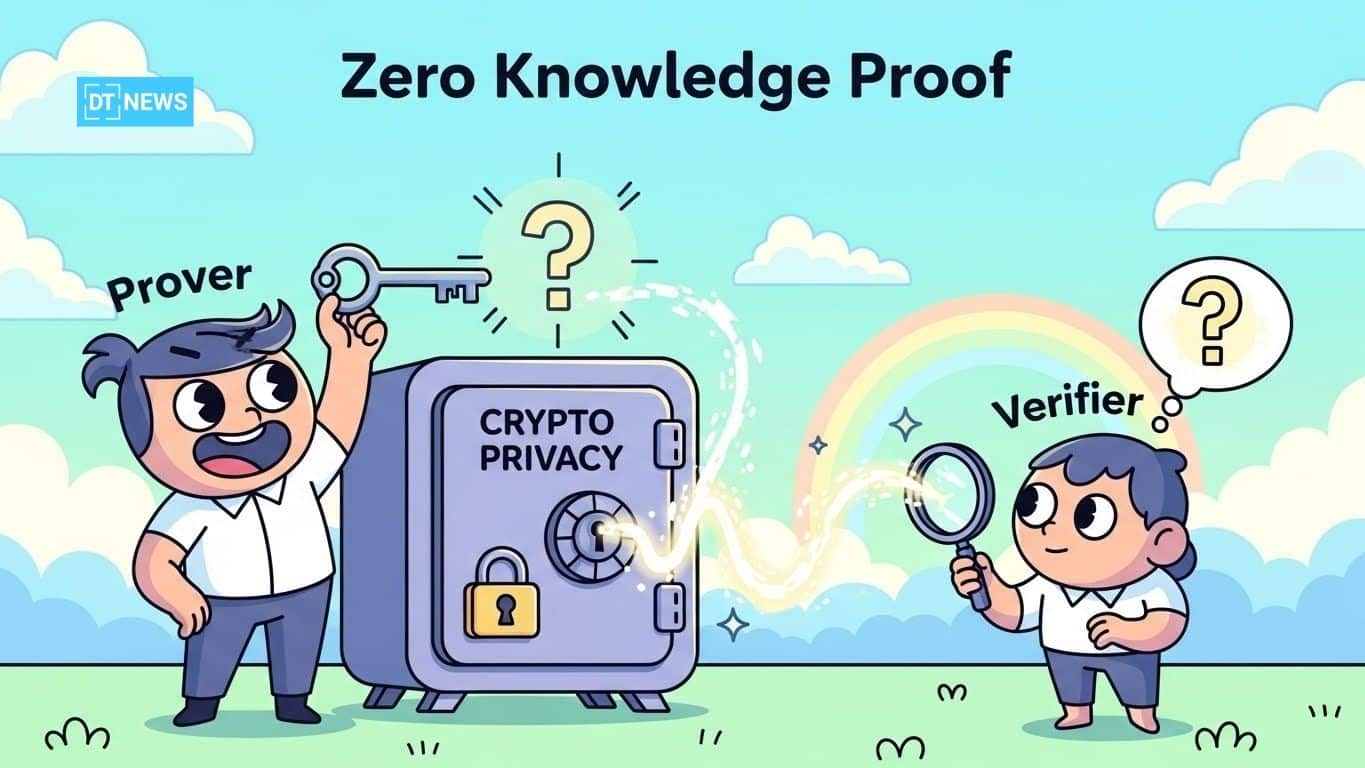
Zero-knowledge proof (ZKP) is a cryptographic technique that allows one party (the prover) to convince another party (the verifier) of the truthfulness of a statement, without disclosing any other information.
In essence, one can prove something (like having enough money for a certain transaction, or meeting some eligibility requirements) without revealing prime data. It’s similar to showing a bouncer a stamped wristband instead of giving him one’s ID: this demonstrates the right to enter without exposing private information.
At a technical level, ZKPs are based on some advanced math. Two well known families are zk-SNARKs and zk-STARKs. Both generate succinct, verifiable proofs.
zk-SNARKs have very short proofs but often have a one-time trusted setup. zk-STARKs have no secret setup (using only public randomness) and are secure from quantum attacks, but have larger proofs.
One ZK proof can validate many transactions on a blockchain, without needing to re-run all of them. As an example, zk-rollup batch executes thousands of Ethereum transactions off-chain and posts a single proof on-chain, so nodes can verify correctness in milliseconds without observing details of each transaction.
Zero-knowledge proofs are so powerful because they combine concealment and compression. They keep all the sensitive information hidden, while compressing humongous computations into a few bytes and making it available for anyone to verify.
ZKP frameworks (such as StarkNet’s Cairo and Aleo’s Leo) are mature enough for production in 2026, making privacy almost as ready as public transactions.
Zero Knowledge Proofs in Crypto: The Privacy Imperative
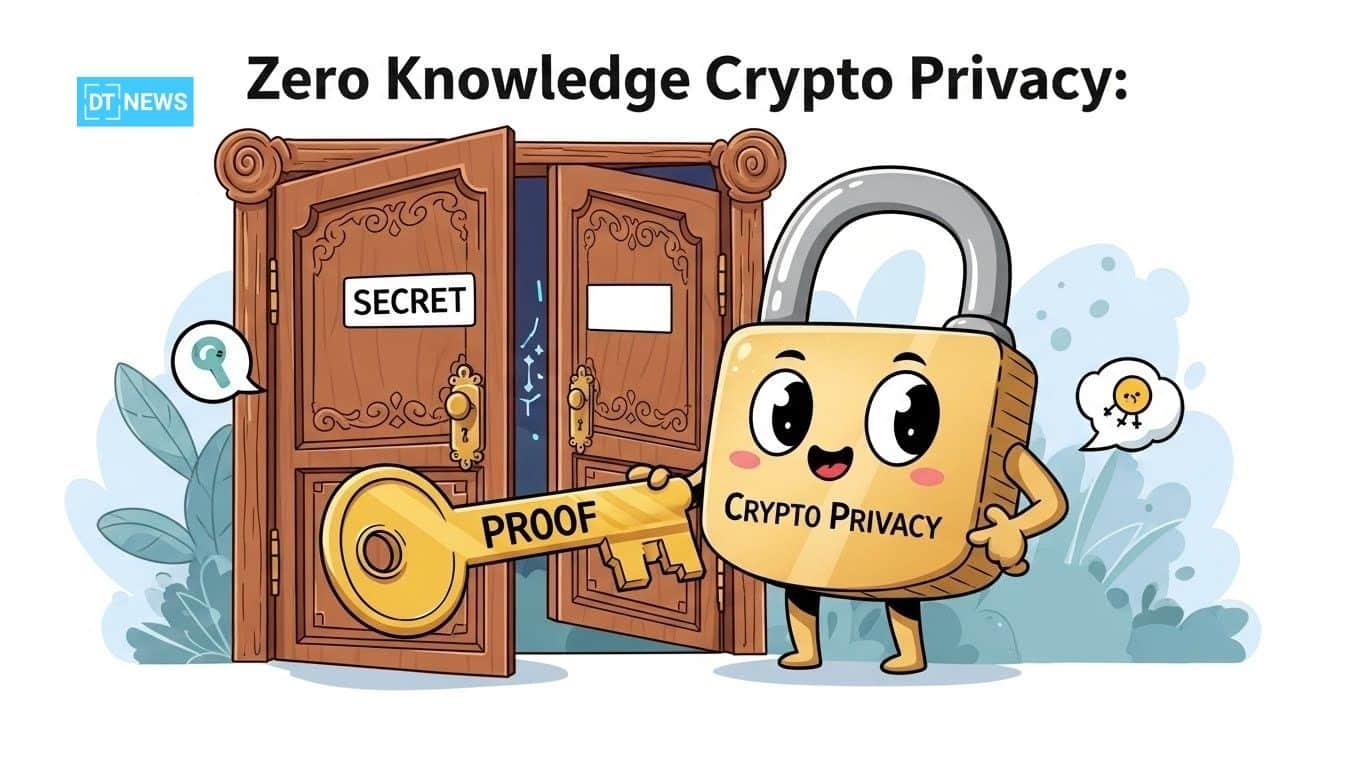
The crypto market has made it obvious this 2026 that privacy is not optional. Blockchains’ default transparency, where every balance and transaction is public, leaves users exposed to surveillance. For instance, if a company’s wallet leaks out all of its payments, competitors might reverse engineer sensitive strategies.
Regulators have taken notice by relaxing sanctions on Tornado Cash, and forming task forces to study crypto privacy, and developers responded with a storm of ZK-powered solutions.
The market also shows the changes. Privacy-focused assets crushed their large-cap counterparts in 2025 (Zcash +820%, Monero +130%) and Zcash’s truly private pool neared 4 million ZEC.
Enterprises now require privacy; one can’t publish vendor payments and payroll. Fortunately, the technology matured just in time. ZK proofs allow for private transactions, and new protocols combine cryptographically assured privacy with auditability. That effectively allows users to privately transact while still demonstrating compliance with rules when required.
ZKP Innovations in 2025
These projects illustrate how zero-knowledge proofs improve privacy:
Ethereum’s ZK Roadmap: Ethereum’s researchers announced plans for validators to directly verify ZK proofs instead of replaying transactions. The target is that by the end of 2026, approximately 10% of validators will operate in this mode.
Aztec Connect (Ethereum L2): July 2025 saw the release of Aztec Connect, the first zk-rollup for completely private DeFi transitions on Ethereum. Users can use Curve or Lido and other protocols with total privacy and save up to 100x. Aztec’s PLONK zk-SNARK batches and encrypts transactions, allowing Ethereum dApps to integrate privacy like a plug in.
StarkNet (Ethereum L2): StarkWare widened the rollout and privacy push. The team revealed Ztarknet, which is a project to support Zcash and Bitcoin assets on StarkNet using STARK proofs. StarkWare aims for StarkNet to serve as the privacy and scaling infrastructure of big blockchains, which would provide ZK-enabled privacy throughout ecosystems.
Aleo & Private Stablecoins: Aleo (a ZK-native blockchain) teamed up with Circle to introduce USDCx, a semi-private version of USDC. Transactions on Aleo are fully encrypted. To those outside the transaction, they appear only as ciphertext, but Circle maintains a secret compliance record for audits. This “banking-level privacy” stablecoin helps hide transaction information while still being compliant with regulators.
Privacy Coin Resurgence: Legacy privacy projects also made progress. Zcash (the first zk-SNARK coin) experienced a resurgence in adoption; founder Zooko Wilcox stresses that privacy is essential for decentralization and it was backed by influential figures such as Naval Ravikant and Edward Snowden.. New chains, such as Aleph Zero and Secret Network, were launched with privacy built in (using ZK proofs and secure enclaves, respectively).
The table below highlights key privacy-focused projects and their ZK technologies:
| Project | Category | ZK Tech | Privacy Feature |
| Zcash | L1 blockchain | zk-SNARKs | Optional shielded transactions (high anonymity) |
| Aztec (ETH) | L2 zk-rollup | zk-SNARKs | Private payments and DeFi on Ethereum |
| StarkNet (ETH) | L2 zk-rollup | zk-STARKs | High-speed rollup; developing privacy features |
| Aleo | L1 blockchain | zk-SNARKs | Private-by-default smart contracts & tokens |
| zkSync (ETH) | L2 zk-rollup | zk-SNARKs | Scalable rollup; adding privacy mode |
| Mina | L1 blockchain | zk-SNARKs | Lightweight chain with succinct proofs |
| Tornado Cash | Mixer (Ethereum) | zk-SNARKs | Anonymous mixer (recently cleared by regulators) |
Zero Knowledge Proofs in the Real-World
Zero-knowledge proofs are powering practical crypto use cases:
Private Payments: Aztec’s zk.money is live. Users are able to make encrypted token swaps that hide all amounts. At the same time, lots of projects also deal with privacy-preserving tokens or rollups, and ZKPs are introduced to make transfers confidential but still provably correct.
Selective Disclosure (zk-KYC): ZKPs allow users to prove facts without exposing identity. For instance, one could provide proof of their status as an accredited investor or legally of age via a ZK credential. Regulators note that ZKPs let users prove compliance without revealing their entire financial history. In reality, AML/KYC is possible using proofs rather than raw data.
Voting and Governance: Platforms such as MACI, use ZKPs to keep on-chain voting private yet verifiable. Voters can verify that their vote was counted without exposing their ballot. The same mechanics can be used for private fundraising and DAO governance, as ZK proofs guarantee the integrity of the tally while keeping individual choices secret.
How are Institutions and Regulatory Bodies Adjusting?
As zero-knowledge privacy scales, regulators and businesses are adjusting. In 2025, policymakers took a stance that as long as it comes with compliance, privacy tools are permitted.
U.S. agencies stated in plain terms that ZK systems enable selective disclosure, providing the proof of required data without disclosing anything else.
The SEC also discussed how ZKPs have been proposed for enabling users to prove compliance (e.g. that funds originated from an AML-checked source) without disclosing full records.
Regulators in Europe have not been any different, everyone is into data protection and therefore encryption on public chains.
Financial institutions are also responding. Several banks that were once skeptical about the idea of public blockchains are now experimenting with private ledgers.
JPMorgan reportedly hosted a private auction using homomorphic encryption (a type of ZK technology). Stablecoin issuers are also experimenting. Circle’s USDCx on Aleo js being tested by banks with auditor keys, and Paxos is testing privacy features as well.
Even companies such as BlackRock and Visa are tokenizing assets on networks that accommodate confidentiality.
The new model is called “privacy and compliance,” which entails hiding data on-chain while proving AML/KYC via cryptographic proofs
How Does Crypto Privacy Look in 2026?
Zero-knowledge proofs are set to be everywhere. Many experts now believe that privacy forms “the third part” of crypto. The ZK tech is now expected to be the privacy layer for Ethereum’s roadmap and new blockchains.
StarkWare’s plans to join Zcash and Bitcoin onto StarkNet, for example, would transform the network of transparency into a universal backbone. The industry will likely see private DeFi and private cross-border payments, and even private on-chain identity (DID) systems become standard.
The tech itself is quickly evolving. Recursive proof schemes (such as Halo 2) are compacting proofs and accelerating verification.
zkVMs (Noir, Cairo) allow developers to write private dApps in familiar languages. With quantum computing looming, zk-STARKs’ transparency will be an advantage. Privacy might become the default eventually, and wallets could shield balances automatically, revealing proof only when required.
Conclusion
Zero-Knowledge Proofs are the core of crypto privacy in 2026z They allow blockchains to process verifications (payments, identities etc.) without sharing user data.
With privacy now an intrinsic layer rather than an afterthought, Zero-Knowledge Proofs ensure confidentiality and trust go hand in hand. In summary, Zero Knowledge Proofs have turned privacy into the winning feature of blockchain technology.
Glossary
Zero-Knowledge Proof: A technique to demonstrate the truth of a statement without disclosing the accompanying information.
zk-SNARK: Zero-Knowledge Succinct Non-interactive ARgument. A ZK proof with short proofs requiring a trusted setup.
zk-STARK: Zero-Knowledge Scalable Transparent ARgument. A ZK proof with no trusted setup(uses public randomness) that is quantum-safe.
Rollup: A Layer-2 answer in which many transactions are batched off-chain and a proof of the result is posted on-chain. ZK-rollups use zero-knowledge proofs.
Privacy Coin: Any cryptocurrency that is all about anonymity. For instance; Zcash protects transactions using zk-SNARKs. Monero hides the sender identities using ring signatures.
Frequently Asked Questions About Zero-Knowledge Proofs
What is a zero-knowledge proof (ZKP)?
A zero-knowledge proof is a cryptographic concept and method that allows one party to prove something to another party without revealing any additional information. For instance; one can demonstrate that they’re over 18 without revealing their precise birth date.
How do ZK proofs help with crypto privacy?
ZK proofs make it possible for blockchains to verify transactions or computations without revealing sensitive information. They facilitate private payments and contracts by allowing participants to prove that a transaction is valid without revealing its inputs, using short proofs that are embedded in an on-chain data structure.
What are some projects that utilize zero-knowledge proofs for privacy?
The most relevant examples are Zcash (zk-SNARKs for shielded transactions); Aztec (Ethereum L2 with zk-SNARKs); StarkNet (Ethereum L2 with zk-STARKs); and Aleo (privacy-focused L1 with ZK). There’s also projects like zkSync (zk-rollup), as well as Mina; Tornado Cash; and many others.
Are zero-knowledge proofs legal and regulated?
It’s legal to use ZK proofs, but regulators also watch how they are used. Already in 2025, authorities indicated privacy tech is allowed if it includes oversight (for example, requiring AML/KYC compliance). Now many privacy projects have added features (view keys, compliance proofs) to satisfy such regulators.
What is the difference between zk-SNARKs and zk-STARKs?
Both are ZK proofs. zk-SNARKs (Succinct Non-interactive ARguments of Knowledge) generate proofs with very minimal size but necessitate a trusted setup at the start. zk-STARKs (Scalable Transparent ARguments) require no secret setup and are quantum secure, but their proof size is larger.