

This article was first published on Deythere.
Bitcoin mining has always rewarded those with scale, capital, and access to the right tools. Yet the industry is now seeing a shift that could soften those barriers.
A newly released open-source operating system is stirring debate across mining circles, not because it promises instant profits, but because it challenges how mining software has worked for years.
According to the source, the goal behind the release is simple but ambitious. It aims to let miners enter the game without relying on expensive third-party vendors that often control performance, updates, and costs.
A Long-Planned Release Finally Reaches Miners
The operating system comes from Tether, which first revealed plans for an open mining platform in June last year. At the time, the company argued that closed systems were limiting competition. The official release of MiningOS, also called MOS, now turns that idea into a working product.
In a public post shared on social media, the company described MiningOS as a modular and scalable system. It is built to support everyone from home miners to large institutions running sites across multiple regions. On its website, the company summed up the vision with a blunt message. No black boxes. No lock-in. No limits.
Why Software Control Matters in Bitcoin Mining
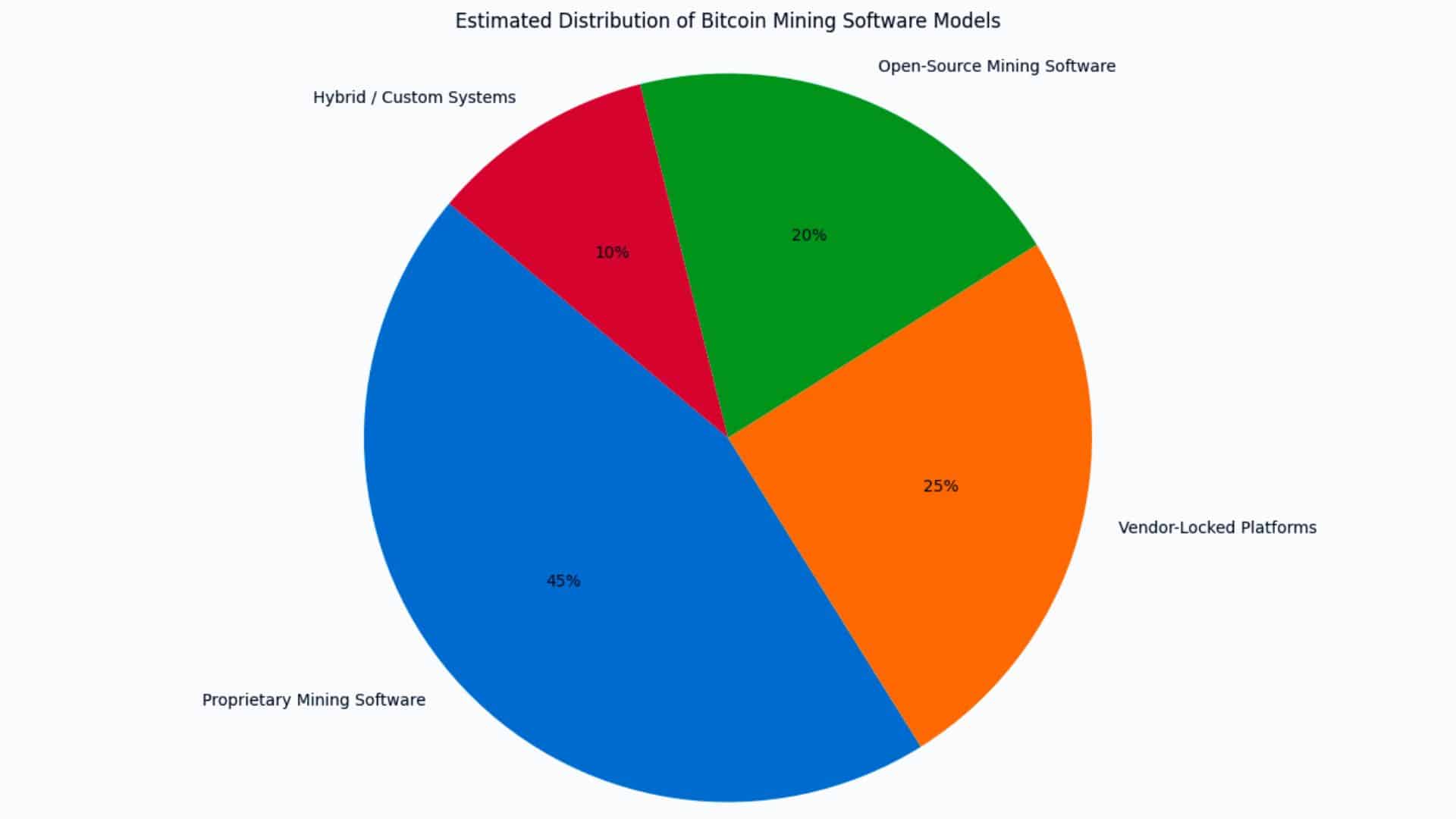
Bitcoin mining often looks like a hardware race, but software quietly shapes outcomes. Many miners rely on proprietary systems that restrict customization and hide critical processes. These limits can raise costs and slow response times during network changes.
MiningOS offers a self-hosted architecture that allows miners to run operations on their own terms. Devices communicate through an integrated peer-to-peer network, rather than a centralized server. This design reduces single points of failure and supports decentralization principles discussed in recent technical research linked here and here.
Built to Avoid Lock-in And Hidden Dependencies
MiningOS is released under the Apache 2.0 license, which allows free use, modification, and redistribution. This matters for developers and operators who want flexibility without legal friction. The system is also built on Holepunch peer-to-peer protocols. That means no centralized services, no backdoors, and no reliance on third-party infrastructure.
For Bitcoin mining, this structure could lower entry costs over time. Instead of paying ongoing fees to software vendors, miners can adapt the system themselves or rely on community-driven improvements.
Leadership And Industry Response
Alongside the announcement, CEO Paolo Ardoino described MiningOS as a complete operational platform. He said it can scale from a home setup to industrial-grade sites spread across different geographies. Analysts see this flexibility as a key selling point during periods when margins remain tight.
The move also places Tether among a small group of firms releasing open mining stacks. Companies like Block have explored similar ideas. However, Block’s software is designed to work only with its own hardware. MiningOS claims broader compatibility, which could appeal to miners running mixed equipment.
A Broader Signal Beyond Stablecoins
This release reflects Tether’s wider push beyond stablecoins. Over the past year, the company invested in tokenization, artificial intelligence, and decentralized finance. It also increased holdings of Bitcoin and gold. Supporting Bitcoin mining directly adds another layer to that strategy.
Conclusion
As open tools gain traction, Bitcoin mining stands at a quiet crossroads. MiningOS does not rewrite economics overnight, yet it offers miners a choice that did not exist before. Greater transparency, fewer dependencies, and lower barriers could reshape who gets to compete. The real test now lies with adoption and community trust.
Glossary of Key Terms
- Bitcoin mining: It is the process of securing the network by validating transactions.
- Open-source software: A software that allows public access to code for improvement.
- MiningOS (MOS): An open operating system designed to manage Bitcoin mining machines at home or at large mining sites.
- Peer-to-Peer Network: A system where devices connect and share data directly without relying on a central server.
FAQs About Bitcoin Mining
What is MiningOS?
It is an open-source operating system designed to manage and scale mining operations.
Why was it created?
It aims to reduce reliance on costly third-party mining software.
Who can use it?
It supports home miners, professionals, and large institutions.
Is it fully decentralized?
It uses peer-to-peer protocols and avoids centralized services.