
This article was first published on Deythere.
A bipartisan U.S. Senate housing package has taken an unexpected detour into digital money policy, adding language that would block the Federal Reserve from issuing a retail CBDC until the end of the decade. The proposal sits inside the “21st Century ROAD to Housing Act,” where a short but high impact section would amend the Federal Reserve Act to prohibit a consumer facing digital dollar that is a direct liability of the Fed and widely available to the public.
The timing is not random. CBDC debates in Washington have shifted from abstract research questions to a sharper argument about civil liberties, financial surveillance, and what happens when central bank money becomes an app on a phone. By placing the provision in a must move housing package, lawmakers are testing whether the political center is ready to draw a bright line now, then revisit the question later under a defined deadline.
Retail CBDC ban language lands inside a housing bill
The text would add a new section focused on central bank digital currency and it is written broadly on purpose. It says the Board of Governors of the Federal Reserve System or a Federal Reserve Bank may not “issue or create” a central bank digital currency, or a digital asset “substantially similar” to one, whether done directly or indirectly through an intermediary such as a financial institution. That intermediary clause is key because it aims to prevent a workaround where banks distribute the product while the Fed still effectively provides the liability.
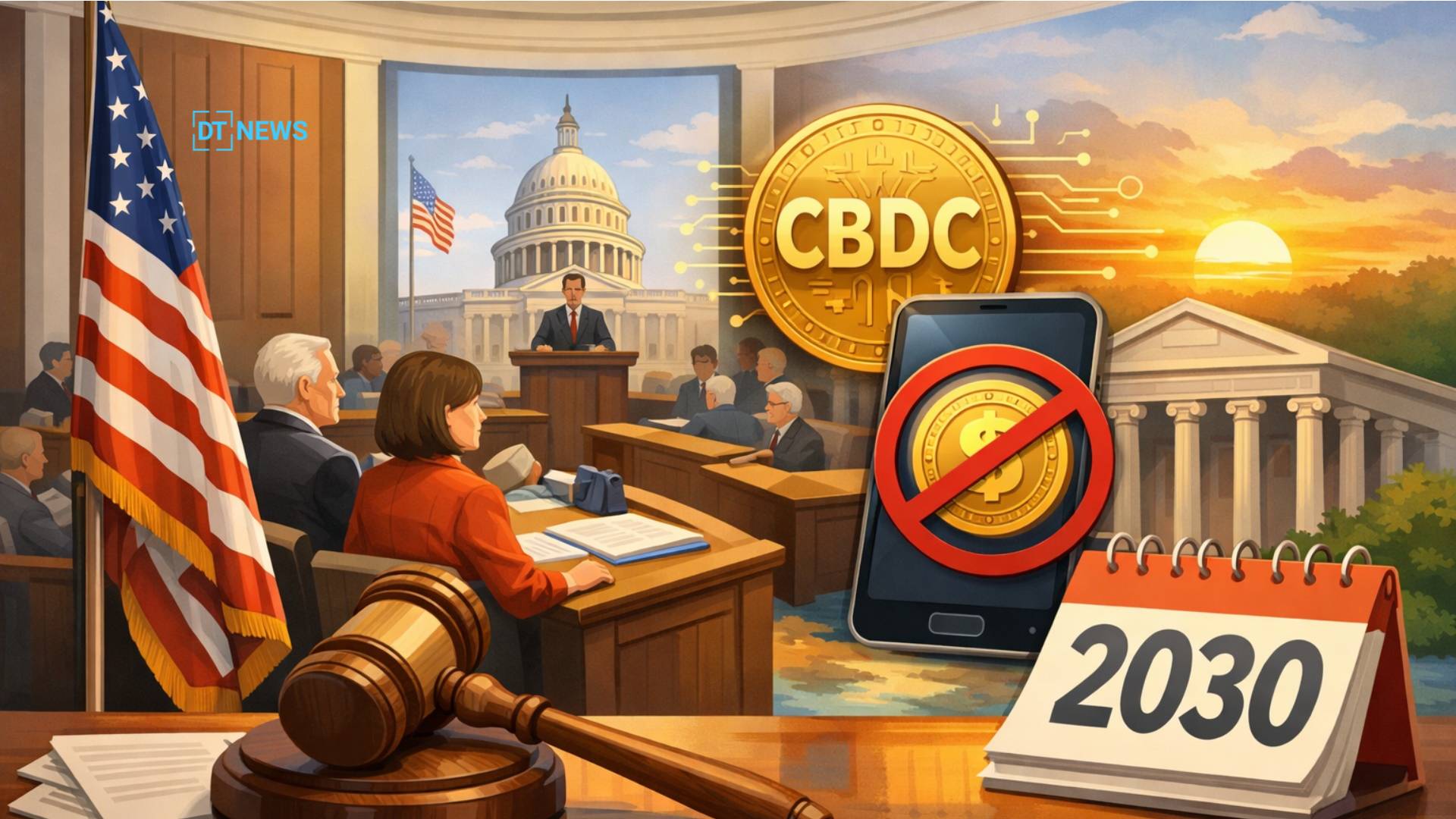
To reduce wiggle room, the bill also defines what it means by a central bank digital currency. The definition targets a dollar denominated digital asset that is U.S. currency, is a direct liability of the Federal Reserve System, and is widely available to the general public. In other words, it is designed to capture the plain meaning of a retail CBDC, rather than wholesale settlement tools used between institutions.
A 2030 sunset clause turns the fight into a time bound referendum
Instead of making the ban permanent, the proposal includes a clear expiration date. The section would “cease to be effective” on December 31, 2030, which sets up a future vote by default. If Congress still wants a ban after that point, lawmakers would need to renew it. If the political climate changes, the prohibition could lapse without another legislative step.
That sunset structure matters because it reframes the argument. Rather than locking in a lifetime policy on day one, it functions like a pause button. Supporters can claim they are protecting cash like privacy norms while the technology and governance questions mature. Critics can argue that the U.S. is choosing delay at a time when other jurisdictions continue pilots and legal work on digital currency frameworks.
The privacy carveout signals what lawmakers say they will accept
The bill includes an exception that reads like a values statement. It says the ban would not prohibit a dollar-denominated currency that is open, permissionless, and private, and that fully preserves the privacy protections of U.S. coins and physical currency. That is a high bar in practice, yet the message is straightforward: if digital money is going to exist at scale, the design should not default to transaction-level visibility and control.
This is also where the market will parse the fine print. The exception does not bless every stablecoin model, nor does it create a new licensing path by itself. What it does is draw a contrast between a state-issued consumer wallet and a system that behaves more like cash, which is part of the long running concern that a retail CBDC could become a financial monitoring layer if governance fails or rules expand over time.
Why crypto markets should pay attention even without a price reaction
A retail CBDC ban does not move Bitcoin in a straight line, but it can shift the policy landscape that shapes on and off ramps, stablecoin regulation, and bank competition. If the Fed is boxed out of consumer issuance, private sector dollar tokens gain breathing room, especially in payments use cases where speed and low fees drive adoption. That can influence which rails dominate, whether banks partner with issuers, and how lawmakers write guardrails around custody, disclosures, and redemption.
It also signals that the U.S. debate is leaning toward a two tier financial model, where the central bank sets base money and private institutions compete on interfaces and services. That reduces the immediate threat of disintermediation, a common worry that a popular retail CBDC could pull deposits away from banks during stress.
What happens next in Washington
The housing package has been promoted as a bipartisan effort led by Senate Banking Committee leadership, but any rider that touches digital money can attract amendments and procedural fights. The practical question is whether this language survives negotiations intact, especially the “substantially similar” phrase and the intermediary clause, which are likely to be the most contested if opponents argue they are too expansive.
Conclusion
For now, the bill does not create a U.S. digital dollar. It tries to prevent one specific form: a retail CBDC that is a direct Fed liability available to the general public. With a 2030 sunset clause and a privacy-centered exception, lawmakers are effectively saying that the next few years should be used to debate design, governance, and rights before any consumer issuance becomes possible.
FAQs
What does the bill block, in plain terms?
It would block the Federal Reserve from issuing or creating a central bank digital currency that is widely available to the public, including issuing it through intermediaries, which is the typical distribution route for a retail CBDC.
Does the bill ban all CBDC research or wholesale experiments?
The language targets a consumer facing product defined as a direct liability of the Fed and widely available to the public. Wholesale or interbank settlement work is generally discussed separately in policy frameworks and is not the primary target of a retail CBDC definition.
Why include an expiration date?
The sunset clause forces the issue to be revisited by December 31, 2030, which turns the policy into a time bound decision rather than a permanent lock.
Glossary of Key Terms
A retail CBDC is a form of central bank money designed for everyday public use, similar in concept to cash but digital, rather than a tool restricted to banks for settlement.
A central bank digital currency, as described in the bill, is a dollar denominated digital asset that is U.S. currency, is a direct liability of the Federal Reserve System, and is widely available to the general public.
A sunset clause is a provision that ends a law automatically on a specific date unless lawmakers renew it, which in this case is December 31, 2030.
Sources
Disclaimer: This article is for informational purposes only and does not constitute financial, investment, or legal advice.