

This article was first published on Deythere.
Remarks by SEC Chair Paul Atkins have projected that Wall Street, which operates the approximately $68 trillion U.S. equity market, could embrace blockchain-powered tokenization within 24 months (2 years).
However, based on recent reporting, less than $670 million of that is currently tokenized. It’s a striking comparison that shows the contrast between traditional markets and their on-chain promise.
The Tokenization Vision - What “Tokenized Markets 2025” Stands For
By “tokenized markets,” Atkins is referring to the move from traditional securities settlement and trading systems on paper (or electronic) to blockchain-native, token-based securities trade settlement systems.
In a speech in November 2025 entitled “Inside Project Crypto,” he promised to deliver a precise “token taxonomy” with terms and definitions to specify which types of these digital assets fall into securities, commodities and other buckets under U.S. law.
Atkins says the infrastructure today, with its multi-day settlement cycles, intermediaries, and fragmented reconciliation, is in dire need of disruption.
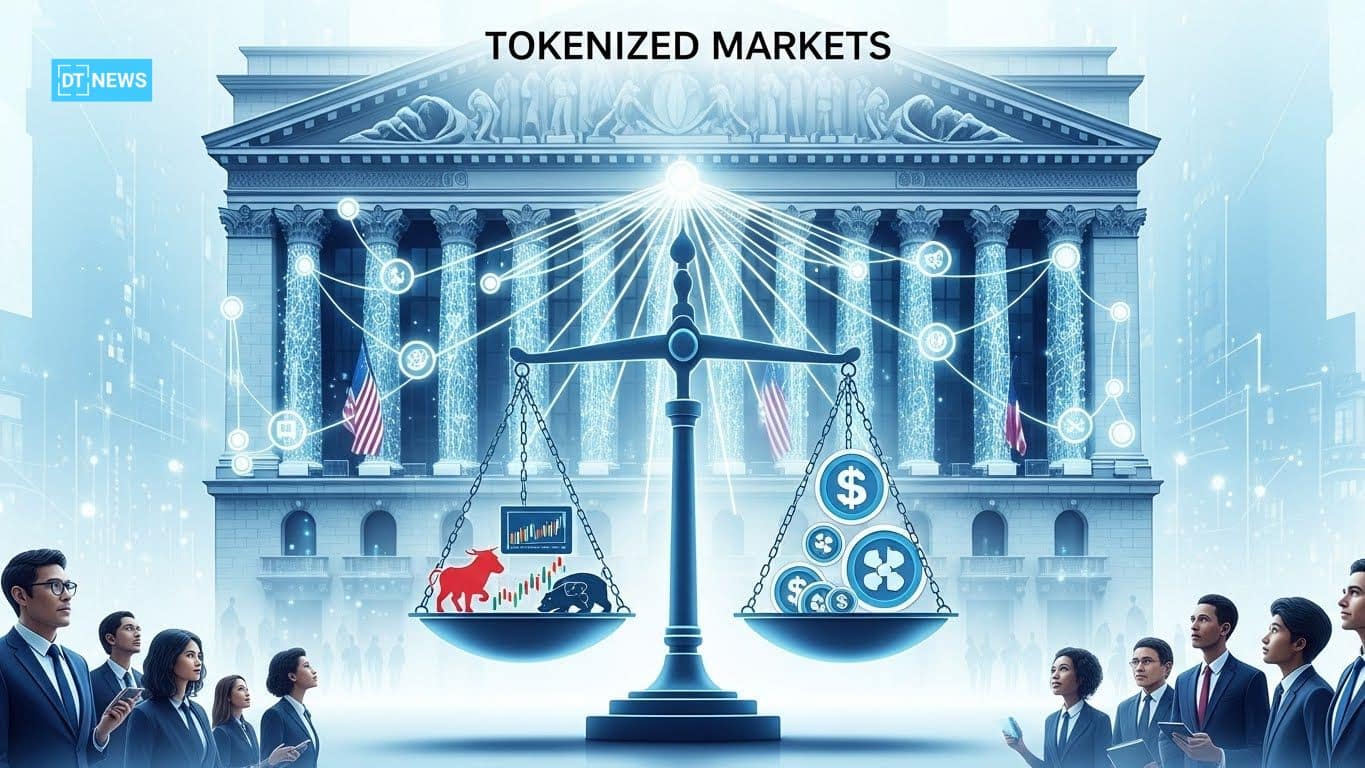
On-chain settlement (“T+0” settlement) could bring an end to delays, increase transparency and reduce systemic risks associated with a delayed clearing and settlement process.
“Tokenization is imminent and… we at the SEC should be focused on how we advance innovation in the marketplace.”
The $68 Trillion Gap
To understand the scope of this transition, the numbers should be considered. The US equity markets are worth around $68 trillion, but there is only a couple million on-chain in tokenized form today.
By this measure then, today’s tokenized assets make up just 0.001% of the market as a whole.
Financial-asset managers such as Bitwise have highlighted this. Their Chief Investment Officer, Matt Hougan highlighted a discrepancy between value held on-chain versus market capitalization as the realization of how early the tokenization revolution sets in.
Why the SEC is Pushing Now
The tone from the S.E.C. has suddenly changed. While previous leadership disproportionately relied on enforcement, Chair Atkins is pushing for codified rule-making and clarity.
He rejected a “reinforcement-first” approach in his “Project Crypto” speech, indicating regulation that enables innovation.
One of the pillars of this strategy involves creating a token taxonomy based on decades-old securities laws (e.g. the Howey test).
The taxonomy seeks to create clear standards for classifying crypto and tokenized assets, which would help ease the operations of issuers, platforms and investors working with legal certainty.
Atkins also made note of the US’s lag in blockchain-native finance, and argued that tokenization should be a feature of tomorrow’s markets not an elective option.
Standards are maturing, competition is escalating globally, and the U.S. is in danger of being left behind if it doesn’t move fast enough.

What Needs to be Done
Widespread practice of tokenized markets is going to take a lot more than regulators nodding. There are several parts that must evolve hand in hand.
Exchanges and clearinghouses need to offer tokenized settlement. Groups like Nasdaq even recently submitted a proposal to the SEC that would enable post-trade tokenization while leaving the front-end order books unaltered.
If the proposal is approved, token-settled shares would be able to begin trading by the third quarter of 2026.
Custody and depository services for on-chain securities will have to adhere to regulatory standards while bringing blockchain enforcement and immutability.
Conclusion
As the United States grapples with tokenization, other jurisdictions are acting fast. Markets like Singapore and Hong Kong doubled down on their tokenized bond programs, digital fund structures and exchange innovations across blockchain rails in 2025.
The United States faces a strategic problem; if it waits too long, capital and innovation will move to more permissive markets, this time in the form of other countries.
That urgency seems to inform Atkins’ aggressive time frame. His message is the U.S. can’t afford to wait. “The next step is coming with digital assets and digitization,” he said.
Glossary
Tokenization – The digitization of assets (cash, stocks, bonds) to be stored on a blockchain, such that the assets can settle electronically, in fractions, and more transparently.
Settlement on-chain – The settlement of trades on a blockchain, which could possibly facilitate workable (T+0) clearance and mitigate counterparty risk.
Token taxonomy – This determines how different types of crypto and tokenized assets sit under securities laws or commodity regulations.
Clearinghouse / Custodian – Entities that are responsible for ensuring trading procedures are correctly followed, and assets are kept secure. In a tokenized economy, these can be superseded or complemented by smart-contract mechanisms.
Fractional ownership – Owning a piece of an asset (shares, real estate, etc.) enlarges access with a reduction in entry cost.
Frequently Asked Questions About Tokenized Markets in 2025
What is meant by tokenized markets?
It involves moving traditional securities markets onto blockchain rails in which shares, bonds and other instruments are represented as digital tokens with on-chain settlement, transparency, and programmable rights.
Are the changes really coming from the SEC?
Yes. The SEC Chair Paul Atkins came out in public support of tokenization and promised he would deliver a regulatory approach for tokenized assets.
What are the primary advantages of tokenization?
The benefits of tokenization are faster (potentially instant) settlement, increased transparency, the opportunity for fractional ownership, 24/7 market access, lower cost and ease of cross-border investing, all driven by blockchain.
How big is the opportunity?
The U.S. equity market is valued at about $68 trillion, yet currently only about $670 million worth of it is tokenized, leaving a large gulf between current on-chain activity and eventual market scale.