
This article was first published on Deythere.
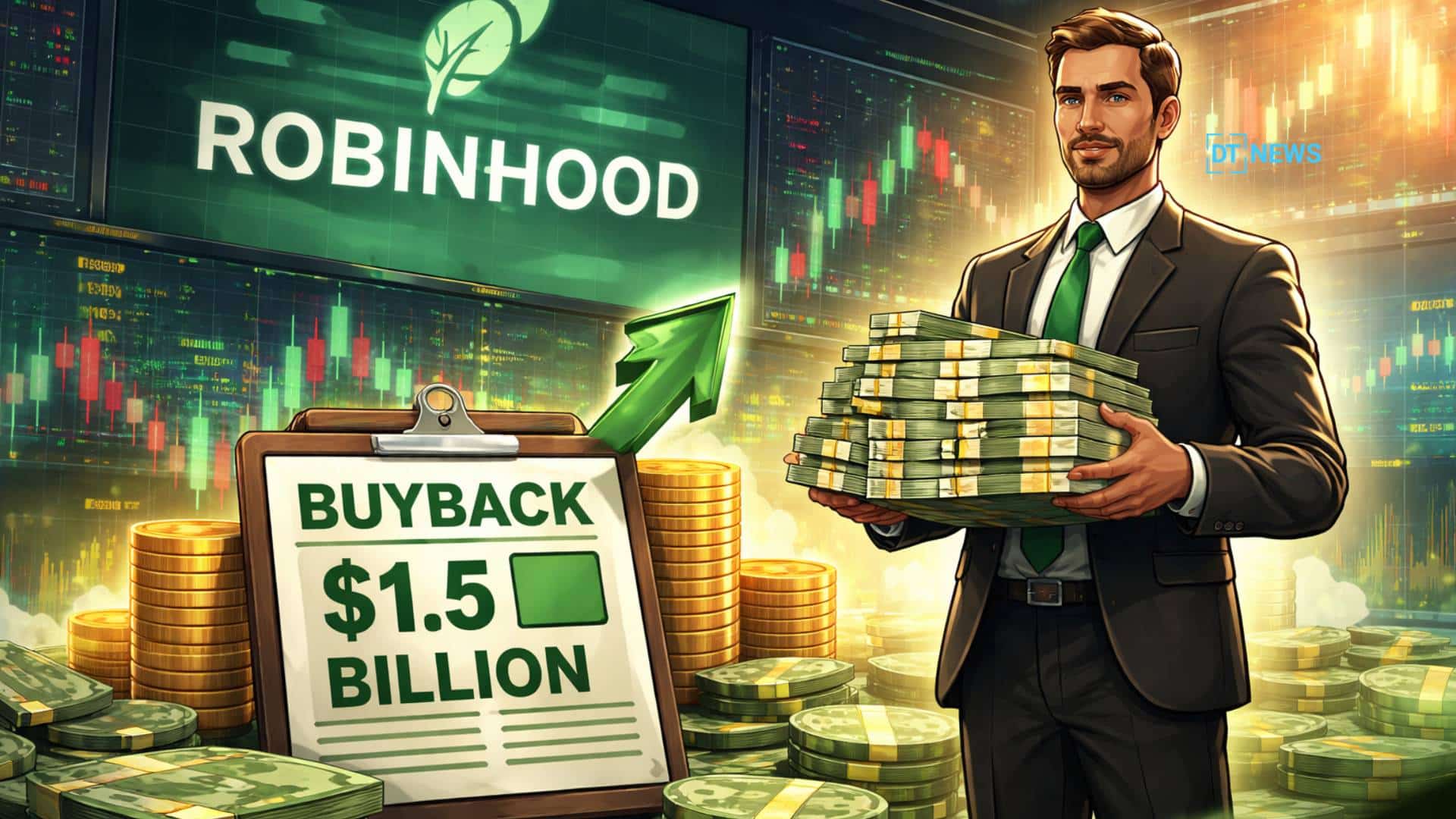
Robinhood has approved a fresh $1.5 billion repurchase plan at a moment when its stock has been under real pressure, and that timing is doing much of the talking. The board authorized the new program on March 24, with management expecting to carry it out over roughly three years from the first quarter of 2026. The plan includes more than $1.1 billion in new capacity, with the rest rolled over from an earlier authorization.
That move matters because buybacks are rarely just accounting exercises. They are usually read as a signal that a company believes the market is mispricing its shares. In Robinhood’s case, the Robinhood stock buyback arrives while the company is trying to steady investor sentiment after a sharp decline in HOOD this year. Shares closed at $69.08 on Tuesday, down 4.7% on the day, and the stock has fallen nearly 39% in 2026 while sitting 54.7% below its October peak of $152.46.
Why the Robinhood stock buyback matters now
The Robinhood stock buyback is not happening in isolation. On the same day, the company disclosed that its brokerage arm entered a new 364-day senior secured revolving credit facility worth $3.25 billion, replacing a prior $2.65 billion facility. Under certain conditions, that line can expand by another $1.625 billion, lifting total potential borrowing capacity to $4.875 billion.
That creates a more layered story as on one hand, the Robinhood stock buyback tells the market that management sees long-term value in the business. On the other, the enlarged credit line shows Robinhood is also keeping financial flexibility close at hand. In plain terms, the company is trying to look both confident and prepared, which is often what firms do when market conditions feel shaky but growth plans remain alive.
The company’s finance chief said the authorization reflects management and board confidence in the firm’s long-term opportunity, its product roadmap, and its ability to return capital over time. That language is standard, but the scale of the approval gives it more weight than usual. A Robinhood stock buyback of this size is not window dressing. It is a deliberate capital signal.
A market message wrapped in a capital decision
There is also a broader lesson here for crypto-linked equities. Robinhood is not only a trading app anymore. It sits at the intersection of retail investing, digital assets, tokenized finance, and a growing menu of financial products. That means weakness in HOOD is often read as a read-through on retail appetite, trading sentiment, and faith in fintech growth.

In that context, the Robinhood stock buyback looks like a statement that the company does not want the market downturn to define the next chapter. It wants investors to see a business that still has room to expand, even while the tape looks ugly. Sometimes a buyback is a victory lap. This one feels more like a company planting its feet and saying it is not blinking.
What investors may watch next
The next test is execution as a buyback authorization is not the same thing as immediate repurchases. The company has flexibility on timing, pricing, and pace, and it can suspend or alter the plan if needed. That means investors will be watching whether the Robinhood stock buyback becomes a meaningful support tool or stays more symbolic in the near term.
They will also watch whether the company can balance shareholder returns with growth spending. Robinhood is still investing in crypto infrastructure, banking products, and tokenized finance. If those efforts gain traction, the Robinhood stock buyback could later be seen as smart timing. If growth stalls, the market may treat it as a defensive move dressed up as confidence.
Conclusion
Robinhood has chosen a striking moment to approve a Robinhood stock buyback, and that is precisely why the market is paying attention. With HOOD trading far below its highs, the repurchase plan sends a message that management believes the market has become too pessimistic. Whether that judgment proves right will depend less on the headline and more on what follows next in product growth, execution, and investor trust.
FAQs
What is the new buyback size?
Robinhood approved a new $1.5 billion repurchase program.
Why is the timing important?
The approval came while HOOD was down sharply in 2026.
Does a buyback mean the stock will rise?
No. It signals confidence, but market performance still depends on fundamentals.
Glossary of Key Terms
Share repurchase: A company buying back its own shares from the market.
Credit facility: A borrowing arrangement that gives a company flexible access to capital.
Capital allocation: How a company uses cash across growth, debt, and shareholder returns.
HOOD: Robinhood’s Nasdaq ticker symbol.
Sources