
This article was first published on Deythere.
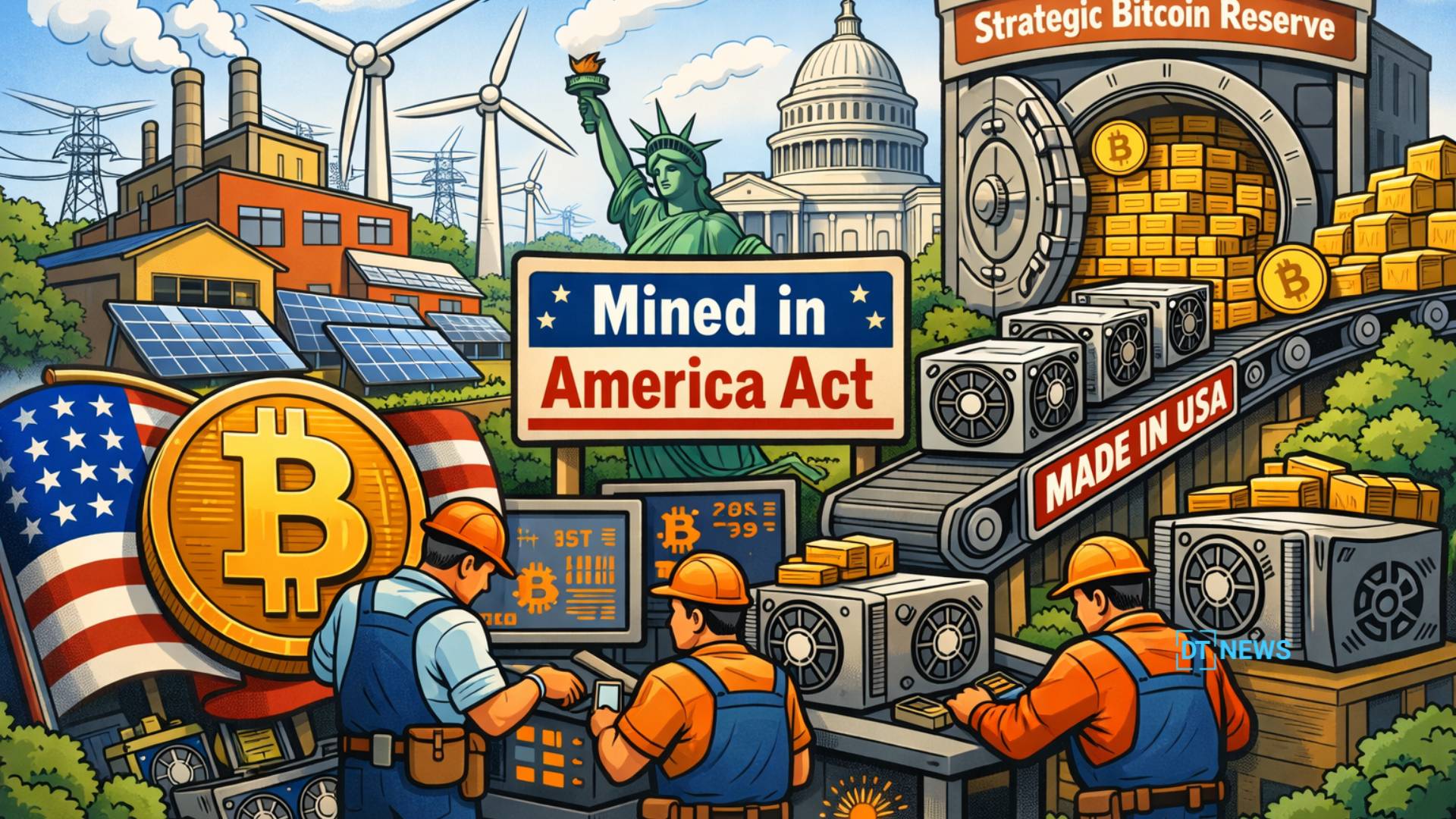
A new Senate proposal has pushed Bitcoin back into the middle of U.S. industrial policy. Senators Bill Cassidy and Cynthia Lummis introduced the Mined in America Act on March 30, 2026, framing digital asset infrastructure as a supply chain and national competitiveness issue rather than a niche tech debate. The bill would create a voluntary federal certification for Bitcoin mining operations, phase out hardware linked to foreign adversaries, support domestic equipment manufacturing, and place a Strategic Bitcoin Reserve into statute through the Treasury.
A policy bill with a much bigger message
At first glance, the legislation looks like a mining bill. In practice, it reads more like an industrial strategy paper with Bitcoin attached to it. The proposal says the U.S. already controls about 38% of global Bitcoin hash rate, yet 97% of the hardware powering that activity comes from China.
That gap is the core of the argument. Lawmakers backing the bill are saying the country may host a large share of Bitcoin mining, but it still does not control the machines that make that position possible.
That matters because Bitcoin mining is not judged by price alone. Serious investors usually track hash rate, mining difficulty, machine efficiency, power cost, and regulatory clarity before they make a call on miner strength. This bill touches nearly all of those indicators. It does not promise instant change, but it tries to make Bitcoin mining look less exposed to foreign hardware risk and more aligned with U.S. manufacturing policy.

Why Bitcoin mining now looks like a strategic industry
The second signal is political, and it is hard to miss. The bill directs the Commerce Department to create a voluntary certification for facilities and mining pools, while NIST and the Manufacturing Extension Partnership would help American firms develop secure, energy-efficient mining hardware. That gives Bitcoin mining a policy lane that looks closer to semiconductor planning than to the old hands-off crypto approach.
For market watchers, the most useful takeaway is that Bitcoin mining may now be measured through a wider lens. Hash rate still matters because it shows how much computing power secures the network. Difficulty still matters because it reflects how competitive block production has become. Miner margins still matter because revenue can fall fast when price weakens or energy costs rise.
But policy risk has now joined the list in a more direct way. If Washington starts treating Bitcoin mining as strategic infrastructure, the sector’s valuation story changes.
Bitcoin mining and the energy question
Energy remains the awkward, stubborn part of the story. The bill does not create new spending authority, but it would let certified projects tap existing federal energy and rural programs. That detail may sound technical, yet it matters more than a flashy headline. Low-cost energy access has always been one of the strongest indicators behind profitable Bitcoin mining, and this provision suggests lawmakers understand that reality.

In plain terms, Bitcoin mining works best where electricity is reliable, cheap, and politically acceptable. When that mix breaks, miners struggle even if Bitcoin itself stays strong. So the market will likely watch whether this proposal can improve energy access and hardware resilience at the same time. If it can, miner economics could become less fragile. If it cannot, the bill may end up as symbolism with little operational force.
What traders and long-term investors should watch
For crypto investors, the real indicators now are straightforward. They should watch whether domestic machine production actually grows, whether mining operators pursue certification, whether power access improves, and whether Treasury-level reserve policy moves from rhetoric into enforceable law. Those are not abstract political details. They shape confidence, capital allocation, and long-range narratives around Bitcoin mining.
The bigger point is simple as Bitcoin mining is no longer being pitched only as a crypto business. It is being pitched as infrastructure, manufacturing, and national leverage. That shift may prove more important than any single market reaction this week.
Conclusion
The Mined in America Act does not guarantee a mining boom, and it does not solve every weakness in the sector. What it does is change the frame. It places Bitcoin mining inside a broader American policy debate about supply chains, energy, hardware, and strategic control. That alone makes it more than routine crypto legislation.
FAQs
What is the Mined in America Act?
It is a Senate proposal introduced on March 30, 2026, that would create a voluntary certification for mining operations, encourage domestic hardware development, reduce reliance on foreign-linked equipment, and codify a Strategic Bitcoin Reserve.
Why does it matter for crypto investors?
It matters because regulation, energy access, hardware supply, and reserve policy all influence miner confidence and the long-term strength of the U.S. Bitcoin ecosystem.
Glossary of Key Terms
Hash rate
The total computing power securing the Bitcoin network.
Mining difficulty
A network measure that adjusts how hard it is to mine a new block.
Strategic reserve
A government-held asset stockpile intended for long-term national value or policy use.
Source
Disclaimer:
This article is for informational purposes only and does not constitute financial, investment, or legal advice.