
This article was first published on Deythere.
The US-Iran conflict sent oil prices soaring and hitting markets hard in March. Traditional futures exchanges shut down over the weekend, but traders still needed exposure. That demand didn’t go away but went on-chain.
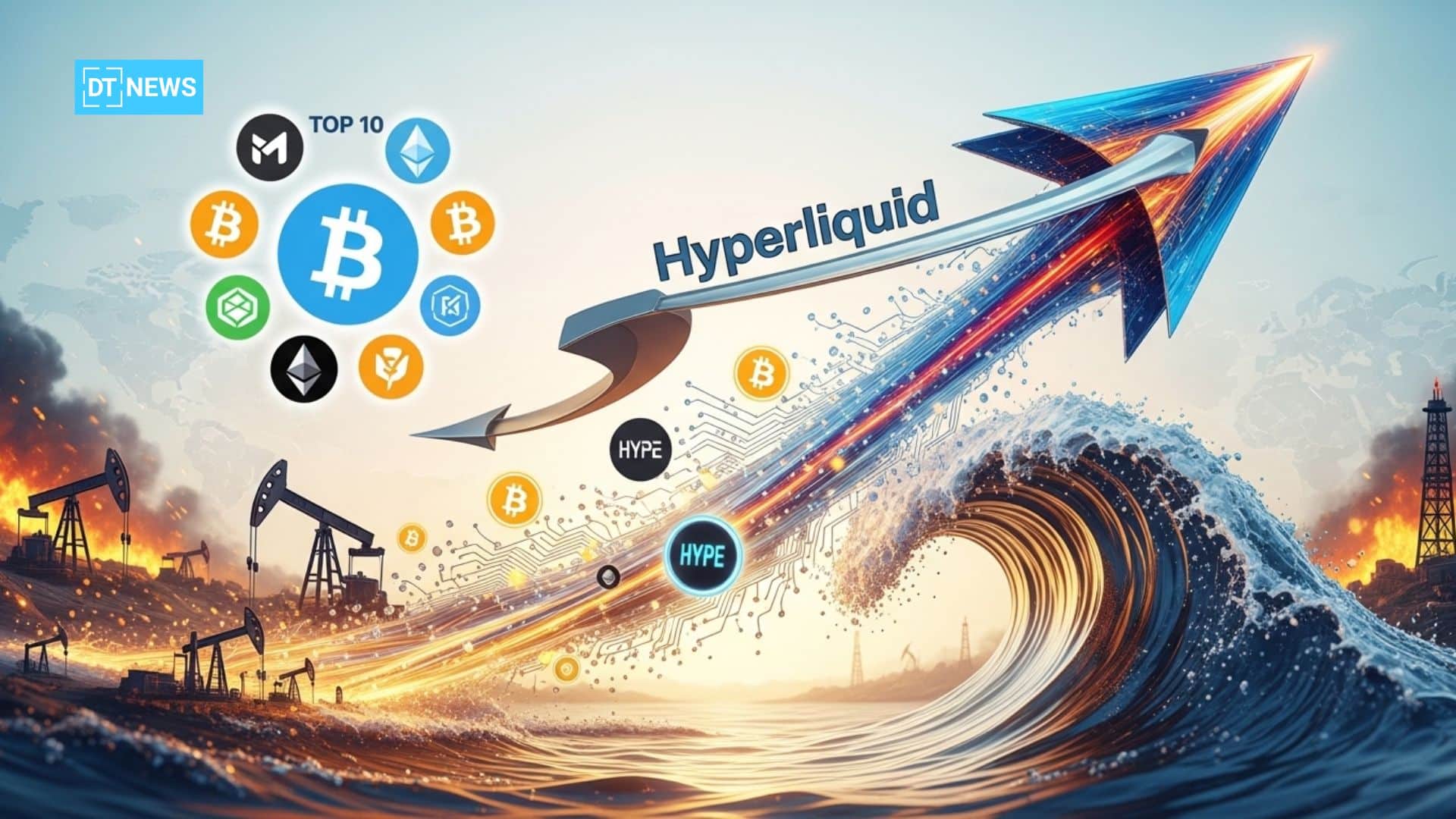
Hyperliquid, a decentralized derivatives exchange, soaked up that flow. Its native token followed. Hyperliquid surge shot the asset to the top 10 ranking by market capitalization, surpassing several long established large caps.
HYPE’s market cap increased from around $8.16 billion to $10.94 billion between March 1 and March 18, an increase of nearly 30%.
The Shift Due to Oil Shock and Weekend Market Gap
The trigger came quickly. Oil markets reacted almost immediately to military strikes linked to the conflict. Prices jumped over $100 per barrel and kept rising as fears mounted that supply could be disrupted, especially through key routes such as the Strait of Hormuz.
Analysts cautioned that prices could rise much higher if disruptions persisted, with forecasts marking levels not seen since major historical crises.
For traders, the more pressing concern was access. Traditional commodity markets close for the weekend but geopolitical events don’t pause until Monday. That created a glaring gap, one that crypto platforms were already primed to fill.
Hyperliquid’s perpetual futures markets remained open. Traders stepped in to voice opinions on oil, gold and silver in real time. Oil-linked contracts alone triggered immense activity, according to market data, with volumes reaching hundreds of millions in a few hours and running into the billions as volatility rose.
This is what formed the basis for the Hyperliquid surge; not speculation alone, but actual usage tied to global macro conditions.

1,700x Growth: Oil Trading Goes On-Chain
One of the most notable traits of this period was the speed of growth. Oil-related trading on Hyperliquid surged as the conflict unfolded. Flowscan data showed that cumulative oil-futures volume on Hyperliquid rose from about $339 million on Feb. 28 to more than $10 billion in a matter of days.
Meanwhile, some specific contracts like tokenized versions of crude oil perpetuals emerged as the platform’s most traded instruments. Some days, volumes surged over $1 billion, surpassing even the largest crypto pairs.
Short positions got blown out as prices rose, leading to tens of millions in liquidations and adding fuel to the momentum behind it. Even weekend trading reached record highs. In one weekend session alone, activity climbed to about $720 million, with oil and metals contracts accounting for what seems to be most of the activity.
Why the Hyperliquid Surge Followed Volume
Hyperliquid surge is closely linked to how the platform is built.
Unlike many crypto tokens that rely primarily on narrative or speculation, HYPE is linked to activity on the platform. Hyperliquid uses trading fees to repurchase tokens and burn them.
As trading volume grew; notably during the oil-fueled surge, fee generation followed suit. That created sustained buying pressure.
According to DefiLlama data, Hyperliquid generated about $187 billion in perpetual futures volume over 30 days, $42.69 billion over seven days, and $6.76 billion over 24 hours.
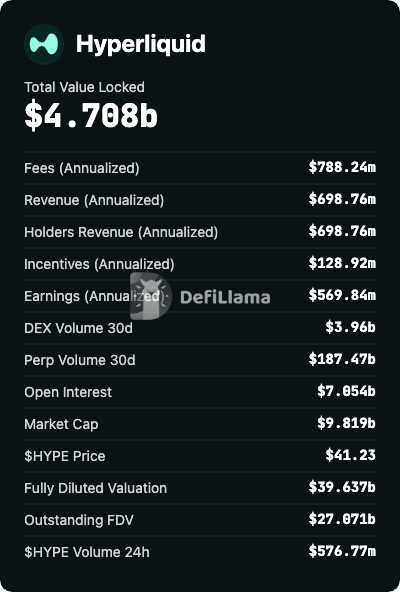
This structure alters traders’ perception of the token. The marketplace started to price HYPE much more like an tool that is linked to exchange utility, with greater usage equals stronger demand. That played a huge role in HYPE climbing into the top 10.
A New Use Case: Crypto as a 24/7 Macro Trading Layer
What was striking during this time wasn’t merely the numbers, it was the kind of activity occurring.
Hyperliquid moved beyond crypto-native trading. It evolved into a venue where one can gain exposure to real world assets like oil, metals and even equity index derivatives.
In recent times, traditional finance is also starting to intersect with this model. 24/7 perpetual futures, for example, related to major indices are now being experimented with on crypto platforms, indicating wider acceptance of continuous trading frameworks.
Throughout the war, Hyperliquid served as an efficient live price discovery layer while traditional exchanges remain offline. It was used by traders to hedge macro risk.
Conclusion
The Hyperliquid surge did not come out of nowhere. It had a definite sequence of events. Geopolitical tension pushed oil prices higher. Oil volatility created demand for continuous trade. Over weekends, traditional markets were unable to provide that service. Hyperliquid did.
With traders entering, on-chain volumes surged. As volume surged, fees increased. With fee growth came an acceleration in HYPE buybacks. The outcome was a quantifiable repricing of the token.
What is unknown is whether this behavior will persist when tensions cool. If traders continue to deploy on-chain derivatives for macro exposure, a more profound transition in the functioning of markets seems inevitable. If not, the surge could be temporary.
Glossary
Perpetual Futures: These are contracts that enable traders to bet on asset prices without expiry.
On-Chain Trading: This means trading that takes place directly on blockchain-based platforms instead of centralized exchanges.
Token Buyback and Burn: It is a system where tokens get repurchased and taken out of circulation to minimize availability.
Open Interest: What is the total number of active derivative contracts in the market.
Real-World Assets (RWA): Assets like oil, gold or equities represented and traded on any blockchain.
Frequently Asked Questions About Hyperliquid Surge
What was the cause of the Hyperliquid surge?
The surge was fueled by high trading volume on Hyperliquid, particularly for Oil related derivatives, during the US-Iran conflict.
What does oil have to do with crypto trading in this context?
Traders used tokenized oil perpetual contracts on Hyperliquid to respond to price movements when traditional markets had closed.
Why didn’t traders use traditional exchanges?
Unfortunately, most commodity futures exchanges are closed on the weekends and crypto platforms such as hyperliquid 24/7.
Is the price of HYPE connected to activity on the platform?
Yes. Demand is directly tied to how much the platform gets used, with trading fees used to buy back and burn HYPE tokens.